Read this page aloud What is Recite? skip to content
Quick Links Hints


English Literature BA (Hons)

What is Unistats?


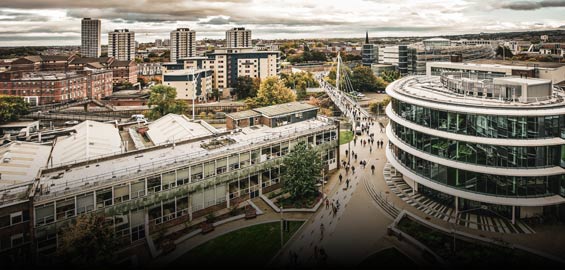
Image: English Literature COURSE INFORMATION (2013 ENTRY)

3 years full-time

Arts, Design and Social Sciences
Lipman Building, Newcastle City Campus

The BA (Hons) English Literature degree aims to provide students with a detailed understanding of writing in English and a sophisticated awareness of the critical debate in the discipline.

Through the programme students become familiar with the major periods of literary expression and with the principal forms of critical understanding. The degree is structured in order to give students an increasing amount of independence as learners.

In the first year all modules are core and compulsory to ensure a basic grounding in the literary canon. In the second year two further core modules are offered that broaden this understanding of the canon and the concept of canonicity.

By the third year students are given the opportunity to complete a dissertation on a topic of their choice.


LEARNING AND TEACHING METHODS

Research informed teaching shapes the content and delivery of this programme. You will be taught by research-active staff, widely published in the field. 

In the first year all modules are core and compulsory to ensure a basic grounding in the literary canon. In the second year two further core modules are offered that broaden this understanding of the canon and the concept of canonicity. In the third year you will have the opportunity to complete a dissertation on a topic of your choice.

The emphasis in first year is on lectures and seminars with supporting subject-specific small groups enabling students to engage in dialogue and develop and negotiate conclusions in discussions with others. Students are given lectures on delivering oral presentations, referencing and seminar participation familiarising them with assessment criteria and helping them to adapt to the learning culture at university.

In second and particularly in the final year there is an increasing emphasis on extended written assignments and self-directed learning though learning continues to be supported through lectures, seminars and tutorials. Embedded skills across modules ensure students have the literacy, IT proficiency, library and research skills necessary to carry out focused interrogations of literary texts.  

Progression is characterised through an increasing emphasis on independent learning. It provides a balance of direct instruction and the opportunity for active assimilation, questioning and debate.

Students are also offered the opportunity to study a foreign language in their second year or to take part in overseas exchanges.


ASSESSMENT METHODS

Assessment is varied, relevant and appropriate and encompasses written course work, dissertation, examinations, short critical analyses, creative writing and the assessment of oral performance in presentations. The discursive essay remains central to our assessment practice but it takes a number of diverse forms including; critical commentary; short text commentary, extended essay, editorial introductions and dissertation.

Central to the assessment of essays is the self-evaluation form you will complete before handing in written work, allowing you to direct the feedback you receive.


CAREERS

The sets of achievements, skills, understandings and personal attributes that make graduates more likely to gain employment are embedded within the degree itself at every level of study. Employers are looking for intelligent, well-rounded graduates who have a depth of understanding, who can think critically and creatively about problems and are well-organised and capable of showing initiative.

Graduates from the English Literature programme have taken up careers in many areas including journalism, the media, marketing and advertising, teaching, librarianship, freelance writing, PR, administration and many have also gone on to postgraduate and doctoral study.

Those considering a career in teaching can select a suite of options managed by the ‘Students into Schools’ project – a joint initiative between Northumbria and Newcastle Universities. These student tutors are supervised and supported by this project and their work is assessed.

Opportunities to plan and think about future employment are provided through the guidance tutor system and in scheduled talks from colleagues in the Careers Service which offers guidance on interview techniques, preparing a C.V., job applications and job searches. Additionally, the Careers Service offers an annual Careers Fair.


 Back to Previous Page   |   Advanced Course Search   |   Browse All Courses


Was this page useful to you?

Northumbria University has taken reasonable care to ensure that the information published is accurate at the time of publication. However, the University gives no warranty or representation as to the quality, accuracy or completeness of the information.