Read this page aloud What is Recite? skip to content
Quick Links Hints


Media and Journalism BA (Hons)

What is Unistats?


Image: Media and Journalism COURSE INFORMATION (2013 ENTRY)

3 years full-time

Arts, Design and Social Sciences
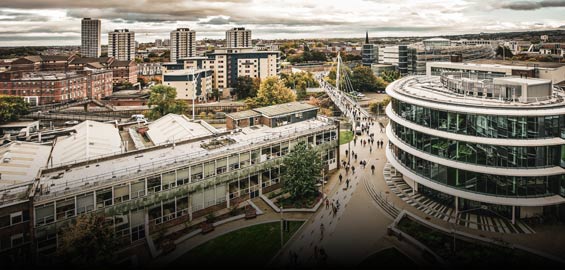
Lipman Building, Newcastle City Campus

The Media and Journalism programme covers an exciting range of skills and knowledge which enable students to gain practical and theoretical experience in online media, including journalism, film production and digital media. The digital and online industries are booming and require workers with skills that combine technical expertise with inquisitive abilities.

Students will undertake modules that teach them the fundamentals of journalism practice and theory including practical broadcast production, news writing, newsgathering techniques, law and ethics and also practical media production skills in creating and writing films including documentary and fiction. Students learn how to write news and features for publication, to generate, write and produce broadcast journalism and how to write and produce television and film productions to a high standard. They learn about how the media industry works and its impact on the world. 

Students undertake a number of film productions each year, including a major film project in final year, which underpins their class based work and prepares them for entering the workplace after graduation. Upon completion of their studies, students possess an impressive set of journalism and media skills and wider transferable skills for a range of careers, plus a portfolio that makes them attractive to the journalism and media industries. Students can also take various options to enhance their understanding of the media in areas such as radio journalism, business and journalism, music and celebrity media.


LEARNING AND TEACHING METHODS

The programme is delivered through a range of lectures, seminars and practical workshops as well as guided independent study. In addition to weekly lectures, seminars and workshops, you are expected to carry out independent learning (including work on journalism outputs and film productions) in each semester.

Throughout the programme you will be taught by research-active staff with high quality publications in the field and who understand the key developments in the journalism industry.  Many of Northumbria's academic staff have worked in the film and television and journalism professions and the programme includes numerous visiting lecturers from the journalism and media industries who share their practice and experience with students throughout their study.


ASSESSMENT METHODS

Assessments are designed to enhance your development and ensure you graduate with the core skills and knowledge that will make sure you are a competitive player in the contemporary media and journalism industries.

Modes of assessment are varied, but focus mainly on practical elements of journalism and media production, and encompass films, written work, essays, examinations, placement portfolio, a dissertation or major practice based project, pitch presentations and group and individual work.

Assessments include works written works of journalism, radio bulletins, short films and documentaries, written journalism, recorded news items.

Many graduates use their projects, dissertations and practical assessments as portfolios for employers and intern opportunities. The department has strong links with local, national and international media outlets.  


CAREERS

Graduates are in a strong position to enter a variety of professions including careers in digital news media, newspapers, radio and television as well as the film and TV industry. 

Graduates have gained employment in public relations, film production, administration, management, teaching, lecturing and research. 

Recent graduates are working for the New Musical Express,  Real Radio, Metro Radio, Frank Public Relations, Leading Link, Newcastle Journal, Take That Ltd and the Olympic Games Press Operations Team.


 Back to Previous Page   |   Advanced Course Search   |   Browse All Courses


Was this page useful to you?

Northumbria University has taken reasonable care to ensure that the information published is accurate at the time of publication. However, the University gives no warranty or representation as to the quality, accuracy or completeness of the information.