Read this page aloud What is Recite? skip to content
Quick Links Hints


Performance BA (Hons)

What is Unistats?


Image: Performance COURSE INFORMATION (2013 ENTRY)

3 years full-time

Arts, Design and Social Sciences
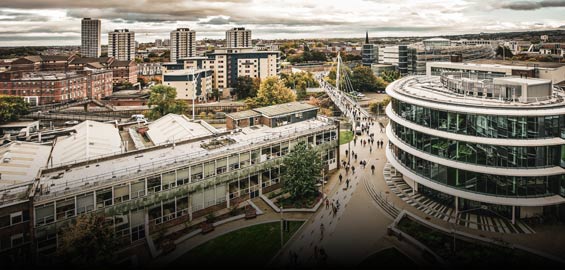
Lipman Building, Newcastle City Campus

This course involves the study of performance through the integration of theory and practical exploration. It is designed to give students a thorough grounding in the skills required for a variety of performance contexts, in order to produce multi-skilled performers who meet the demands of current, professional practice.

The programme aims to produce graduates who are flexible, enterprising and responsive to the challenges of contemporary performance practice.

Performance-based modules studied at all stages, explore new styles and approaches and develop individuals committed to multimedia performance work which communicates to audiences through the spoken word, movement, sound, music, song and visual imagery; and is interested in the contemporary arts including theatre in its broadest sense, dance, music, video and film.


LEARNING AND TEACHING METHODS

You will be taught in a range of different ways and in different contexts to support your learning. The majority of your work in classes and your contact time with staff will involve practical work in drama studios and theatres. This practical work will involve staff-guided explorations of key techniques and performance methods, and also rehearsals and production activity.

The most intensive periods of taught time will be within rehearsal periods where you will be involved in making live work for an audience. You will also spend some of your time being taught in more conventional academic settings such as lectures and seminars.

Throughout your time on the course there will be opportunities to collaborate with staff and students in making work, while there will also be opportunities to develop work independently. 


ASSESSMENT METHODS

The majority of assessment on this course is practical, covering performance, acting and technical skills, your creative and artistic decision making and your contribution to collaborative work. Some assessment takes place in the drama studio and some takes place on stage in front of a public audience.

In your final year you will be part of a cast of actors working with a professional director on a major production project, performed in front of a paying audience which includes invited artists, directors and casting agent.

There is a core of academic work which includes written submission in the form of essays, evaluations and logbooks as well as oral presentation. There are no formal written examinations.


CAREERS

Our graduates go into many areas of employment within theatre and performance industries. Recent graduates are “jobbing actors” and performers, performing onstage and on screen. Recent graduates have performed at the National Theatre (London, and on tour), Live Theatre and Northern Stage (Newcastle), and Hampstead Theatre as well as at the Edinburgh Fringe. 

Graduates have also formed theatre companies, most recently in Cambridge, and a music band. A significant proportion of our 2012 graduates found immediate employment with the award-winning November Club theatre company who are working towards a major performance project. We also have graduates who have developed careers as stage managers, technicians and arts administrators.

This degree also equips students to undertake postgraduate study and some develop careers beyond the field of Performing Arts, both in the public sector (for example as teachers), and in the private sector.

Students on this course are required to engage in tasks with a focus on employability. In particular, between second year and third year students develop work independently which focusses on their specific aspirations and goals as emerging performers/practitioners. Feeding into this work are guest speakers from theatre-related industries as well as key members of the Performing Arts team, most of whom continue to make work within an industry context as actors, directors, writers, choreographers and performance makers.  There are always opportunities arising from staff activities and staff contacts for students to engage with, and frequently employment opportunities arise from these points of contact.

Moreover, the degree enables students to develop a range of skills transferable in many walks of life, including communication and presentational skills as well as leadership and organisational skills, and intellectual and analytical skills.  


 Back to Previous Page   |   Advanced Course Search   |   Browse All Courses


Was this page useful to you?

Northumbria University has taken reasonable care to ensure that the information published is accurate at the time of publication. However, the University gives no warranty or representation as to the quality, accuracy or completeness of the information.