


New Master Research Agreement strengthens commitment to cutting-edge research and innovation
Northumbria University and Lockheed Martin Space UK have signed a new Master Research Agreement,…

Computer Science and Informatics interdisciplinary research is driving significant beneficial and enduring changes for society and individuals. The following impact case studies are being submitted as part of REF 2021. More information about some of these can be found above.
These impact case studies form part of a larger picture of impact within the Unit which extends across multiple sectors. Our Unit is also committed to ensuring that computing science overcomes educational challenges within society, such as the digital divide. By using topics from within our applied research (e.g., health, cybersecurity) we are preparing future generations with the skills they need to compete in the global digital economy.
To read all impact case studies in full, please click here.
The Unit is committed to ensuring that computer science overcomes educational challenges within society such as the digital divide. Northumbria’s research on digital literacy engagement has positively influenced educational practices and the aspirations of young people.
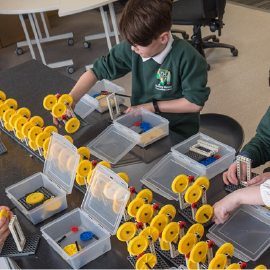
As part of NUSTEM, researchers in the Unit were part of an investigation examining the gap in academic progression for certain groups of young people in STEM subjects. Researchers developed and published a new theory of change to increase the diversity and number of young people pursuing a career in STEM. This research has helped provide new insights about how to improve digital resources and the accessibility of online educational portals. This has helped inform practice for 48 schools in the North East, amounting to over 43,000 students.
Researchers have delivered interactive workshops to over 90,000 children from less-affluent areas in the North East in partnership with Newcastle City Council, libraries and Your Homes. As part of the DIGISTEM project, Northumbria is working with the Ekiti state government in Nigeria to provide digital literacy skills and innovative computer science tools to transform studying practice for young people.
Northumbria is part of a consortium of Universities, businesses and professional bodies that have formed a National Institute of Coding to address the digital skills gap. The Institute aims to increase employability of digital specialists and bring in more people from underrepresented groups.
The Institute of Coding (IoC) at Northumbria University from Northumbria University on Vimeo.

Northumbria University and Lockheed Martin Space UK have signed a new Master Research Agreement,…

The longest satellite record ever assembled shows that Greenland and Antarctica have lost 11.3…

Dr Juna Sathian, an Associate Professor at Northumbria University, has been elected a Fellow…

Northumbria University has played a key role in shaping a new national plan designed to help…

A Northumbria University academic, whose research has played a key role in bringing breakfast…

Wildfires raging through prehistoric rainforests helped create the earliest known peat bog…

A Northumbria University astronomer has helped uncover new clues about a rare icy object from…

Two leading academics from Northumbria University have been elected to the Fellowship of the…

Coach Lane Campus
-

Europa Hotel
-
The Great Hall, Sutherland Building
-
Manchester Marriott Hotel Piccadilly
-
Page last updated 25/01/24
