
-
Study
-
Quick Links
- Open Days & Events
- Real-World Learning
- Unlock Your Potential
- Tuition Fees, Funding & Scholarships
- Real World Learning
-
Undergraduate
- Application Guides
- UCAS Exhibitions
- Extended Degrees
- School & College Outreach
- Information for Parents
-
Postgraduate
- Application Guide
- Postgraduate Research Degrees
- Flexible Learning
- Change Direction
- Register your Interest
-
Student Life
- Students' Union
- The Hub - Student Blog
- Accommodation
- Northumbria Sport
- Support for Students
-
Learning Experience
- Real-World Learning
- Research-enriched learning
- Graduate Futures
- The Business Clinic
- Study Abroad
-
-
International
International
Northumbria’s global footprint touches every continent across the world, through our global partnerships across 17 institutions in 10 countries, to our 277,000 strong alumni community and 150 recruitment partners – we prepare our students for the challenges of tomorrow. Discover more about how to join Northumbria’s global family or our partnerships.
View our Global Footprint-
Quick Links
- Course Search
- Undergraduate Study
- Postgraduate Study
- Information for Parents
- London Campus
- Northumbria Pathway
- Cost of Living
- Sign up for Information
-
International Students
- Information for International Students
- Northumbria and your Country
- International Events
- Application Guide
- Entry Requirements and Education Country Agents
- Global Offices and Regional Teams
- English Requirements
- English Language Centre
- International student support
- Cost of Living
-
International Fees and Funding
- International Undergraduate Fees
- International Undergraduate Funding
- International Masters Fees
- International Masters Funding
- International Postgraduate Research Fees
- International Postgraduate Research Funding
- Useful Financial Information
-
International Partners
- Agent and Representatives Network
- Global Partnerships
- Global Community
-
International Mobility
- Study Abroad
- Information for Incoming Exchange Students
-
-
Business
Business
The world is changing faster than ever before. The future is there to be won by organisations who find ways to turn today's possibilities into tomorrows competitive edge. In a connected world, collaboration can be the key to success.
More on our Business Services-
Business Quick Links
- Contact Us
- Business Events
- Research and Consultancy
- Education and Training
- Workforce Development Courses
- Join our mailing list
-
Education and Training
- Higher and Degree Apprenticeships
- Continuing Professional Development
- Apprenticeship Fees & Funding
- Apprenticeship FAQs
- How to Develop an Apprentice
- Apprenticeship Vacancies
- Enquire Now
-
Research and Consultancy
- Space
- Energy
- AI Futures
- CHASE: Centre for Health and Social Equity
- NESST
-
-
Research
Research
Northumbria is a research-rich, business-focused, professional university with a global reputation for academic quality. We conduct ground-breaking research that is responsive to the science & technology, health & well being, economic and social and arts & cultural needs for the communities
Discover more about our Research-
Quick Links
- Research Peaks of Excellence
- Academic Departments
- Research Staff
- Postgraduate Research Studentships
- Research Events
-
Research at Northumbria
- Interdisciplinary Research Themes
- Research Impact
- REF
- Partners and Collaborators
-
Support for Researchers
- Research and Innovation Services Staff
- Researcher Development and Training
- Ethics, Integrity, and Trusted Research
- University Library
- Vice Chancellors Fellows
-
Research Degrees
- Postgraduate Research Overview
- Doctoral Training Partnerships and Centres
- Academic Departments
-
Research Culture
- Research Culture
- Research Culture Action Plan
- Concordats and Commitments
-
-
About Us
-
About Northumbria
- Our Strategy
- Our Staff
- Our Schools
- Place and Partnerships
- Leadership & Governance
- University Services
- Northumbria History
- Contact us
- Online Shop
-
-
Alumni
Alumni
Northumbria University is renowned for the calibre of its business-ready graduates. Our alumni network has over 253,000 graduates based in 178 countries worldwide in a range of sectors, our alumni are making a real impact on the world.
Our Alumni - Work For Us
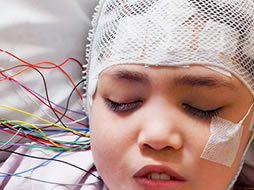
People living with HIV have a significantly delayed internal body clock, consistent with the symptoms of jet lag, according to new findings reported by researchers from universities in South Africa and the UK.
The findings, which have been published in the Journal of Pineal Research, may explain some of the health problems experienced by people with HIV, and guide research towards improving their quality of life.
Researchers from Northumbria and Surrey universities in the UK and South Africa’s University of the Witwatersrand and University of Cape Town studied people aged 45 years and above living in South Africa’s Mpumalanga province, where nearly one in four people is living with HIV. As such, the infection is endemic and does not associate with any difference in lifestyle.
They found that physiological daily rhythms, as measured by the hormone melatonin, were delayed by more than an hour on average in HIV positive participants. Their sleep cycle was also shorter, with researchers noting that their sleep started later and finished earlier.
This suggests the possibility that HIV infection may cause a circadian rhythm disorder similar to the disruption experienced in shift work or jet lag.
The authors believe that this body clock disruption may contribute significantly to the increased burden of health problems that people living with HIV are experiencing despite successful treatment, such as an increased risk of cardiovascular, metabolic, and psychiatric disorders.
South Africa has the fourth highest rate of HIV prevalence in the world, and researchers believe there is a strong need for further funding to identify whether similar disruption to the body clock is experienced by younger people living with HIV in other countries.
“The participants living with HIV essentially experience the one-hour disruption associated with switching to daylight savings time, but every single morning,” says Professor Malcolm von Schantz, Professor of Chronobiology at Northumbria University, corresponding author of the publication.
“This happens in spite of the fact that essentially everybody is exposed to the same light-dark cycle. Our findings have important potential implications for the health and wellbeing of people living with HIV, especially given the well-established relationships between disrupted circadian rhythms and sleep deprivation.”
Dr Karine Scheuermaier of the University of the Witwatersrand, senior author of the study added: “This is very similar to the risk profile observed in shift workers. Understanding and mitigating this disruption may be an important step towards helping people living with HIV live healthier lives.”
“Our findings identify an urgent research topic,” says Xavier Gómez-Olivé, also from the University of the Witwatersrand, whose research grant funded the study. “The next step must be to establish if the same body clock disruption exists in people living with HIV who are younger and who live in other countries.”
Co-author Dale Rae, of the University of Cape Town, added “This is a great example of the importance of studying sleep in people living in Africa, and demonstrates how findings from this research can also be relevant to people anywhere in the world.”
The paper, Delayed circadian rhythms in older Africans living with human immunodeficiency virus (HIV), is now available in the Journal of Pineal Research.
The research was performed within the HAALSI (Health and Ageing in Africa: a Longitudinal Study of an INDEPTH Community in South Africa) cohort of the MRC/Wits Agincourt Research Unit. It was funded by a Newton Grant from the Academy of Medical Sciences.
Northumbria University's Department of Psychology demonstrates a commitment to excellence, manifest in first-class teaching and learning underpinned by high quality research, and promoting business facing professional engagement.
This is the place to find all the latest news releases, feature articles, expert comment, and video and audio clips from Northumbria University
Latest News and Features
Working-class roots drive North East graduate’s AI healthcare revolution
A Northumbria University graduate has developed groundbreaking AI technology that could save…
Scaling-up global solar panel manufacturing sustainably
Pioneering research led by Northumbria University shows how the renewable energy sector can…
Business leaders and universities unite to pave way for a new era of skilled graduate jobs
Leaders from national, international and regional businesses including Greggs, Siemens Energy…
Northumbria Professor recognised for pioneering work on domestic abuse and gender-based violence
A leading legal academic from Northumbria University has been awarded the prestigious title…
International prize for pioneering Down syndrome dementia research
A Northumbria University researcher has won a prestigious international competition to develop…
Researchers awarded NIHR funding to support real world evaluations to improve public health interventions
Researchers from the University of Glasgow and Northumbria University have been awarded £2.5…
From care leaver to government AI leader: Northumbria graduate's extraordinary journey
A Northumbria University graduate who grew up in the care system in County Durham has been…
Northumbria Academics Appointed to National Leadership Positions
Three academics from Northumbria University have been appointed to president positions across…
Upcoming events
On Weaving
Gallery North
EY Degree Apprenticeship Information Event
Northumbria University
-
Next Stop Northumbria
The Queens Hotel
-
