
A Northumbria University researcher has won a prestigious international competition to develop innovative wearable technology for monitoring early signs of Alzheimer's disease in people with Down syndrome.
.png?h=350&w=350&modified=20260204084523&hash=3264D2D0A8BB95A76F57A409066AA9BA) Dr Tamlyn Watermeyer, an NIHR-Alzheimer's Society Dementia Fellow at
Northumbria University, was named winner of the Dementia and other
Neurological Disorders category in the SmartSocks DISCOVERY Pioneers
Competition, beating entries from across the world.
Dr Tamlyn Watermeyer, an NIHR-Alzheimer's Society Dementia Fellow at
Northumbria University, was named winner of the Dementia and other
Neurological Disorders category in the SmartSocks DISCOVERY Pioneers
Competition, beating entries from across the world.
Her winning project, SmartSleep&Steps-DS Pilot, will use pioneering SmartSocks wearable technology to monitor sleep patterns and walking in adults with Down syndrome.
This group are at exceptionally high risk of developing Alzheimer's disease, yet access to specialist dementia, sleep and movement assessment is often limited and difficult to access.
Traditional monitoring methods – such as overnight sleep studies in hospital, smartwatches and specialist walking assessment centres – are often uncomfortable, difficult to use or simply impractical for people with Down syndrome.
 The SmartSocks technology offers an unobtrusive way to
capture physiological data through an everyday item of clothing but has never
been tested in adults with Down syndrome.
The SmartSocks technology offers an unobtrusive way to
capture physiological data through an everyday item of clothing but has never
been tested in adults with Down syndrome.
SmartSocks DISCOVERY are specialist AI-enabled research socks that monitor pulse rate, skin response, temperature and movement patterns.
The technology was developed with support from Alzheimer's Society to help researchers study people with dementia, autism, learning disabilities and brain injuries who often find wrist-worn devices like smartwatches uncomfortable, fiddly or stigmatising.
The socks are machine washable and collect data continuously whilst people go about their normal daily activities.
 This pilot study will establish whether the technology is
acceptable, practical and can generate high-quality data in real-world
settings.
This pilot study will establish whether the technology is
acceptable, practical and can generate high-quality data in real-world
settings.
Dr Watermyer said: “I’m incredibly excited to work alongside adults with Down syndrome and the learning disability community to test this technology.
“SmartSocks offers a genuinely inclusive way to study early changes in sleep and movement, using something familiar and comfortable rather than invasive assessments.
“This project is an important step towards more accessible, person-centred dementia research.”
The research forms part of Dr Watermeyer's wider work on the Revolutionising Alzheimer's Disease Assessment in Down Syndrome (RAD) programme, which is co-designing digital, home-based assessments with people with Down syndrome and their supporters to address longstanding inequalities in dementia research and care.
Dr Watermeyer leads the Neurosciences Research Venture (NeRVe) lab at Northumbria University and studies how degenerative brain diseases affect people's memory, thinking and mental wellbeing.
Her particular passion is working with under-served populations, including people with learning disabilities and global majority communities, in the dementia prevention movement.
To date, she has secured approximately £3 million as Principal Investigator and Co-investigator from funders including the NIHR, Medical Research Council, Alzheimer's Society and Alzheimer's Research UK.
As competition winner, Dr Watermeyer will receive a SmartSocks DISCOVERY Kit, allowing her to monitor participants' sleep, movement and body responses around the clock.
This research could help spot sleep and movement problems earlier – potential early signs of changes in the brain – meaning people with Down syndrome could get help and support sooner.
The pilot study will run over 9-12 months and recruit 10-15 adults with Down syndrome aged 30 and over.
The SmartSocks technology was designed by Dr Zeke Steer, Founder and CEO of Milbotix, the company which produces Smartsocks. He was inspired to create the product following his experience of watching his great grandmother develop dementia and the challenges she faced.
Dr Steer said: “We were encouraged by the quality, creativity, and ambition of the proposals we received. The winning projects demonstrate exactly the kind of visionary and impactful research SmartSocks DISCOVERY was developed for.”
At Northumbria, psychology is more than a subject – it’s a journey into understanding the mind, improving lives, and creating positive change.

Our academics are delivering high impact research to understand big societal questions around how citizens can be empowered to digitally – and interactively - engage with governments, political organisations, healthcare providers and civic authorities on a local and national scale.
Multiomics is a field that uses technologies to understand the complex role of DNA in our environment, health, our microbial world, and those microbes related to disease.
This is the place to find all the latest news releases, feature articles, expert comment, and video and audio clips from Northumbria University
Latest News and Features
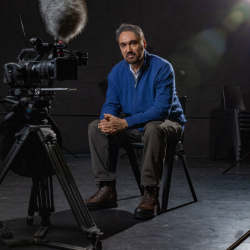
From Netflix to Newcastle Northumbria graduate uses AI to revolutionise film and TV production
A Northumbria University graduate who co-created Bangkok Breaking — one of Thailand's biggest…

Northumbria University researcher brings death-positive arts festival to libraries across England
An arts festival exploring death, dying and end-of-life choices — led by a Northumbria University…
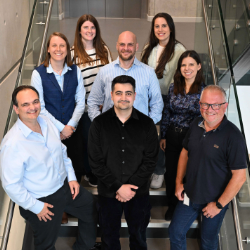
Northumbria University spinout achieves CE marking for deep lung breath sampling device — a first backed by peer-reviewed research
A medical device company spun out of Northumbria University has reached a significant milestone…
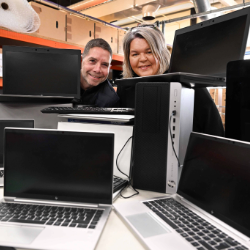
Northumbria University's IT recycling initiative recognised as national best practice
The equivalent weight of one and a half double-decker buses' worth of IT equipment has been…
Scientists solve decades-long mystery about why Saturn appears to change its spin
Researchers at Northumbria University have used the most powerful space telescope ever built…
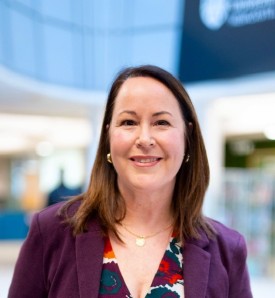
Northumbria University professor named among UK's most outstanding health and care research leaders
A Northumbria University professor has been appointed as one of the UK's most influential health…
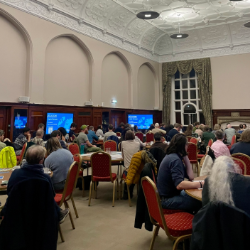
From campuses to communities: Newcastle's fifth Climate Change Forum forges greener future for city
Newcastle's fifth Climate Change Forum drew a full house – and an energising conversation about…

'Safer Stadiums' research shares women's experiences at men's football games
New research led by Northumbria University highlights the experiences of women who attend men's…
More events
Upcoming events

From sustenance to complete nourishment in a changing and uncertain climate
Ellison Building A, 001 (ELA 001)
-

Broken Bonds: New Perspectives on Marital Breakdown
The Great Hall
-

Smarter Supply Chains: Digital Innovation for Cost, Efficiency & Carbon
Northumbria University
-

Culture in Conversation: Rethinking Leadership & Organisational Practice
CCE1 Newcastle Business School
-
