
Domestic burning of wood and dung fuels in neolithic homes would have exceeded internationally-agreed standards for indoor air quality, exposing inhabitants to unsafe levels of particulates.
Working with environmental engineers, researchers from Northumbria, Newcastle, Durham and Copenhagen universities used modern air quality monitoring methods to assess the impact of domestic fuel burning inside buildings at Çatalhöyük, in Turkey, one of the world’s earliest settlements.
 A typical house at Çatalhöyük, a UNESCO World Heritage site,
had a domed oven set against the south wall, located beneath an opening in the
roof. In the 1990s, a replica of one of these houses was built at Çatalhöyük to
show visitors what they may have looked like during the time of occupation.
A typical house at Çatalhöyük, a UNESCO World Heritage site,
had a domed oven set against the south wall, located beneath an opening in the
roof. In the 1990s, a replica of one of these houses was built at Çatalhöyük to
show visitors what they may have looked like during the time of occupation.
Although previous studies have shown that burning biofuels has significant negative consequences on health, especially in enclosed spaces with poor ventilation, the relationship between fuel use and health in prehistory has never been explored.
The research team burned different types of fuel in the hearth of the replica house and measured pollution levels to test how living in these buildings may have exposed the inhabitants to fine particulate matter and impacted on their respiratory health.
The research, which was funded by the Wellcome Trust, found that the average levels of fine particulate matter (PM2.5) over a two hour period were extremely high and that concentrations continued to remain high up to 40 minutes after the fires had burnt out afterwards.
The results indicated greater exposure directly in front of the oven although similar levels were also detected to the side of the hearth, suggesting that a person’s position in relation to the fire would have had only a minimal impact on exposure.
 Professor Anil Namdeo, Professor of Air Quality Management at Northumbria University, said: “This work has important implications for the current era. Many communities all around the world still use biomass for cooking and heating, and in poorly ventilated houses, resulting in more than four million deaths each year associated with indoor air pollution. Our study highlights this issue and could pave the way for developing mitigation measures to minimise this.”
Dr Lisa-Marie Shillito, Senior Lecturer in Landscape Archaeology at Newcastle University, added: “At Çatalhöyük, the lack of a proper chimney, and the fact that buildings consist of a single, small room that combined living space and the hearth, means that anyone inside the building would have been exposed to unsafe levels of particulates as a result of everyday domestic activities. This would almost certainly have had a negative health impact on these communities, due to a combination of an open fire and lack of ventilation.”
Studying air pollution and respiratory health in the past can be challenging because human remains do not always provide clear signs due to inadequate preservation. Small particles of PM2.5 can travel deep into the lungs where they become embedded in the tissue and can even enter the blood stream, triggering an inflammatory response outside the lungs. The remains of many of the inhabitants of Çatalhöyük show signs of osteoperiostitis, or bone lesions, which can be response to infection, and the research team suggest that this may be explained by the chronic exposure to PM2.5 that this community would have had.
Professor Anil is a member of Northumbria University's Department of Geography and Environmental Sciences, within the Faculty of Engineering and Environment.
Geography At Northumbria University Encompasses All Of Our Work In Physical And Human Geography, Environmental Science And Management, Health & Safety, And Disaster Management.
This is the place to find all the latest news releases, feature articles, expert comment, and video and audio clips from Northumbria University

Northumbria has submitted 1096 staff across thirteen Units of Assessment (UoA) to the Research Excellence Framework (REF) 2021. This submission reflects our research across four Faculties and nineteen Departments, incorporating traditional disciplines, such as English and Engineering, modern disciplines, such as Business and Design, and professional disciplines, such as Architecture and Nursing.
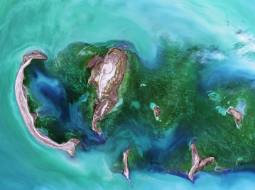
Geography and Environmental Studies investigates the increasingly urgent issues affecting the world and its people such as the climate crisis, global sustainable development, solar-terrestrial science and cold climates.
Latest News and Features

UK network to accelerate the development of sustainable surface technologies
A new national network led by Newcastle University and Northumbria University, in partnership…

Criminologist wins acclaimed Philip Leverhulme Prize to pioneer a new criminology of the offshore world
A Northumbria University criminologist has been awarded a Philip Leverhulme Prize, one of the…

New platform maps charity support for the Armed Forces community
Pioneering data platform maps where the Armed Forces community receive support from charities

Northumbria co-leads study on fairer support for families
A major study co-led by Northumbria University will test whether attachment assessments lead…

New AHRC research shows how community innovation can power the next phase of devolution.
New research published today by the AHRC Creative Communities programme provides fresh evidence…

Free sessions to help families navigate the SEND system
Northumbria University's award-winning Student Law Office is launching SEND Decoded, a series…

New Doctoral Training Programme will tackle key polar science questions with a reduced carbon footprint
The Net Zero Polar Science (NZPS) Doctoral Training Programme (DTP) has welcomed its first…

New Student Health Hub brings joint health and wellbeing support
A new drop-in service is bringing health and wellbeing support for students at both Newcastle…
More events
Upcoming events

Next Stop Northumbria
Manchester Marriott Hotel Piccadilly
-

-
Magnetospheric Multiscale Science Working Team Meeting
Sutherland Building

Christmas Market and Tree lighting
Northumbria University
-
