

NESST topping out ceremony attendees receive traditional tankards to celebrate build milestone
Topping out ceremony marks pivotal moment for centre backed by £50 million investment set to…

Modern technologies, including reality capture and data sensing technologies, artificial intelligence (AI), 3D printing and additive manufacturing, and robotics, are transforming industries worldwide.
In the context of construction, these technologies have the potential to revolutionize processes and increase productivity. The integration of these advanced technologies and off-site methods of construction needs to be fostered to overcome the productivity challenges faced by the construction industry.
Join us at Transforming Construction with Off-Site Methods and Technologies (TCOT 2026), where we're pushing the boundaries of traditional construction practices and embracing the future of building.
This conference is a collaboration between Northumbria University, the University of New Brunswick Off-site Construction Research Centre (OCRC), and CIB International Council for Research and Innovation in Building and Construction.
The conference will be held in Newcastle Upon Tyne, UK, from August 18-20 2026, at Northumbria University. Plenary sessions, presentations of peer-reviewed papers, engaging keynote speakers, technical workshops and industry case studies will inform individuals and organisations of the latest uses of innovative technologies and off-site methods that are critical to the future of the construction industry.
A flyer for the conference is available to download as a PDF here.
Delegates are eligible to claim up to 10 hours of formal Continuing Professional Development (CPD), and we especially welcome delegates from industry.

Dates: Tuesday 18 - Thursday 20 August 2026
Location: Business and Law School, City Campus East (CCE1), Northumbria University, Newcastle upon Tyne, NE2 1XA, UK
Venue Access: The main entrance is step-free with automatic doors and there is lift access to all floors. More information on building access can be found on our AccessAble pages.
Transport: More information on travelling to CCE1 and Newcastle upon Tyne can be found here.
Registration fees:
Full conference: £500+VAT (early bird) / £600+VAT (standard)
One day: £250+VAT (early bird) / £300+VAT (standard)
Target Delegates: 200 participants from industry, academia and government
Keynote Sessions: Four pioneering plenary talks and keynote speeches
Previous Conference information: Transforming Construction with Off-site Methods and Technologies, University of New Brunswick, August 20 - 22, 2024.
CONFERENCE TOPICS
Transforming Construction with Off-Site Methods and Technologies (TCOT2026) adopts a socio-technical systems perspective to explore how offsite construction research and practice are shaping the future of the built environment. The conference aims to bring together, academic, industry and policy communities to examine the transition toward more industrialised, digitalised, sustainable and resilient systems of practice.
TCOT2026 invites contributions that advance understanding, innovation and implementation across the people, process and technology dimensions. Submissions are welcomed focusing on, but not limited to, the following three overarching themes and their associated sub-topics.
Advanced Technologies & Data
OSC Processes and Systems
People and Management for OSC
Submission Option |
Task |
Deadline |
|
Option 1: Academic Full Papers (7-10 Pages) |
300 Words - Abstract Submission |
open |
|
Notification of Abstract Acceptance |
open | |
|
Full Paper Submission |
10/04/26 | |
|
Notification of Full Paper Acceptance |
27/04/26 | |
|
Camera-Ready Submission |
15/05/26 | |
|
Option 2: Short Papers (3-4 Pages) |
300 Words - Abstract Submission |
open |
|
Notification of Abstract Acceptance |
open | |
|
Final Short Paper Submission |
13/03/26 | |
|
Notification of Short Paper Acceptance |
27/04/26 | |
|
Camera-Ready Submission |
15/05/26 | |
|
Option 3: Presentation Only - Industry Speakers |
300-500 Words - Abstract Submission |
24/04/26 |
|
Notification of Abstract Acceptance |
11/05/26 | |
|
Presentation Slides Submission |
10/08/26 | |
|
Workshop Proposals (CfW) |
Workshop Proposal Submission |
open |
|
Notification of Workshop Selection |
09/03/26 | |
|
Workshops Registration Open |
01/04/26 | |
|
Workshops Registration Deadline |
17/07/26 | |
|
Workshop Delivery Day |
18/08/26 | |
|
Important Dates (all options) |
Early Bird Registration Opens |
01/04/26 |
|
Early Bird Registration Deadline |
07/06/26 | |
|
Regular Registration Deadline |
04/08/26 | |
|
Author/Presenter Registration Deadline |
19/06/26 |
All authors/presenters must register by June 19 2026, otherwise submissions will be withdrawn.
Expressions of interest for workshop delivery can be submitted via the form here.
CALL FOR SUBMISSION
We invite contributions from academic researchers and industry practitioners addressing the conference’s thematic areas and sub-topics. Three types of submissions are available:
All accepted submissions will be included in the conference proceedings and will be considered for conference awards.
For full paper (type 1) and short paper (type 2) submissions, abstract submission is encouraged but not mandatory. For presentation only (type 3) submissions, an abstract submission is required by the stated deadline.
The official language of the conference is English and the formatting instructions for preparing the three types of submissions can be found under the Submission Guidelines (below).
SUBMISSION GUIDELINES
All submissions must be original and not simultaneously under review by another journal or conference.
Submissions are invited under the following three options:
Options 1 & 2: Full Paper and Extended Abstract
These options are recommended for academic researchers but open to all contributors. Please follow the submission steps below:
Deadline: 15th February 2026
Abstracts must not exceed 300 words. Notification of abstract acceptance will be issued on 22nd February 2026.
Deadline: 27 March 2026
Full scientific papers (7-10 pages) should present original research method and theoretical contributions.
Short papers (3-4 pages) may include scientific insights or case studies with intellectual merit.
Both must use the official paper template and follow the formatting instructions provided.
Step 3 – Camera-Ready Submission (Required)
Deadline: 15 May 2026
Authors upload the final revised version of their paper in the required format, accompanied by the signed Copyright Agreement Form, which will be available through ConfTool.
Deadline: 7 August 2026 (Required)
Presentations will be 15 minutes total. A template slide deck and submission instructions will be shared upon paper acceptance.
Option 3: Presentation Only
This option is recommended for industry practitioners wishing to present practical applications and project case studies, without submitting a paper.
Deadline: 24 April 2026
Abstracts must be 300 - 500 words. Notification of abstract acceptance will be issued by 11 May 2026.
Deadline: 10 August 2026
Presentations will be 15 minutes total. A template slide deck and further submission instructions will be provided after the acceptance.
CONTACT
For any questions regarding submissions, please contact:
Programme to follow.
TCOT 2026 offers a variety of partnership opportunities to advertise your organisation and/or products to members of the Architecture, Engineering, Construction, and Facilities Management industry. Our delegates will include industry leaders, academics, students and government and public sector officials. Partnering with this conference will allow your organisation to benefit from association with Northumbria University, IC3 (International Centre for Connected Construction), the University of New Brunswick OCRC, and CIB, while reaching out to a unique, captive audience in an engaging environment. There are many different partnership packages and benefit opportunities available at the conference, and we welcome the opportunity to discuss custom partnership packages that best suit your needs.
Download our Conference Partnership Opportunities Brochure


Mohamad Kassem is Professor of Digital Construction and Founder and Lead of the Digital Innovation in Construction and Engineering Lab (NU-DICE) at Newcastle University, UK. His research focuses on developing digital innovation technologies and processes to address productivity, circularity and decarbonisation challenges in construction and the built environment. He has led over £12 million in funded research and published more than 170 peer-reviewed outputs.
Professor Kassem is also recognised for his sustained collaboration with the private and public sector, working closely with policymakers, clients, contractors, consultants and technology providers. He has served as a digital transformation advisor to the European Commission, the UK Foreign and Commonwealth Office, the Construction Industry Training Board, the Centre for Digital Built Britain (University of Cambridge), and the governments of Brazil, Mexico and others—supporting national-scale digital strategies in more than 11 countries. His work has been recognised with awards such as the Scherer Award from the European Council for Computing in Construction, the RISE Award for Digital Innovation in Sustainability, and an Enterprise Fellowship.

Zhen Lei is Associate Professor in the Department of Civil Engineering at the University of New Brunswick, where he holds the OSCO Research Chair in Off-site Construction and serves as Scientific Director of the Off-site Construction Research Centre (OCRC).
His research expertise spans construction process simulation and optimisation, Building Information Modelling (BIM), process improvement, and emerging digital technologies. He is a frequent speaker at industry and academic events across Canada and the United States, and his work is documented in over 70 publications in leading journals and conference proceedings.

David Greenwood is Emeritus Professor of Construction Management in the Department of Architecture and the Built Environment at Northumbria University, UK. Before entering academia, he spent a decade working as a Site Engineer and Senior Estimator in the construction industry — a grounding that continues to shape his practical, impact-focused approach to research.
He is co-founder and director of BIM Academy (2013–2023), a joint venture that won the 2017 Times Higher Education Award for most innovative collaboration between industry and academia. A former Fellow of the Chartered Institute of Building and Chair of the Association of Researchers in Construction Management (ARCOM), he has spent over twenty years consulting, training, and lecturing for commercial and governmental organisations around the world.
His academic output includes more than 150 publications, several authored and co-authored textbooks, and research funded by the EPSRC, AHRC, and UK and international government agencies. Throughout his career, he has been a consistent advocate for initiatives that drive better practice across the construction industry.

Professor Mathew Aitchison is Chief Executive Officer of Building 4.0 Collaborative Research Centre and a Professor of Architecture at Monash University.
Building 4.0 CRC is an industry-led research initiative co-funded by the Australian Government and its work is focused on building better, smarter, safer, faster, and more sustainably, particularly in housing.
Prior to taking up the role of CEO of Building 4.0 CRC, Mathew led the establishment of Monash University’s Future Building Initiative.
He was previously a Professor of Architecture at the University of Sydney where he was Director of the Innovation in Applied Design Lab (IAD Lab).
Over the past decade, Mathew has directed a series of large, collaborative research projects exploring the future of building.
https://www.linkedin.com/in/mathew-aitchison-2452b671

With over 15 years of research at Luleå University of Technology as her foundation, Helena has spent her career turning academic insight into real-world impact in industrialized and modular construction.
From 2010 to 2022, she led R&D and Design at Lindbäcks Bygg, one of Sweden's leading modular multi-family building companies, where she navigated the critical balance between standardization and flexibility that defines successful offsite construction.
In 2022, Helena brought her expertise to the global stage as CTO at Volumetric Building Companies in the US, where she established operations at the former Katerra facility in Tracy, California, and built out the team in Berwick — driving industrialized construction forward on an international scale.
Since late 2023, she has returned to Europe as Business Leader for VBC International, where she continues to shape the future of modular construction across the region.
Helena knows how to make modular construction work — and she loves doing it.

Jeff Rankin is a Professor and holder of the M. Patrick Gillin Chair in Construction Engineering and Management in the Department of Civil Engineering at the University of New Brunswick. He holds a PhD in Civil Engineering from the University of British Columbia, he is also currently the President of the Canadian Society for Civil Engineering
His career bridges academia and industry. Before joining UNB, he served as Executive Director of the Construction Technology Centre Atlantic, acting as an innovation broker for the region's construction sector. His hands-on construction experience spans project and construction management roles across a wide range of project types — from high-rise buildings to major infrastructure, including the Confederation Bridge.
Today, his research focuses on improving construction industry performance through innovation: the thoughtful adoption of advanced technologies and sustainable practices in the delivery of public infrastructure.

Pamela Bell is Professor of Practice for Advanced Construction at Te Herenga Waka – Victoria University of Wellington, where her work sits at the intersection of design, business, and innovative construction methods. Her subject matter expertise spans offsite manufacturing, design-thinking, dynamic strategy, and future-focused governance — with a particular passion for affordable housing supply and added-value timber manufacture.
Pamela founded OffsiteNZ in 2010 — New Zealand's peak body for innovative construction — out of her Master of Architecture thesis Kiwi Prefab, which was later published as a book and presented as a museum exhibition. She led the organisation until 2019, when offsite construction reached a genuine tipping point of awareness across government, industry, and the public.
Her career defies easy categorisation. She has served as Chief Everything Officer at Building Institute Aotearoa, Chair of the NZ Construction Industry Council, and board director across a wide range of built environment organisations including Urban Plus, Abodo Wood, BRANZ, and ConCOVE. She is also an active Innovation Consultant working with start-ups and commercial organisations in the sector.
Beyond construction, Pamela's background includes high-performance sport (1998 Winter Olympics), entrepreneurship across ventures including Fruition Apparel and NZ Snowboard Academy, and academic course design — she created the Design + Business course at Victoria University to open up broader career pathways for architecture and design students. She has also led workshops and written for the New Zealand Institute of Directors on the interface between design thinking and governance.
Pamela is a 2019 Victoria University of Wellington Alumni Award recipient.
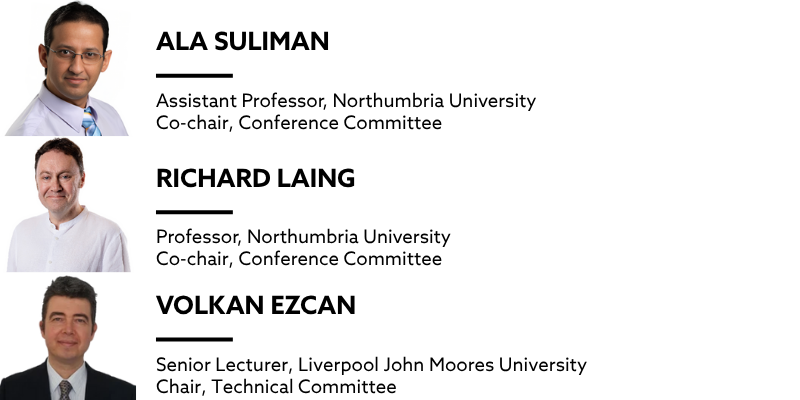
The conference is being organised by the conference committee below and the Northumbria University Event Management Team - Venues at Northumbria.
Thanks to our partners at the NewcastleGateshead Initiative (NGI), attendees can take advantage of special, discounted hotel rates across a range of conveniently located city hotels. Don't miss out — view the hotel selection, compare rates, and book now!

The Conference Dinner will be held on Wednesday 19 August 2026 at St. James' Park, home of the world-famous Newcastle United Football Club.
Dinner menu details will be posted soon.

For general information or enquiries about the conference please email the Conference Committee on tcot.2026@northumbria.ac.uk.
For information about submissions please email Vokan Ezcan on volkan.ezcan@unb.ca .
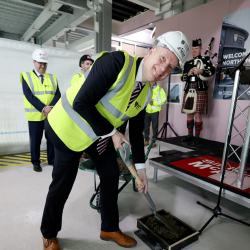
Topping out ceremony marks pivotal moment for centre backed by £50 million investment set to…

A Northumbria University graduate who co-created Bangkok Breaking — one of Thailand's biggest…

An arts festival exploring death, dying and end-of-life choices — led by a Northumbria University…
A medical device company spun out of Northumbria University has reached a significant milestone…

The equivalent weight of one and a half double-decker buses' worth of IT equipment has been…
Researchers at Northumbria University have used the most powerful space telescope ever built…

A Northumbria University professor has been appointed as one of the UK's most influential health…
Newcastle's fifth Climate Change Forum drew a full house – and an energising conversation about…

Ellison Building A, 001 (ELA 001)
-

The Great Hall
-

Northumbria University
-

CCE1 Newcastle Business School
-
