
A Northumbria University PhD student has led an international team of astronomers in creating the first-ever three-dimensional map of Uranus's upper atmosphere, revealing how the ice giant's unusual magnetic field shapes spectacular auroras high above the planet's clouds.
 Using the James Webb Space Telescope,
led by NASA with its partners, ESA (European Space Agency)
and CSA (Canadian Space Agency), Paola Tiranti and her colleagues observed Uranus for
nearly a full rotation, detecting the faint glow from molecules up to 5,000
kilometres above the cloud tops.
Using the James Webb Space Telescope,
led by NASA with its partners, ESA (European Space Agency)
and CSA (Canadian Space Agency), Paola Tiranti and her colleagues observed Uranus for
nearly a full rotation, detecting the faint glow from molecules up to 5,000
kilometres above the cloud tops.
The observations provide the most detailed picture yet of where the planet's auroras form and how energy moves through its atmosphere.
The study, published today in Geophysical Research Letters, also confirms that Uranus's upper atmosphere has continued to cool over the past thirty years – a trend that has been surprising scientists for over three decades.
Auroras occur when energetic particles become trapped in a planet's magnetic field and strike the upper atmosphere, releasing energy that creates a signature glow.
Using Webb's Near-Infrared Spectrograph, the team mapped out the temperature and density of ions in Uranus's ionosphere, a region where the atmosphere becomes ionised and interacts strongly with the planet's magnetic field.
The measurements revealed that temperatures peak between 3,000 and 4,000 kilometres above the cloud tops, whilst ion densities reach their maximum around 1,000 kilometres.
 Speaking about the findings,
lead author Paola Tiranti said: “This is the first time we've been
able to see Uranus's upper atmosphere in three dimensions. With Webb's
sensitivity, we can trace how energy moves upward through the planet's
atmosphere and even see the influence of its lopsided magnetic field.”
Speaking about the findings,
lead author Paola Tiranti said: “This is the first time we've been
able to see Uranus's upper atmosphere in three dimensions. With Webb's
sensitivity, we can trace how energy moves upward through the planet's
atmosphere and even see the influence of its lopsided magnetic field.”
Uranus's magnetosphere is one of the strangest in the Solar System. Unlike Earth, where the magnetic field is relatively aligned with the planet's rotation axis, Uranus's magnetic field is tilted by nearly 60 degrees and offset from the planet's centre. This means its auroras sweep across the surface in complex ways.
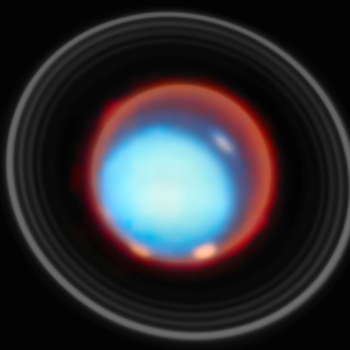
The Webb observations detected two bright auroral bands near Uranus's magnetic poles, together with a distinct depletion in emission and ion density between them – a feature likely linked to how magnetic field lines guide charged particles through the atmosphere. Similar darkened regions have been seen at Jupiter, where magnetic field geometry controls particle flow.
Webb's data also confirmed that Uranus's upper atmosphere is still cooling, extending a trend that began in the early 1990s. The team measured an average temperature of around 426 kelvins (about 150 degrees Celsius), lower than values recorded by ground-based telescopes or previous spacecraft observations.
Understanding why Uranus is cooling, despite being so far from the Sun, could provide crucial insights into how ice giant planets regulate their atmospheric temperature.
 Paola Tiranti said: “By
revealing Uranus's vertical structure in such detail, Webb is helping us
understand the energy balance of the ice giants. This is a crucial step towards
characterising giant planets beyond our Solar System.”
Paola Tiranti said: “By
revealing Uranus's vertical structure in such detail, Webb is helping us
understand the energy balance of the ice giants. This is a crucial step towards
characterising giant planets beyond our Solar System.”
The study is based on data from JWST General Observer programme 5073, led by Dr Henrik Melin of Northumbria University, which used the telescope's Integral Field Unit on 19 January 2025 to observe Uranus for 15 hours.
Planetary scientists from Northumbria University's Solar and Space Physics peak of research excellence have been involved in a number of research projects using data from Webb, specifically exploring the upper atmospheres of our solar system's giant gas planets – Jupiter, Saturn, Uranus and Neptune.
- Deep space telescope captures Neptune's auroras for the first time
- Unveiling Jupiter's upper atmosphere
- Uranus aurora discovery promises new riches from James Webb Space Telescope
- Telescope to provide insight into Solar System light shows
- Telescope reveals unexpected activity above Jupiter's Great Red Spot
The James Webb Space Telescope is the world's premier space science observatory. Webb is solving mysteries in our solar system, looking beyond to distant worlds around other stars, and probing the mysterious structures and origins of our universe and our place in it. Webb is an international program led by NASA with its partners, ESA (European Space Agency) and CSA (Canadian Space Agency).
The paper JWST Discovers the Vertical Structure of Uranus' Ionosphere was published in Geophysical Research Letters on Thursday 19th February at 09:00 ET/14:00 GMT.
Image Credit: ESA/Webb, NASA, CSA, STScI, P. Tiranti, H. Melin, M. Zamani (ESA/Webb)
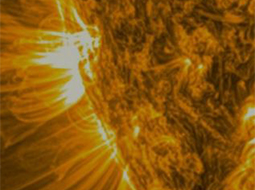
Northumbria University is powering the next generation of space innovation. Learn more about our expert academics, world class research and state of the art facilities.
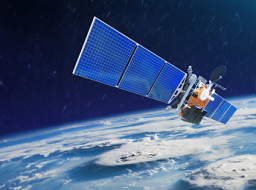
Our North East Space Skills and Technology Centre will be a state of the art £50M facility developed by Northumbria, with investment from the UK Space Agency and the space and satellite division of industry giant Lockheed Martin.

At Northumbria Engineering, Physics and Mathematics are co-located in one ambitious, future-facing school.

Northumbria’s Solar and Space researchers work to understand the physics of the Sun and all aspects of the solar-terrestrial connection to improve space weather forecasting.
Latest News and Features

New Student Health Hub brings joint health and wellbeing support
A new drop-in service is bringing health and wellbeing support for students at both Newcastle…

Researchers aim to grow optical fibres using biology instead of machinery
A new project led by Northumbria University aims to grow optical fibres using proteins, mimicking…

Training the next generation of space scientists
Northumbria University has hosted a major international workshop, bringing together leading…
.png?modified=20261006102851)
International design competition to grow the colour of the future
Researchers at Northumbria University and Imperial College London have launched an international…

Northumbria graduates celebrated at North East Business Awards
Graduate entrepreneurs from Northumbria University are celebrating after winning recognition…

How facial recognition failures harm people with facial differences
Researchers at Northumbria University's Centre for Responsible AI are working with Face Equality…

New Master Research Agreement strengthens commitment to cutting-edge research and innovation
Northumbria University and Lockheed Martin Space UK have signed a new Master Research Agreement,…

Speeding glaciers drive half a century of polar ice loss
The longest satellite record ever assembled shows that Greenland and Antarctica have lost 11.3…
More events
Upcoming events

Next Stop Northumbria
Europa Hotel
-
The Past We Inherit. The Future We Build: Better Decisions Happen Together
The Great Hall, Sutherland Building
-
Next Stop Northumbria
Manchester Marriott Hotel Piccadilly
-
