
Recommendations by academics from Northumbria University have been included in a new report by the British Academy, exploring how to tackle the rise of digital poverty.
Across the UK there are huge disparities in digital access, digital skills, usage, and outcomes, illustrated by the fact that ‘among people living on household incomes under £25,000, one in five never use the internet – rising to nearly a third of disabled people and nearly a half of those aged 65 or over’.
To inform policy thinking around the crucial challenge of addressing inequality, the British Academy commissioned six projects that examined different aspects of digital poverty in the UK.
 Among them was a project led
by Northumbria’s Massimo Ragnedda, Associate Professor in Media and Communication; and Maria Laura Ruiu, Assistant Professor in Sociology and Criminology, entitled Living on the edge of the digital poverty.
Among them was a project led
by Northumbria’s Massimo Ragnedda, Associate Professor in Media and Communication; and Maria Laura Ruiu, Assistant Professor in Sociology and Criminology, entitled Living on the edge of the digital poverty.
Their research investigates the links between digital poverty and social inequalities in England, particularly in relation to the impact of Covid-19.
They discovered the pandemic has exacerbated digital inequalities in the UK and highlighted how millions of people in the UK are living in digital poverty, or at risk of doing so.
Dr Ragnedda explains: “Digital poverty is accrued across the life course and increases the risk of exclusion, particularly for the most disadvantaged and vulnerable groups in society.
“The shift to online due to the Covid-19 pandemic has exposed massive digital disparities in terms of reliable digital connectivity, level of digital skills and competencies, and digital equipment needed to fully participate in a digital society.
“The pandemic has dramatically accelerated the need to use the Internet for everyday activities, exacerbating fragility and inequalities already present in society and highlighting new ones.”
Dr Ruiu added: “With the advent of online learning and the increasing number of people forced to work from home, today more than ever having a reliable internet connection, a digital device and proper digital skills are crucial to engaging with education, employment and the health system.
“By contrast, those who do not have these effective primary assets can remain excluded from society, becoming “second class” citizens.
“For this reason, accessing and properly utilising ICTs can be defined as a civil and social right, a necessity to fully participate in society.”
Highlights from their research has been included in the British Academy’s new report – Understanding Digital Poverty and Inequality in the UK, which identifies six lessons to shape policy that effectively addresses digital poverty and inequality. They are:
- Addressing digital poverty involves more than improving access – interventions must empower people and places to benefit from digital access.
- Local resources and intermediaries can be valuable assets in tackling place-based digital poverty, and the public sector has a crucial role to play in enabling them.
- Strategies to tackle digital poverty are important components of broader policies of tackling inequality.
- Policies should consider how and why intersecting inequalities are likely to exacerbate. digital poverty and design interventions that can benefit those most at risk of digital poverty
- People can move in and out of digital poverty over time.
- Consider policy interventions that can adapt to demographic and economic changes, through consistent and long-term investment.
The Understanding Digital Poverty and Inequality in the UK report sits alongside and feeds into an Academy project on Technology and Inequality.
The Academy’s Technology and Inequality project was prompted by a request, in early 2022, by Sir Patrick Vallance and the Government Office for Science to conduct an independent project on the topic of technology and inequality.
This work seeks to improve our understanding of how government can play a key role in supporting access to, uptake of, and investment in technologies that can be critical to delivering broad public objectives, in a way that ensures inequalities do not become entrenched.
A new evidence hub will collate the Academy’s Technology and Inequality work.
Dr Ragnedda and Dr Ruiu are among academics working across Northumbria University, carrying out research into Computerised Society and Digital Citizens, in response to the challenges faced by a society increasingly dependent on interactive digital platforms, services, apps and devices.
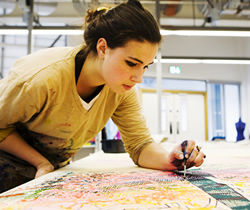
Northumbria’s Arts Department Offers A Stimulating And Dynamic Learning Environment In Which To Study Flexible, Student-Orientated Courses. Staff Are Globally-Renowned, Research-Active Experts In Fine Art, Performance And Visual Cultures.

The Department Offers An Exciting And Extensive Range Of High-Quality Undergraduate And Post-Graduate Courses In Criminology, Politics, And Sociology.
This is the place to find all the latest news releases, feature articles, expert comment, and video and audio clips from Northumbria University
Latest News and Features

New platform maps charity support for the Armed Forces community
Pioneering data platform maps where the Armed Forces community receive support from charities

Northumbria co-leads study on fairer support for families
A major study co-led by Northumbria University will test whether attachment assessments lead…

New AHRC research shows how community innovation can power the next phase of devolution.
New research published today by the AHRC Creative Communities programme provides fresh evidence…

Free sessions to help families navigate the SEND system
Northumbria University's award-winning Student Law Office is launching SEND Decoded, a series…

New Doctoral Training Programme will tackle key polar science questions with a reduced carbon footprint
The Net Zero Polar Science (NZPS) Doctoral Training Programme (DTP) has welcomed its first…

New Student Health Hub brings joint health and wellbeing support
A new drop-in service is bringing health and wellbeing support for students at both Newcastle…

Researchers aim to grow optical fibres using biology instead of machinery
A new project led by Northumbria University aims to grow optical fibres using proteins, mimicking…

Training the next generation of space scientists
Northumbria University has hosted a major international workshop, bringing together leading…
More events
Upcoming events

Next Stop Northumbria
Europa Hotel
-
The Past We Inherit. The Future We Build: Better Decisions Happen Together
The Great Hall, Sutherland Building
-
Next Stop Northumbria
Manchester Marriott Hotel Piccadilly
-
