-
Study
-
Quick Links
- Open Days & Events
- Real-World Learning
- Unlock Your Potential
- Tuition Fees, Funding & Scholarships
- Real World Learning
-
Undergraduate
- Application Guides
- UCAS Exhibitions
- Extended Degrees
- School & College Outreach
- Information for Parents
-
Postgraduate
- Application Guide
- Postgraduate Research Degrees
- Flexible Learning
- Change Direction
- Register your Interest
-
Student Life
- Students' Union
- The Hub - Student Blog
- Accommodation
- Northumbria Sport
- Support for Students
-
Learning Experience
- Real-World Learning
- Research-enriched learning
- Graduate Futures
- The Business Clinic
- Study Abroad
-
-
International
International
Northumbria’s global footprint touches every continent across the world, through our global partnerships across 17 institutions in 10 countries, to our 277,000 strong alumni community and 150 recruitment partners – we prepare our students for the challenges of tomorrow. Discover more about how to join Northumbria’s global family or our partnerships.
View our Global Footprint-
Quick Links
- Course Search
- Undergraduate Study
- Postgraduate Study
- Information for Parents
- London Campus
- Northumbria Pathway
- Cost of Living
- Sign up for Information
-
International Students
- Information for International Students
- Northumbria and your Country
- International Events
- Application Guide
- Entry Requirements and Education Country Agents
- Global Offices and Regional Teams
- English Requirements
- English Language Centre
- International student support
- Cost of Living
-
International Fees and Funding
- International Undergraduate Fees
- International Undergraduate Funding
- International Masters Fees
- International Masters Funding
- International Postgraduate Research Fees
- International Postgraduate Research Funding
- Useful Financial Information
-
International Partners
- Agent and Representatives Network
- Global Partnerships
- Global Community
-
International Mobility
- Study Abroad
- Information for Incoming Exchange Students
-
-
Business
Business
The world is changing faster than ever before. The future is there to be won by organisations who find ways to turn today's possibilities into tomorrows competitive edge. In a connected world, collaboration can be the key to success.
More on our Business Services-
Business Quick Links
- Contact Us
- Business Events
- Research and Consultancy
- Education and Training
- Workforce Development Courses
- Join our mailing list
-
Education and Training
- Higher and Degree Apprenticeships
- Continuing Professional Development
- Apprenticeship Fees & Funding
- Apprenticeship FAQs
- How to Develop an Apprentice
- Apprenticeship Vacancies
- Enquire Now
-
Research and Consultancy
- Space
- Energy
- AI Futures
- CHASE: Centre for Health and Social Equity
- NESST
-
-
Research
Research
Northumbria is a research-rich, business-focused, professional university with a global reputation for academic quality. We conduct ground-breaking research that is responsive to the science & technology, health & well being, economic and social and arts & cultural needs for the communities
Discover more about our Research-
Quick Links
- Research Peaks of Excellence
- Academic Departments
- Research Staff
- Postgraduate Research Studentships
- Research Events
-
Research at Northumbria
- Interdisciplinary Research Themes
- Research Impact
- REF
- Partners and Collaborators
-
Support for Researchers
- Research and Innovation Services Staff
- Researcher Development and Training
- Ethics, Integrity, and Trusted Research
- University Library
- Vice Chancellors Fellows
-
Research Degrees
- Postgraduate Research Overview
- Doctoral Training Partnerships and Centres
- Academic Departments
-
Research Culture
- Research Culture
- Research Culture Action Plan
- Concordats and Commitments
-
-
About Us
-
About Northumbria
- Our Strategy
- Our Staff
- Our Schools
- Place and Partnerships
- Leadership & Governance
- University Services
- Northumbria History
- Contact us
- Online Shop
-
-
Alumni
Alumni
Northumbria University is renowned for the calibre of its business-ready graduates. Our alumni network has over 253,000 graduates based in 178 countries worldwide in a range of sectors, our alumni are making a real impact on the world.
Our Alumni - Work For Us
In an article written for The Conversation*, Mark Middling, Assistant Professor of Accounting at Northumbria University discusses the impact of Everton FC's recent ten point deduction for breaking financial rules.
On November 16 2023, fans of Everton FC may have been reasonably satisfied about how the football season was shaping up. They were 14th in the English Premier League, and had recently recorded wins against West Ham and Crystal Palace.
Then on November 17 everything changed. The club were docked ten points for breaching the league’s “profitability and sustainability” rules, pushing them down to 19th place and into the relegation zone.
The rules that Everton broke are designed to force clubs into being financially sustainable businesses, by allowing them to build up footballing losses (separate to spending on things like infrastructure or community projects) of no more than £105 million over a three-year period.
Everton were found to have exceeded this limit by £19.5 million, with relevant losses of £124.5 million to the end of the 2021-2022 season. At this time Everton had the largest Premier League wage bill in proportion to revenue and failed to achieve desired returns when trying to sell unwanted players.
Everton originally filed returns showing £87 milllion of losses, well within the limit. However, an independent commission decided that this figure was lower than the true value.
Everton also claimed there were mitigating circumstances, including losses on “player X” who was arrested in 2021 and ultimately had his contract terminated, additional losses due to an inability to sell players because of COVID-19, and the war in Ukraine affecting the club’s sponsorship deals with Russian companies. But the excuses were dismissed by the commission which said the breach was of Everton’s “own making” and due to “mismanagement”.
Everton are reportedly “fuming” with what they call an “unprecedented and disproportionate” decision, which they are expected to appeal.
Everton said in a statement: “The club believes that the commission has imposed a wholly disproportionate and unjust sporting sanction.”
It added: “Both the harshness and severity of the sanction imposed by the commission are neither a fair nor a reasonable reflection of the evidence submitted.” The severity of the punishment has even been debated in parliament.
Yet some consider Everton to have been lucky. If the points deduction had been applied last season, when Everton were in a tense relegation battle, they almost certainly would have been demoted to the Championship. This season, under new manager Sean Dyche, they still have a decent chance of staying in the Premier League, despite the points deduction.
But if Everton are relegated, the financial consequences could be severe. The club’s annual revenue, last listed as £181 million, would fall significantly due to massively reduced broadcast income (and despite the so-called “parachute prepayments” that clubs demoted from the top flight receive).
Then there’s the cost of the new £760 million 53,000 seater stadium, which is due to be completed in 2024, and possible legal claims for damages of up to £300 million by six clubs, including Burnley, Leeds and Leicester, who were recently relegated from the Premier League while Everton clung on.
Sticky situation for the toffees
In effect, Everton’s rule-breaking loss of £19.5 million over the limit may lead to much bigger losses further down the line. And this could well act as a strong deterrent to other clubs thinking of pushing football’s financial boundaries.
It may also be a show of force by the Premier League to try and limit the scope of the soon-to-be appointed independent football regulator, which some in the league consider to be an intervention too far into the business of football. Perhaps the Premier League is trying to demonstrate that regulatory powers should be limited and that it is perfectly capable of governing itself.
Of course, the fan-led review of English football came to a very different conclusion, which is why a regulator is part of the UK government’s plans. Its aims are to prevent breakaway leagues, limit undesirable club owners, and further reduce financial unsustainability in English football, including making clubs more resilient to financial shocks such as the one engendered by COVID.
One MP has argued that the severity of Everton’s punishment is a clear indication that an independent regulator is needed – sentiments that have been echoed by the Football Supporters Association. It is entirely plausible to argue that if an independent regulator had been in place for the past five years, Everton may not have found itself in this position in the first place. The future regulator could, for example, operate a licensing system in which clubs have to prove they are being run within certain financial criteria – or risk having their licence revoked.
For now, the exact details of the regulator’s remit are yet to be decided. But a floodgate of financial sustainability controls seems to have been opened, with punishments and deterrents a key part of the sport’s future culture. It may not be what Everton wants – but it could just be what English football needs.
*This article was originally published by The Conversation. Please see here for republishing guidelines.
Invest in our experience – Northumbria has been delivering programmes in sport, exercise and rehabilitation for over 30 years and is one of the “top 10” sport Universities in the UK.
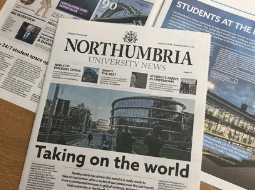
Northumbria University News is packed full of news and features covering everything from research projects and business partnerships to student and staff awards.
This is the place to find all the latest news releases, feature articles, expert comment, and video and audio clips from Northumbria University
Latest News and Features
Working-class roots drive North East graduate’s AI healthcare revolution
A Northumbria University graduate has developed groundbreaking AI technology that could save…
Families back nationwide school holiday activities programme in record survey
A landmark survey of 20,000 parents and carers has revealed overwhelming support for the Government's…
Scaling-up global solar panel manufacturing sustainably
Pioneering research led by Northumbria University shows how the renewable energy sector can…
Business leaders and universities unite to pave way for a new era of skilled graduate jobs
Leaders from national, international and regional businesses including Greggs, Siemens Energy…
Northumbria Professor recognised for pioneering work on domestic abuse and gender-based violence
A leading legal academic from Northumbria University has been awarded the prestigious title…
International prize for pioneering Down syndrome dementia research
A Northumbria University researcher has won a prestigious international competition to develop…
Researchers awarded NIHR funding to support real world evaluations to improve public health interventions
Researchers from the University of Glasgow and Northumbria University have been awarded £2.5…
From care leaver to government AI leader: Northumbria graduate's extraordinary journey
A Northumbria University graduate who grew up in the care system in County Durham has been…
Upcoming events
On Weaving
Gallery North
EY Degree Apprenticeship Information Event
Northumbria University
-
Next Stop Northumbria
The Queens Hotel
-