-
Study
-
Quick Links
- Open Days & Events
- Real-World Learning
- Unlock Your Potential
- Tuition Fees, Funding & Scholarships
- Real World Learning
-
Undergraduate
- Application Guides
- UCAS Exhibitions
- Extended Degrees
- School & College Outreach
- Information for Parents
-
Postgraduate
- Application Guide
- Postgraduate Research Degrees
- Flexible Learning
- Change Direction
- Register your Interest
-
Student Life
- Students' Union
- The Hub - Student Blog
- Accommodation
- Northumbria Sport
- Support for Students
-
Learning Experience
- Real-World Learning
- Research-enriched learning
- Graduate Futures
- The Business Clinic
- Study Abroad
-
-
International
International
Northumbria’s global footprint touches every continent across the world, through our global partnerships across 17 institutions in 10 countries, to our 277,000 strong alumni community and 150 recruitment partners – we prepare our students for the challenges of tomorrow. Discover more about how to join Northumbria’s global family or our partnerships.
View our Global Footprint-
Quick Links
- Course Search
- Undergraduate Study
- Postgraduate Study
- Information for Parents
- London Campus
- Northumbria Pathway
- Cost of Living
- Sign up for Information
-
International Students
- Information for International Students
- Northumbria and your Country
- International Events
- Application Guide
- Entry Requirements and Education Country Agents
- Global Offices and Regional Teams
- English Requirements
- English Language Centre
- International student support
- Cost of Living
-
International Fees and Funding
- International Undergraduate Fees
- International Undergraduate Funding
- International Masters Fees
- International Masters Funding
- International Postgraduate Research Fees
- International Postgraduate Research Funding
- Useful Financial Information
-
International Partners
- Agent and Representatives Network
- Global Partnerships
- Global Community
-
International Mobility
- Study Abroad
- Information for Incoming Exchange Students
-
-
Business
Business
The world is changing faster than ever before. The future is there to be won by organisations who find ways to turn today's possibilities into tomorrows competitive edge. In a connected world, collaboration can be the key to success.
More on our Business Services-
Business Quick Links
- Contact Us
- Business Events
- Research and Consultancy
- Education and Training
- Workforce Development Courses
- Join our mailing list
-
Education and Training
- Higher and Degree Apprenticeships
- Continuing Professional Development
- Apprenticeship Fees & Funding
- Apprenticeship FAQs
- How to Develop an Apprentice
- Apprenticeship Vacancies
- Enquire Now
-
Research and Consultancy
- Space
- Energy
- AI and Tech
- CHASE: Centre for Health and Social Equity
- NESST
-
-
Research
Research
Northumbria is a research-rich, business-focused, professional university with a global reputation for academic quality. We conduct ground-breaking research that is responsive to the science & technology, health & well being, economic and social and arts & cultural needs for the communities
Discover more about our Research-
Quick Links
- Research Peaks of Excellence
- Academic Departments
- Research Staff
- Postgraduate Research Studentships
- Research Events
-
Research at Northumbria
- Interdisciplinary Research Themes
- Research Impact
- REF
- Partners and Collaborators
-
Support for Researchers
- Research and Innovation Services Staff
- Researcher Development and Training
- Ethics, Integrity, and Trusted Research
- University Library
- Vice Chancellors Fellows
-
Research Degrees
- Postgraduate Research Overview
- Doctoral Training Partnerships and Centres
- Academic Departments
-
Research Culture
- Research Culture
- Research Culture Action Plan
- Concordats and Commitments
-
-
About Us
-
About Northumbria
- Our Strategy
- Our Staff
- Our Schools
- Place and Partnerships
- Leadership & Governance
- University Services
- Northumbria History
- Contact us
- Online Shop
-
-
Alumni
Alumni
Northumbria University is renowned for the calibre of its business-ready graduates. Our alumni network has over 253,000 graduates based in 178 countries worldwide in a range of sectors, our alumni are making a real impact on the world.
Our Alumni - Work For Us
Dr Sarah Hughes, Assistant Professor in Human Geography at Northumbria University, discusses the situation facing new refugees in the UK.
When someone applies for asylum in the UK today, they may be waiting months or even years for their application to be decided, thanks to the record-high backlog that the government is failing to tackle.
The vast majority of asylum claims are successful. Up to 77% of applications have been granted refugee status since 2021, a substantial increase from the pre-pandemic years, when only one-third of applications received a positive decision. But approval of an asylum application is not an instant guarantee of a safe and secure life in the UK. On the contrary, new refugees are immediately thrust into another period of limbo that puts them at risk of poverty and homelessness.
While awaiting their decision, new refugees in the UK are housed in accommodation provided by the government – currently in hotels, dispersal accommodation, or sites such as the Bibby Stockholm barge – and receive a small amount of money (£6.77 per day for adults) for food, clothing and toiletries. When awarded refugee status, they must leave their accommodation and are cut off from government support.
They can now work, rent a house and access state benefits, including social housing. But this transition happens very quickly, and new refugees have only 28 days, including weekends and bank holidays, to access the essential services they need to rebuild their lives.
Organisations supporting refugees have called for the period to be extended to 56 days, to give people adequate time to set up their lives in the UK and give local government time to offer needed support. This has been discussed in both houses of parliament, but no progress has been made.
It would also bring this period in line with existing legislation on homelessness reduction which requires local authorities to work to try to find accommodation for anyone at risk of becoming homeless in the next 56 days.
Yet the Home Office appears to have moved in the opposite direction. Refugee organisations have reported that some people are receiving just seven days’ notice to leave their accommodation.
The Home Office has said that the policy has not changed, telling the Guardian that “an asylum seeker remains eligible for asylum support for a prescribed period from the day they are notified of the decision on their claim”.
Previously, new refugees received a letter informing them that their existing support and accommodation will end in 28 days. This letter is crucial to start homelessness proceedings at local authority level, and to give refugees a timeline to plan for changing circumstances.
Any shortening of the guaranteed 28-day notice period would put impossible pressure on local authorities to help refugees find accommodation and would further push people into poverty and homelessness.
The 'destitution gap'
In my ongoing research, I’ve conducted dozens of interviews with new refugees, as well as representatives from local authorities and charities in the north of England. Their comments reveal how this 28-day period often results in homelessness, labour exploitation and financial destitution.
The British Red Cross has labelled the time between the end of government asylum support and access to universal credit and other resources the “destitution gap”. During this time, new refugees frequently turn to food banks and charities, or take on exploitative jobs. As one person explained:
"Twenty-eight days is not enough to sort anything, and your money is cut … you ended up being homeless, not having a place to go and not having something to eat."
New refugees are not allowed to work while awaiting a decision, and therefore are unable to save money, effectively meaning many cannot support themselves straight away.
To access benefits such as universal credit they need a national insurance number. But my research highlights that this is not given to a new refugee until their identification card is sent out, which can be several days (or weeks) after the positive decision, and many cards arrive containing errors.
Even a timely application can keep new refugees in the destitution gap – it takes approximately five weeks for the first payment of universal credit to arrive in a bank account.
New refugees also face difficulty finding somewhere to live. Accessing the private rental market is near impossible without a deposit, job, or reference. Social housing is in short supply in the UK, and the local authorities I interviewed rarely found accommodation for new refugees within 28 days.
Many new refugees become homeless, and are moved into hostels, bed and breakfast accommodation or end up on the street. Children may move schools, and new refugees are uprooted from their support systems, faith networks and communities.
Local authorities and support organisations help to bridge this gap. They work with new refugees to find accommodation, take them to Job Centre appointments, set up bank accounts and navigate the online world of benefits. But even their help is limited in such a short time frame. As one local authority representative told me:
"[People] are moving from one terrible system that’s falling apart to another terrible system that’s falling apart … they might be safe in some ways but that doesn’t mean that everything is going to be OK now."
This high level of change in a short period causes acute anxiety for new refugees, affecting their ability to move on and settle in the UK. Given that refugees have often experienced significant trauma, the threat of homelessness, financial destitution and a lack of access to food when they are granted status can be incredibly difficult to cope with. As one refugee, a single mother with a child recounted:
"When you get refugee status the struggle doesn’t end. It is another big struggle which starts. I need to leave this property, I need to apply for universal credit, I need to leave everything. Am I going to be homeless? What’s going to happen?"
This article was originally published by The Conversation.
Geography At Northumbria University Encompasses All Of Our Work In Physical And Human Geography, Environmental Science And Management, Health & Safety, And Disaster Management.
This is the place to find all the latest news releases, feature articles, expert comment, and video and audio clips from Northumbria University
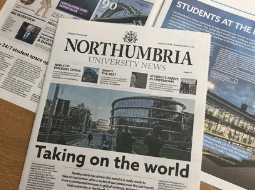
Northumbria University News is packed full of news and features covering everything from research projects and business partnerships to student and staff awards.
Latest News and Features
National Fellowship honours Northumbria nursing leader
A leading academic in palliative and end-of-life care at Northumbria University has been recognised…
£1.3m national study launches to evaluate changes to police involvement in mental health crisis responses
A major new research project will examine how changes to police involvement in mental health…
Royal Honour as leading researcher awarded Polar Medal
Professor John Woodward has been awarded The Polar Medal in recognition of his outstanding…
Report calls on the UK banking industry to consider interventions that "design out" economic abuse
Researchers have published the findings of a ground-breaking study which brought together victim-survivors…
Northumbria's ‘Banana Split: Unpeeling a New Energy Source’ project highly commended at prestigious Green Gown Awards
A Northumbria University research project has been highly commended at the 2025 Green Gown…
Northumbria ranked most sustainable university in the North East for fifth consecutive year
Northumbria University has been rated as ‘1st class’ for sustainability and is once again the…
Northumbria expert delivers training to help address victim-blaming language
A Northumbria University academic is leading pioneering training to support police forces across…
Northumbria University launches national AI challenge inviting young people to imagine a hopeful future
Northumbria University has launched the Hopeful Futures AI Challenge, a groundbreaking national…
Upcoming events
Archives to Action: Historical Evidence for Policy Reform
Virtual Workshop
-
Viruses of Microbes-UK (VoM-UK) Conference 2026
Northumbria University
Holocaust Memorial Day 2026 - Bridging Generations: Generational Voices and Silences
The Great Hall
-
Commercialising SHAPE Innovations and Impact
Northumbria University
-