
A team led by researchers from Northumbria University have been awarded the 2024 Outreach Prize by the Microbiology Society in recognition of their efforts and commitment to raising awareness of microbiology among future generations.
Dr Amanda Jones and Dr Helen Hooper from Northumbria’s Department of Applied Sciences, joined forces with one of the University’s Senior Technicians, Callum Crawford, and graduate, Andrew Bell, who is now a primary school Assistant Headteacher. Together, they used their knowledge in teaching microbial research and molecular biology to design and implement a project for 10 and 11-year-old primary school children called What is a microorganism and where do they grow?
The project, which has since run successfully in two Newcastle schools, was inspired by the impact of the COVID-19 pandemic on children, who had their lives hugely affected by something that they struggle to comprehend, given that it can’t be seen. This simple fact drove their decision to work together to develop a programme of hands-on activities that reveal the hidden world of microorganisms to children in an accessible and memorable way.

Dr Jones explained further: “Children have been hugely affected by the COVID-19 pandemic, which led to us developing a programme of hands-on activities to reveal the hidden world of microorganisms, to children in a memorable way.
“We pooled both microbiological and primary teaching expertise to create an enquiry-based programme to develop children’s understanding of: What are microorganisms? Where do microorganisms grow? What substances kill microorganisms?
“We used workshops as well as hands-on approaches where Year 5 children became researchers and designed a microbiological enquiry; the first swabbing surfaces to test for the presence of microorganisms using a hand-held ATP luminometer. The second enquiry was to explore a range of antimicrobial agents such as hand sanitiser, disinfectants and even garlic juice and how effective they were at killing E. coli.”
Finally, a field trip to visit the University enabled the children to further develop their practical skills by investigating the DNA of Green Fluorescent Protein (GFP) transformed E. coli by pouring and loading agarose gels and performing electrophoresis – a procedure to separate biological molecules.
Funding from the Royal Society Partnership scheme supported the purchase of equipment and resources necessary for the project and has ensured that activities are sustainable beyond the project end date for each school.
Dr Hooper, who teaches across a range of Applied Sciences degrees at Northumbria, said: “I embed the opportunity for students to engage with volunteering to help develop and deliver this primary school outreach into one of my modules, The Impact of Science on Society, specifically to support and encourage Northumbria students to develop their experience, communication skills and confidence.”
On receiving the 2024 Outreach Prize, Dr Jones added: “Working with young children and teaching them about microbiology is a passion of ours and to win this Outreach Prize is a great honour.”
The Microbiology Society Outreach Prize is awarded annually by the Society to an individual or group of microbiologists who have demonstrated an outstanding outreach initiative. Dr Jones and Dr Hooper delivered a presentation on their work during the Microbiology Society's Committees Day, held in London in October.
Dr Peter Cotgreave, Chief Executive of the Microbiology Society, said: “The Microbiology Society’s Outreach Prize is awarded annually for an outstanding outreach initiative and in Dr Amanda Jones and her team, including Andrew Bell, Callum Crawford and Dr Helen Hooper, we recognised a fantastic team effort and deserved win. Their commitment to raising awareness of microbiology among future generations, developing a programme of hands-on activities that reveal the hidden world of microorganisms to children, is truly inspiring.”
At Northumbria University, a range of outreach work takes place with children, families and teachers to support young people to feel more confident in considering a career in science, technology, engineering and maths (STEM) subjects. NUSTEM was established in 2014 with the aim of engaging more young people in the STEM subjects, inspiring future generations of scientists and engineers, and redressing the balance of female students and under-represented groups studying STEM subjects in universities.
Over the last decade the group has worked with over 160,000 primary and secondary school pupils along with their families and teachers to foster an enjoyment of STEM subjects in young people, with the aim of encouraging more to consider careers in STEM.
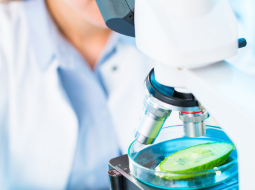
The Department of Applied Sciences has an exciting and extensive portfolio of subjects including biology, biomedical sciences, chemistry, forensic science, food and nutritional sciences.
This is the place to find all the latest news releases, feature articles, expert comment, and video and audio clips from Northumbria University
Northumbria University News is packed full of news and features covering everything from research projects and business partnerships to student and staff awards.
Latest News and Features

UK network to accelerate the development of sustainable surface technologies
A new national network led by Newcastle University and Northumbria University, in partnership…

Criminologist wins acclaimed Philip Leverhulme Prize to pioneer a new criminology of the offshore world
A Northumbria University criminologist has been awarded a Philip Leverhulme Prize, one of the…

New platform maps charity support for the Armed Forces community
Pioneering data platform maps where the Armed Forces community receive support from charities

Northumbria co-leads study on fairer support for families
A major study co-led by Northumbria University will test whether attachment assessments lead…

New AHRC research shows how community innovation can power the next phase of devolution.
New research published today by the AHRC Creative Communities programme provides fresh evidence…

Free sessions to help families navigate the SEND system
Northumbria University's award-winning Student Law Office is launching SEND Decoded, a series…

New Doctoral Training Programme will tackle key polar science questions with a reduced carbon footprint
The Net Zero Polar Science (NZPS) Doctoral Training Programme (DTP) has welcomed its first…

New Student Health Hub brings joint health and wellbeing support
A new drop-in service is bringing health and wellbeing support for students at both Newcastle…
More events
Upcoming events

Next Stop Northumbria
Manchester Marriott Hotel Piccadilly
-

-
Magnetospheric Multiscale Science Working Team Meeting
Sutherland Building

Christmas Market and Tree lighting
Northumbria University
-
