
-
Study
-
Quick Links
- Open Days & Events
- Real-World Learning
- Unlock Your Potential
- Tuition Fees, Funding & Scholarships
- Real World Learning
-
Undergraduate
- Application Guides
- UCAS Exhibitions
- Extended Degrees
- School & College Outreach
- Information for Parents
-
Postgraduate
- Application Guide
- Postgraduate Research Degrees
- Flexible Learning
- Change Direction
- Register your Interest
-
Student Life
- Students' Union
- The Hub - Student Blog
- Accommodation
- Northumbria Sport
- Support for Students
-
Learning Experience
- Real-World Learning
- Research-enriched learning
- Graduate Futures
- The Business Clinic
- Study Abroad
-
-
International
International
Northumbria’s global footprint touches every continent across the world, through our global partnerships across 17 institutions in 10 countries, to our 277,000 strong alumni community and 150 recruitment partners – we prepare our students for the challenges of tomorrow. Discover more about how to join Northumbria’s global family or our partnerships.
View our Global Footprint-
International Students
- Information for International Students
- Northumbria and your Country
- International Student Events
- Application Guide
- Entry Requirements and Education Country Agents
- Global Offices and Regional Teams
- English Requirements
- English Language Centre
- International student support
- Cost of Living
-
International Fees and Funding
- International Undergraduate Fees
- International Undergraduate Funding
- International Masters Fees
- International Masters Funding
- International Postgraduate Research Fees
- International Postgraduate Research Funding
- Useful Financial Information
-
International Partners
- Agent and Representatives Network
- Global Partnerships
- Global Community
-
International Mobility
- Study Abroad
- Information for Incoming Exchange Students
-
-
Business
Business
The world is changing faster than ever before. The future is there to be won by organisations who find ways to turn today's possibilities into tomorrows competitive edge. In a connected world, collaboration can be the key to success.
More on our Business Services-
Business Quick Links
- Contact Us
- Business Events
- Research and Consultancy
- Education and Training
- Workforce Development Courses
- Join our mailing list
-
Education and Training
- Higher and Degree Apprenticeships
- Continuing Professional Development
- Apprenticeship Fees & Funding
- Apprenticeship FAQs
- How to Develop an Apprentice
- Apprenticeship Vacancies
- Enquire Now
-
Research and Consultancy
- Space
- Energy
- AI Futures
- CHASE: Centre for Health and Social Equity
- NESST
-
-
Research
Research
Northumbria is a research-rich, business-focused, professional university with a global reputation for academic quality. We conduct ground-breaking research that is responsive to the science & technology, health & well being, economic and social and arts & cultural needs for the communities
Discover more about our Research-
Quick Links
- Research Peaks of Excellence
- Academic Departments
- Research Staff
- Postgraduate Research Studentships
- Research Events
-
Research at Northumbria
- Interdisciplinary Research Themes
- Research Impact
- REF
- Partners and Collaborators
-
Support for Researchers
- Research and Innovation Services Staff
- Researcher Development and Training
- Ethics, Integrity, and Trusted Research
- University Library
- Vice Chancellors Fellows
-
Research Degrees
- Postgraduate Research Overview
- Doctoral Training Partnerships and Centres
- Academic Departments
-
Research Culture
- Research Culture
- Research Culture Action Plan
- Concordats and Commitments
-
-
About Us
-
About Northumbria
- Our Strategy
- Our Staff
- Our Schools
- Place and Partnerships
- Leadership & Governance
- University Services
- Northumbria History
- Contact us
- Online Shop
-
-
Alumni
Alumni
Northumbria University is renowned for the calibre of its business-ready graduates. Our alumni network has over 253,000 graduates based in 178 countries worldwide in a range of sectors, our alumni are making a real impact on the world.
Our Alumni - Work For Us
Adults who use Instagram are no more likely to suffer from anxiety, depression or loneliness than that those who don’t, according to new research.
The UK study, presented at the British Psychological Society’s Cyberpsychology Section Conference, also found that there was no significant link between passive use (browsing) or active use (posting videos and images or interacting with others’ posts) of Instagram and levels of anxiety, depression and loneliness.
The study used a nationally representative sample of UK adults, with an average age of 44.
While some previous studies* have found a negative link between mental wellbeing and social media use, particularly around issues of body image and social comparisons of ‘idealised’ posts, the research has often had a female bias and a focus on younger adults (18-30). The study authors say that often little consideration is given to differences in demographics when considering the impact of social media use on wellbeing.
In the current study, Instagram users (372) and non-Instagram users (100) were ‘matched’ to take account of age, gender, education and nationality. The sample included 248 women and 219 men, as well as two people who identified as ‘other’ and three who preferred not to say, with participants aged between 19 and 82.
Participants were asked whether they used Instagram or not, and Instagram users were questioned about whether and how often they engaged with three types of Instagram use: Interaction (actively posting/commenting on content), broadcast (posting/uploading content), and browsing (passively looking at content without leaving comments or interacting with anyone).
Levels of anxiety, depression and loneliness were assessed through widely used questionnaires.**
The research was carried out by Dr Sam Roberts, of Liverpool John Moores University; and Professor Thomas Pollet, Connor Malcolm and Dr Kristofor McCarty of Northumbria University's Department of Psychology.
Dr Roberts said: “We know that different groups may be affected in different ways by Instagram usage, and our study is one which adds to a body of research which has found that the overall use of social media on the wellbeing of adults is very small.
“The average age of our study participants was a lot older than the average age of those who’ve taken part in previous research, which could have impacted the findings, and also suggests that different groups respond differently to social media and its possible impact on wellbeing.”
Dr Roberts also said that what people view on social media can influence their wellbeing too. “Because the content on individuals’ Instagram and other social media feeds can vary immensely, exposure to different types of content will have different effects on users.
“As such, going forward, it’s important that research is done over a longer period of time, and that it examines the type of content that people are looking at and engaging with.”
The study authors point out that as the data on different types of Instagram use is self-reported, it could contain inaccuracies. A further limitation of the study is its cross-sectional nature, meaning data was collected at only one point in time.
*Reer et al (2019) Psychosocial well-being and social media engagement: The mediating roles of social comparison orientation and fear of missing out.
Brown and Tiggemann (2016), Attractive celebrity and peer images on Instagram: Effect on women’s mood and body image
**The Hospital Anxiety and Depression Scale was used to measure levels of anxiety and depression. The Revised UCLA Loneliness Scale was used to measure loneliness.
Northumbria University's Department of Psychology demonstrates a commitment to excellence, manifest in first-class teaching and learning underpinned by high quality research, and promoting business facing professional engagement.
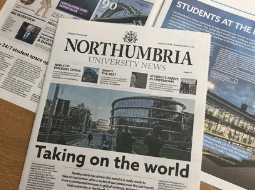
This is the place to find all the latest news releases, feature articles, expert comment, and video and audio clips from Northumbria University

Northumbria University News is packed full of news and features covering everything from research projects and business partnerships to student and staff awards.
Latest News and Features
University partnership brings space research to life for school pupils
A North East school has partnered with solar and space physics experts from Northumbria University…
Telescope reveals surprising secrets in Jupiter's northern lights
An international team of scientists, led by a PhD researcher from Northumbria University, has…
Northumbria Film graduates receive Royal Television Society honours
Two Northumbria University Film graduates have won Royal Television Society (RTS) Student Awards…
Scientists reveal the best and worst-case scenarios for a warming Antarctica
A new analysis of decades of research on the Antarctic Peninsula, involving experts from Northumbria…
PhD student maps mysterious upper atmosphere of Uranus for the first time
A Northumbria University PhD student has led an international team of astronomers in creating…
Developing technology to help empower young innovators across the globe
Northumbria University researchers have joined forces with the International Federation of…
Working-class roots drive North East graduate’s AI healthcare revolution
A Northumbria University graduate has developed groundbreaking AI technology that could save…
Families back nationwide school holiday activities programme in record survey
A landmark survey of 20,000 parents and carers has revealed overwhelming support for the Government's…
Upcoming events
Launch of the Northern Interprofessional Education Strategy
Northumbria University
-
Broken Bonds: New Perspectives on Marital Breakdown
The Great Hall
-
