
A North East school has partnered with solar and space physics experts from Northumbria University for a project supported by a Royal Society Partnership Grant which aims to bring academic research and STEM careers to life.
 Year 7 pupils are among those
from Whytrig Middle School in Seaton Delaval who have
already visited the University’s Northumbria Space Technology Laboratory (NSTL) to see first-hand where
studying the subjects of Science, Technology, Engineering and Maths (STEM) can
lead.
Year 7 pupils are among those
from Whytrig Middle School in Seaton Delaval who have
already visited the University’s Northumbria Space Technology Laboratory (NSTL) to see first-hand where
studying the subjects of Science, Technology, Engineering and Maths (STEM) can
lead.
Researchers from the Solar and Space Physics Group within Northumbria’s School of Engineering, Physics and Mathematics are collaborating with the middle school on the innovative project which will allow pupils to investigate “How can we communicate beyond the earth?” over the next few months.
Led by Whytrig teacher Preetha Lowden and Royal Society University Research Fellow, Dr Luca Franci from Northumbria University, the project gives pupils the opportunity to explore how satellites communicate using laser technology – an advancement which is set to replace traditional radio communications in space. More than 80 11-year-olds kicked off the project recently by exploring laser communications and miniature satellites known as CubeSats in a lab setting.
 Around the size of a shoe box,
the CubeSats contain high-speed laser communications systems
capable of transmitting data one thousand times faster than it is currently
possible to do through radio frequencies, while orbiting the earth. Satellite
communications are used for maintaining key services such as
telecommunications, navigation and weather forecasting systems across the
globe.
Around the size of a shoe box,
the CubeSats contain high-speed laser communications systems
capable of transmitting data one thousand times faster than it is currently
possible to do through radio frequencies, while orbiting the earth. Satellite
communications are used for maintaining key services such as
telecommunications, navigation and weather forecasting systems across the
globe.
Dr Franci, who leads observing campaigns as part of the European Space Agency (ESA) and NASA’s Solar Orbiter Mission which studies the Sun and its influence on the solar system, explained: “This first visit was one of many opportunities to work together over the coming months and it was great to see the young people really engaged in a range of practical activities, including a demonstration of the principles of laser communications, which work by blinking light a billion times per second.
“We combined equipment demonstrations with careers talks, spending time in real laboratory environments and solving 3D puzzles, bringing classroom learning to life and showcasing the breadth of STEM career opportunities available. The visit also provided a fantastic opportunity for PhD and postdoctoral researchers at Northumbria to develop outreach skills by working with small groups of young people and would not have been possible without their support, as well as input from many other talented colleagues from the Solar and Space Physics Research Group.”
 The Royal Society Partnership Grants scheme funds UK schools and
colleges to work in partnership with STEM professionals from academia or
industry to run investigative STEM projects. The scheme aims to provide
opportunities for students to develop key skills including research,
problem-solving and data-handling abilities, while demonstrating the range of
STEM careers available and fostering long-term working relationships between
educational institutions and STEM professionals.
The Royal Society Partnership Grants scheme funds UK schools and
colleges to work in partnership with STEM professionals from academia or
industry to run investigative STEM projects. The scheme aims to provide
opportunities for students to develop key skills including research,
problem-solving and data-handling abilities, while demonstrating the range of
STEM careers available and fostering long-term working relationships between
educational institutions and STEM professionals.
Lead teacher on the project from Whytrig Middle School, Mrs Lowden, said: “This Royal Society Partnership Grant gives our pupils an incredible opportunity to work alongside world-class researchers and experience real space science in action. The project has already brought their learning to life in ways that simply aren't possible in a traditional classroom setting. It's opened their eyes to the exciting career possibilities in STEM, and many are now asking questions about becoming engineers, physicists and space scientists of the future.”
 Northumbria is home to the North East Space Skills and Technology Centre (NESST), a cutting-edge facility under construction in the heart of the
University’s Newcastle city campus. NESST is the result of a £50 million investment,
with partners including the UK Space Agency and Lockheed Martin UK Space, to power
the space sector workforce of the future and drive world-leading research and
technology development.
Northumbria is home to the North East Space Skills and Technology Centre (NESST), a cutting-edge facility under construction in the heart of the
University’s Newcastle city campus. NESST is the result of a £50 million investment,
with partners including the UK Space Agency and Lockheed Martin UK Space, to power
the space sector workforce of the future and drive world-leading research and
technology development.
To support the creation of a talent pipeline of young people with an interest in the growing UK space sector, Northumbria has previously hosted successful “Space Camp” events providing practical workshops for pupils from North East primary and secondary schools.
Discover more about studying Aerospace Satellite Engineering and other Engineering, Physics and Mathematics courses at Northumbria University.

Northumbria’s Solar and Space researchers work to understand the physics of the Sun and all aspects of the solar-terrestrial connection to improve space weather forecasting.

At Northumbria Engineering, Physics and Mathematics are co-located in one ambitious, future-facing school.
This is the place to find all the latest news releases, feature articles, expert comment, and video and audio clips from Northumbria University
Latest News and Features
Scientists solve decades-long mystery about why Saturn appears to change its spin
Researchers at Northumbria University have used the most powerful space telescope ever built…
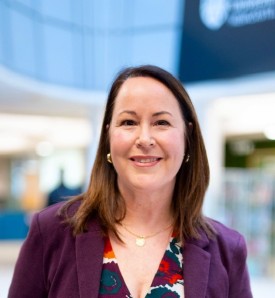
Northumbria University professor named among UK's most outstanding health and care research leaders
A Northumbria University professor has been appointed as one of the UK's most influential health…
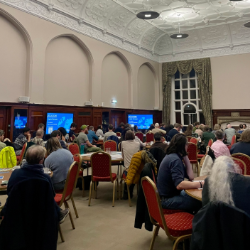
From campuses to communities: Newcastle's fifth Climate Change Forum forges greener future for city
Newcastle's fifth Climate Change Forum drew a full house – and an energising conversation about…

'Safer Stadiums' research shares women's experiences at men's football games
New research led by Northumbria University highlights the experiences of women who attend men's…
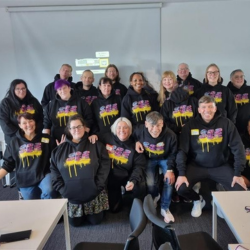
Free online directory launches to support people with experience of homelessness
Researchers at Northumbria University have launched a free, searchable online directory covering…
Northumbria University confirms multi-million investment in Centre for Writing and Publishing alongside commitment from North East Mayor
Newcastle is poised to become a major centre for the UK publishing industry after multi-million-pound…
Northumbria University delivers diverse programme of public engagement events for ESRC Festival of Social Science 2025
Northumbria University delivered fifteen innovative public engagement events as part of the…

Recognition for researcher dedicated to tackling food insecurity in the UK
A Northumbria University academic who has played a key role in bringing breakfast clubs and…
More events
Upcoming events
North East CTEC Educator Conference 2026
Harvard Lecture Theatre 403
-

From sustenance to complete nourishment in a changing and uncertain climate
Ellison Building A, 001 (ELA 001)
-
