
A Northumbria University academic who has played a key role in bringing breakfast clubs and holiday activities to millions of children across the country has been elected to the Fellowship of the Academy of Social Sciences.
Professor Greta Defeyter OBE, Dean of Social Mobility Policy Engagement and Professor of Developmental Psychology at Northumbria, has been leading research into the importance of holiday programmes, school meals and breakfast clubs for over two decades.
As Director of the University’s Health Living Lab, Professor Defeyter’s work has contributed to the Government announcing £600 million funding to continue the Holiday Activities and Food (HAF) programme over the next three years, with a recent landmark survey of 20,000 parents and carers revealing the benefits to young people and the pressure the initiative helps take off family finances.
She is currently working with the Department for Education on the roll out of the £315 million National School Breakfast Club Scheme across all state funded primary schools in England and was awarded an OBE in recognition of services toeducation in 2024.
 As one of 74 new Academy of Social Sciences Fellows elected from 39 organisations across the UK, Professor Defeyter has been recognised for her significant contributions to social science, which highlight the relevance of the social sciences in understanding and addressing the many varied societal challenges facing the UK and the world today.
As well as excellence in research and professional applications of social science, the new Fellows are elected from a variety of backgrounds, disciplines and professions, due to their work beyond academia, including in industry, policy making and higher education.
Speaking of being elected to the Academy of Social Sciences Fellowship, Professor Defeyter said: “I am honoured to be elected a Fellow of the Academy of Social Sciences. Over the last 25 years, I’ve had the privilege of working with many social scientists and I appreciate the impact they have had on my thinking and the direction of my research. I hope to work with the Academy of Social Sciences to further promote the importance of social science research, especially to policy makers.”
Professor Defeyter established the Healthy Living Lab in 2006 to investigate the impacts of school breakfast clubs on children’s health, social and educational wellbeing. Working with Kellogg’s, the Greggs Foundation and Blackpool Council between 2008 and 2019, her research demonstrated that breakfast clubs can improve school attendance and punctuality, motivation, social relationships, educational attainment and quality of life for many children. This evidence has supported the nationwide expansion of breakfast clubs in recent years.
Recognising that school holidays brought difficulties for many families, Professor Defeyter expanded her research. Her evaluations of holiday clubs and city-wide holiday programmes evidenced the need for the UK government to alleviate holiday hunger and ensure that children and young people were offered nutritious food and engaging activities outside of term time as well as during the academic year.
As a result, in 2021 the government announced that up to £220 million was being made available to local authorities across England to fund the HAF, and later, the HAF Plus programme, which has been co-designed to make it more engaging for older children. The HAF Plus framework has also been adopted by supporting organisations, such as Kitchen Social, funded by the Mayor’s Fund for London, and has been implemented across all London boroughs.
Professor Defeyter has already received several accolades for her work. In 2006 she was named as a Children’s Food Hero by Sustain, following notable award winners, Jamie Oliver and Ed Balls. In 2015, she was made a Fellow of the British Psychological Society in recognition of her research with children living in areas of social and economic deprivation, and in 2020 she was named as one of the country’s top 100 change makers by the Big Issue for her research and policy impact on childhood food poverty in the UK. Most recently, she was appointed President of the Royal Society of Medicine's (RSM) Food & Health Forum.
She has a number of executive roles and fellowships with organisations. These include a long-standing association with the UK charity Feeding Britain, where she is currently a Trustee supporting a recently announced partnership with acclaimed chef and television presenter, Gordon Ramsay, aimed at tackling hunger across the UK.
President of the Academy of Social Sciences, Will Hutton FAcSS, said: “I’m delighted to welcome leading social scientists to the Academy’s Fellowship this spring. Their substantial contributions have furthered knowledge and our understanding in tackling a wide range of societal challenges including working with Indigenous communities in the Arctic to better understand climate risk, memory retrieval processes in legal contexts, social inequalities, economic policy and tackling hate crime.
“We look forward to working with them to further promote the important role the social sciences play in our daily lives.”
The Academy’s Fellowship comprises 1,700 leading social scientists from academia, the public, private and third sectors. Professor Defeyter now joins this international community and is the tenth Northumbria academic to be elected to the Fellowship in the last two years.
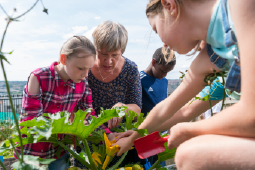
At Northumbria University’s School of Communities and Education, we bring together experts in education, childhood and early years, social work, occupational therapy, public health and psychological training with the aim of improving lifelong health and wellbeing, in our region and beyond.
This is the place to find all the latest news releases, feature articles, expert comment, and video and audio clips from Northumbria University
Latest News and Features

North-East pupils tackle real space research through award winning Orbyts programme
A Northumbria University-backed programme giving North-East pupils the chance to do real space…

New dementia risk tool designed for the countries that need it most
An international team led by Northumbria University has developed and validated a simple five-factor…

UK network to accelerate the development of sustainable surface technologies
A new national network led by Newcastle University and Northumbria University, in partnership…

Criminologist wins acclaimed Philip Leverhulme Prize to pioneer a new criminology of the offshore world
A Northumbria University criminologist has been awarded a Philip Leverhulme Prize, one of the…
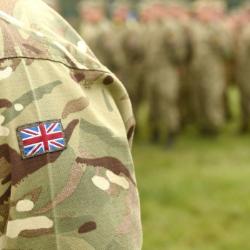
New platform maps charity support for the Armed Forces community
Pioneering data platform maps where the Armed Forces community receive support from charities

Northumbria co-leads study on fairer support for families
A major study co-led by Northumbria University will test whether attachment assessments lead…

New AHRC research shows how community innovation can power the next phase of devolution.
New research published today by the AHRC Creative Communities programme provides fresh evidence…

Free sessions to help families navigate the SEND system
Northumbria University's award-winning Student Law Office is launching SEND Decoded, a series…
More events
Upcoming events

-
Magnetospheric Multiscale Science Working Team Meeting
Sutherland Building

Christmas Market and Tree lighting
Northumbria University
-
What can an engineering education in the North East lead to?
Durrant Hall
-
