-
Study
-
Quick Links
- Open Days & Events
- Fixed Block Degrees
- Real-World Learning
- Unlock Your Potential
- Tuition Fees, Funding & Scholarships
- Still Time to Apply
-
Undergraduate
- Application Guides
- UCAS Exhibitions
- Extended Degrees
- School & College Outreach
- Parents & Guardians
-
Postgraduate
- Application Guide
- Postgraduate Research Degrees
- Flexible Learning
- Change Direction
- Register your Interest
-
Student Life
- Students' Union
- The Hub - Student Blog
- Accommodation
- Northumbria Sport
- Support for Students
-
Learning Experience
- Real-World Learning
- Research-enriched learning
- Graduate Futures
- The Business Clinic
- Study Abroad
-
-
International
International
Ideally situated in the 5th best student city in the UK (QS Best Student Cities 2026), Northumbria University is a UK Top 40 University (Complete University Guide 2026) with a diverse community of 34,500 students from over 140 countries.
View our Global Footprint-
International Students
- Information for International Students
- Northumbria and your Country
- International Student Events
- Application Guide
- Entry Requirements and Education Country Agents
- Global Offices and Regional Teams
- English Requirements
- English Language Centre
- International student support
- Cost of Living
-
International Fees and Funding
- International Undergraduate Fees
- International Undergraduate Funding
- International Masters Fees
- International Masters Funding
- International Postgraduate Research Fees
- International Postgraduate Research Funding
- Useful Financial Information
-
International Partners
- Agent and Representatives Network
- Global Partnerships
- Global Community
-
International Mobility
- Study Abroad
- Information for Incoming Exchange Students
-
-
Business
Business
Northumbria University is proud to offer a range of Professional, Statutory and Regulatory Body (PSRB) approved & accredited courses and programmes. Explore our list of courses and programmes under our Education and Training page.
More on our Business Services-
Business Quick Links
- Contact Us
- Business Events
- Research and Consultancy
- Education and Training
- Workforce Development Courses
- Join our mailing list
-
-
Research
Research
Northumbria is a research-rich, business-focused, professional university with a global reputation for academic quality. We conduct ground-breaking research that is responsive to the science & technology, health & well being, economic and social and arts & cultural needs for the communities
Discover more about our Research-
Quick Links
- Research Peaks of Excellence
- Academic Departments
- Research Staff
- Postgraduate Research Studentships
- Research Events
-
Research at Northumbria
- Interdisciplinary Research Themes
- Research Impact
- REF
- Partners and Collaborators
-
Support for Researchers
- Research and Innovation Services Staff
- Researcher Development and Training
- Ethics, Integrity, and Trusted Research
- University Library
- Vice Chancellors Fellows
-
Research Degrees
- Postgraduate Research Overview
- Doctoral Training Partnerships and Centres
- Academic Departments
-
Research Culture
- Research Culture
- Research Culture Action Plan
- Concordats and Commitments
-
-
About Us
-
About Northumbria
- Our Strategy
- Our Staff
- Our Schools
- Place and Partnerships
- Leadership & Governance
- University Services
- Northumbria History
- Contact us
- Online Shop
-
-
Alumni
Alumni
Northumbria University is renowned for the calibre of its business-ready graduates. Our alumni network has over 253,000 graduates based in 178 countries worldwide in a range of sectors, our alumni are making a real impact on the world.
Our Alumni - Work For Us
EXPERT COMMENT - World Menopause Day: how cultural representations of ‘the change’ are empowering women
Ahead of World Menopause Day on Sunday (18 October), Katy Shaw, Professor of Contemporary Writings at Northumbria University, discusses the important role popular culture is playing in changing perceptions of the menopause.
In an episode of the comedy Absolutely Fabulous entitled “menopause”, Patsy starts to experience hot flushes and night sweats. Forced into a menopause support meeting, she is regaled with tales of memory loss, sweating, sexual decline and incontinence from other women. One suffering attendee cries that “the sands of time are trickling through my hourglass!” as she laments her changing body. In the background sit Patsy and Edina – visibly disgusted and horrified at the future that lies ahead of them.
Mentions of menopause in popular culture have traditionally been few and far between. Unfortunately, the few depictions that did exist were much like Ab Fab’s. These were depictions that instilled fear and created little understanding of what experiencing it was really like.
However, over the past two decades, “the change” has become a hot topic for a new generation of writers and creatives. And, this World Menopause Day we can celebrate growing visibility, as new representations offer a more nuanced and empowered view of that period in a woman’s life.
Changing the ‘change’
The idea of the “menopause” has only been around since 1821. It was named by the French physician Charles Pierre Louis De Gardanne in the first article on the subject: De la ménépausie, ou de l’âge critique des femmes (Menopause: The Critical Age of Women). The male naming of an inherently female experience was, well, problematic. But the term stuck and today is used interchangeably with “the change” as a short-hand for identifying a diverse range of experiences associated with the female ageing process.
Medicine has spent centuries focusing on the health risks associated with menopause, including increased risks of depression, heart disease, osteoporosis, cognitive impairment and even dementia. Presenting menopause as a problem to be solved or an issue to be eradicated, historical medical narratives have at best sought to make menopause invisible. At worst, it presented it as a female problem that could be solved by male medical intervention.
But as female life expectancy increased steadily across the ages, debates about the visibility of cultural representations of the menopause began to develop.
Menopause expert Laura Eldridge, suggests:
How your culture sees you, treats you, and talks about you dictates how you live in that culture. Culture is our mirror, and if we see withered crones in the glass, we feel useless and disposable. If, however, we see energy and renewal: well, what does that feel like?
By 2018, American actress Gwyneth Paltrow famously claimed that the menopause" needed rebranding“ for a new generation of women.
Meno-makeover
These changes have inspired a rise in the number of representations of menopause in popular culture. In a major change from the monstrous or comedic woman suffering from hot flashes who is desexualised and sidelined, a swath of new productions have sought to make menopause visible, reframing the change as a period of empowerment.
One particularly powerful depiction is in the award-winning TV series Fleabag. A frank discussion between the titular character and an older businesswoman about ageing takes a turn from the expected as it actively challenges commonly held perceptions of "the change”.
The menopause comes. The f***ing menopause comes and it is the most… wonderful f***ing thing in the entire world.
Instead of falsely glamorising the menopause the older woman is candid and balanced, offering hope instead of fear and despair. She describes how her pelvic floor crumbled, how she got hot, and no one seemed to care but how there was also freedom to be had. Fleabag admits that she thought it was horrendous, to which the older woman responds: “It is horrendous, and then it is magnificent”.
Fleabag is not alone. From Menopause the Musical (2001) and its sequel Cruising Through Menopause (2020) and House of Cards(2013-18) to Nine Perfect Strangers (2021) and across theSex and the City franchise (1998-2004), new candid depictions of menopause and the various experiences of it have been made visible. As a result of such instances becoming more common, the menopause has become a valid subject of cultural discussion and artistic endeavour.
New cultural depictions of menopause matter because they can increase awareness and change perspectives. In doing so, they provide contemporary audiences with a much-needed education that has the potential to enhance public awareness and, in turn, increasing understanding of life cycle change, health and well-being, and the ageing process for both genders.
Research also shows that cultural representations of menopause can influence how women perceive the menopause experience or report symptoms and conceptualise the change as a start or an ending.
Popular culture is a powerful tool for tackling old myths about menopause and offers a vital creative platform for sharing a diversity of experiences of menopause. Presenting new representations of women not only surviving but thriving in the third stage of their lives, culture provides a platform and a toolkit for communicating alternative experiences of the menopause today.
This article was written for and published by The Conversation.
Humanities At Northumbria Is Composed Of Three Subject Teams: History, Literature & Creative Writing, And English Language & Linguistics, And Is Also Developing Strengths In The Fields Of American Studies And Heritage Studies.

Professor in the Department of Humanities and lead researcher into twenty-first century writings.
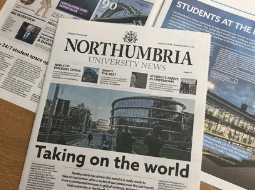
This is the place to find all the latest news releases, feature articles, expert comment, and video and audio clips from Northumbria University
Humanities At Northumbria Is Composed Of Three Subject Teams: History, Literature & Creative Writing, And English Language & Linguistics, And Is Also Developing Strengths In The Fields Of American Studies And Heritage Studies.
Professor in the Department of Humanities and lead researcher into twenty-first century writings.
This is the place to find all the latest news releases, feature articles, expert comment, and video and audio clips from Northumbria University
Latest News and Features

From Sydney Opera House to Northern Stage: powerful Indigenous dance production finally arrives in the North East
A critically acclaimed dance production exploring the trauma of Australia's Stolen Generations…
404 International Festival of Art and Technology lands in Newcastle this summer
The world-renowned art and technology festival is set to take place in the UK for the first…
Northumbria nursing lecturer named Nurse Educator of the Year at prestigious national awards
A Northumbria University academic has been named Nurse Educator of the Year at the British…
Rethinking trust and democracy in international governance
Northumbria University is spearheading a major international research initiative that explores…
What Are Words Worth 2U2?
Programme Northumbria is delighted to present What Are Words Worth 2U2?, an interdisciplinary,…
Celebrate the next generation of creative talent at Northumbria graduate showcase
Northumbria University’s annual REVEAL degree shows spotlight the exceptional work of graduating…
Northumbria University opens its doors for The Late Shows 2026
Northumbria University is set to throw open its doors to the public this May as part of The…
Northumbria maintains prestigious Small Business Charter status
Northumbria University's Newcastle Business School has secured reaccreditation with the Small…
Upcoming events
REVEAL Music Recitals 2026
The Great Hall
-
Northumbria and SGU Alumni Celebration
Versa Rooftop - New York
-
Alumni Social New York
Peter Dillons
-
Alumni Social Boston
The Banshee Pub
-
