
Our two Centres for Doctoral Training - Renewable Energy Northeast Universities (ReNU) and Renewable Energy Northeast Universities Plus (ReNU+) are doctoral training programmes funded by the Engineering and Physical Sciences Research Council, and delivered by Northumbria, Durham and Newcastle Universities.
ReNU+ runs alongside ReNU, please visit our Apply Now page for further details of our ReNU+ studentship.
Find our more about the ReNU+ and ReNU programmes at the drop down links below.
The EPSRC Centre for Doctoral Training in Renewable Energy Northeast Universities Plus (ReNU+) is a transformative and inclusive programme that aims to train a new generation of Doctoral Carbon Champions (DCCs) who are characterised by scientific and engineering excellence and capable of interdisciplinary systemic thinking to accelerate Net Zero.
ReNU+ is designed to prepare DCCs with skills for high-skill employment across industry, policy, education and government, addressing key challenges in resilience and equity in the United Kingdom's energy transition. The programme seeks to achieve this through training led by Northumbria, Newcastle and Durham universities.
ReNU+ runs alongside ReNU, please visit our Apply Now page for further details of our ReNU+ studentship.
The ReNU+ training programme has a core focus on developing interdisciplinary skills that facilitate understanding of and engagement with the wider Net Zero system including investment, regulation and end-user engagement. The programme aims to develop scientists and engineers who can deliver impact beyond technology development. ReNU+ also recognises the critical importance of an inclusive and sustainable transition to Net Zero. To that objective, the programme seeks to build more diverse cohorts of DCCs including people from under-represented groups and non-traditional educational backgrounds, supporting doctoral education as a pathway for social mobility.
The ReNU+ Centre for Doctoral Training offers a structured PhD pathway combining technical depth, professional development, and opportunities for real‑world impact. This approach is designed to help researchers develop skills and knowledge that support their careers in academia, industry, or policy.
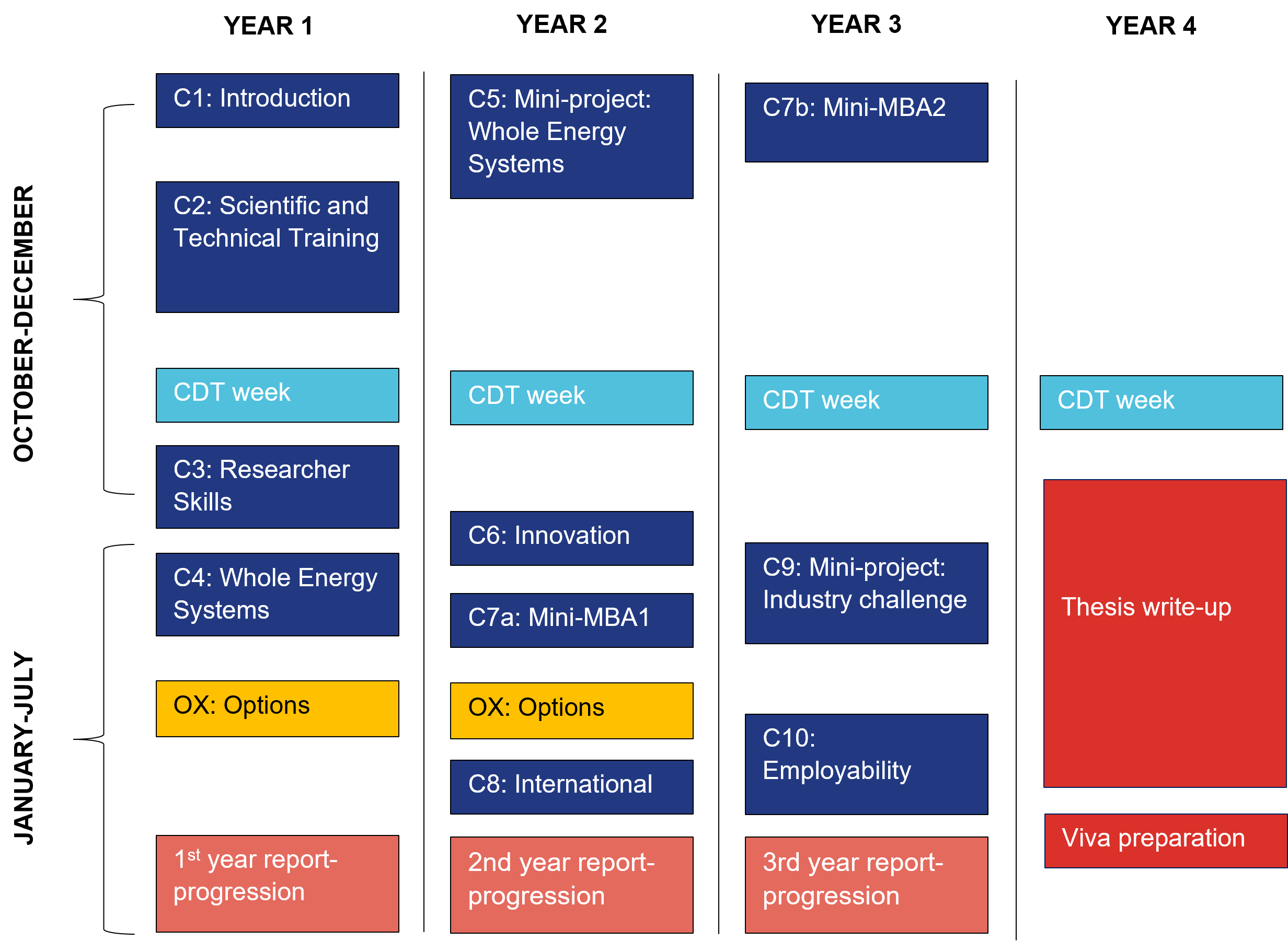
Program snapshot (ReNU Training Diagram)
- Duration: 4 years for full-time (longer for part-time)
- Important note: Module content is reviewed annually and may change.
- Formats: Lectures; seminars; practical workshops; group projects; public engagement activities.
Year 1 Building foundations
- Aim: Introduce research skills, technical breadth, and a supportive research culture.
- Core elements:
- Professional skills: Resilience, communication, collaboration, and time management.
- Technical knowledge: Broad grounding in materials and renewable energy systems.
- Research management: Project planning, risk awareness and research integrity.
- Knowledge & skills: Environmental impact assessment; data analysis; research software.
- Public engagement: Training and activities to share research with non‑specialist audiences.
- Optional modules: Tailored training aligned to individual projects.
- Cohort activities: CDT Week for immersive training and networking.
Year 2 Expanding horizons
- Aim: Connect research to policy, business and societal needs.
- Core elements:
- Policy context: How regulation and government decisions influence energy systems.
- Business awareness: Entrepreneurship and collaboration with industry.
- Impact pathways: Translating research into policy, community benefit, and industry solutions.
- Cohort activities: CDT Week for immersive training and networking.
- Optional modules: Tailored learning aligned to individual projects.
Year 3 Driving innovation
- Aim: Apply knowledge in collaborative, solution‑focused settings.
- Core elements:
- Sustainability: Systems thinking for a fair energy transition and practical constraints.
- Industry challenge: Team‑based projects addressing real-world problems from industry partners.
- Cohort activities: CDT Week for immersive training and networking.
- Optional modules: Tailored training aligned to individual projects.
Year 4 Preparing for the future
- Aim: Complete thesis, refine career plans and transition to next steps.
- Core elements:
- Careers: CVs, mock interviews, and networking.
- Thesis write‑up: Structuring, writing strategies, and writing retreat.
- Viva preparation
Recruitment for all 5 ReNU cohorts is now complete. Please see the information below for an overview of the programme.
The aim of ReNU is to train the next-generation of doctoral graduates with the skills required to drive UK innovation in renewable energy (RE) and sustainable distributed energy (DE) applications. ReNU is a 4 year training programme with taught modules at various strategic points during the period.
In additional to individual institutional training programme, ReNU will provide cohort training with the objectives of: (1) create a pipeline of doctoral graduates with outstanding problem solving abilities to enable UK commercial development and exploitation of RE and sustainable DE technologies; and (2) provide a comprehensive training experience that is inherently interdisciplinary, international and includes key business and innovation training. The training programme consists three parts: core modules, optional modules and flexible modules.
Ten core modules covering scientific fundamentals and principles relevant to RE and DE, introduction on whole energy systems, research skills and methodology, business and innovation, interaction with industry to tackle industrial challenges and enhancing employability.
Optional modules providing specialist training more relevant to your research, and delivered through specialist modules, short lab stay in the labs with specific facilities and expertise, and peer to peer learning. Each student will have the chance to take four optional modules.
Training is also provided through other flexible means of public engagement activities, participating national and international conferences, site visits to industry or other stake holders and outputs writing.
The first year of the CDT training programme aims to provide you with fundamental knowledge of renewable and sustainable energy technologies (C2). This includes the physical principles behind batteries, fuel cells, solar cells and many other devices and materials found at the cutting-edge of energy research. Importantly, the energy sector extends well beyond a single technology and the factors which determine the success or failure of a clean energy technology include policy, economics and society. Some of these factors are considered in C4 which sets the context for innovation in the energy sector.
In addition to developing knowledge, the first year focuses on developing key skills for research relating to analysis, communication and responsible research and innovation (C3). The combination of this training with optional training modules and the flagship CDT Week will provide a solid background for success in the following years. Note also that equality, diversity and inclusivity is an important theme within ReNU and all students and academic staff will received training in this area.
The second year includes further training in whole energy systems and you will have the opportunity through an extended mini-project (C5) to consider your individual research in a broader context. The second year allow allows you to develop key skills in innovation (C6) and business (C7a) with specialists in this area.
In the third year of your training, there is increased emphasis on your individual research project as you become the expert this area. This is mixed with another extended group mini-project aimed at tacking an industrial R&D challenge (C9). You will also complete the second part of a mini-MBA business training (C7b) during this year. The fourth year of your project is focused on finishing your thesis (including writing up) and consolidating all your training such that you are ready for employment after your PhD.
Watch the video below to find out more;
A PhD Can Take You Further Than Academia
A PhD doesn’t just open doors to academic careers, it can also provide a strong foundation for success in industry. Hear from Dr Simon FitzGerald, who holds a PhD and now works at HORIBA UK, and Dr Lu Xing, who began her journey in industry at Accenture before transitioning into academia.

Dr Simon FitzGerald
Head of Science and Technology, HORIBA UK
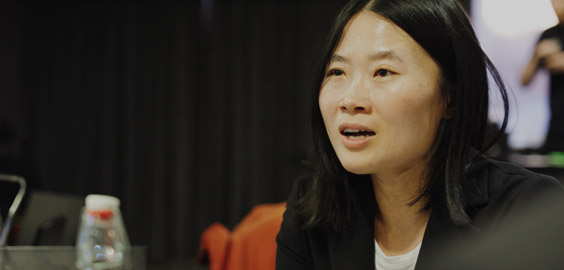
Dr Lu Xing
Associate Professor, Northumbria University
Why ReNU Plus PhD?
Listen to staff and students discuss the benefits of the ReNU Plus PhD programme.
Listen to Professor Neil Beattie discuss the ReNU+ PhD programme.
Listen to Amna describe the benefits of being part of a cohort within the ReNU PhD programme.
Listen to Nick describe the benefits of the ReNU+ PhD programme.
Listen to Pierre describe the benefits of being part of a cohort within the ReNU PhD programme.
Page last updated 23/07/26
