
Event and Lecture Series 2018/2019
Below you will find the latest event and lecture series for the Visual and Material Research Culture Group 2018/2019.
Guest speakers for Semester 2 Seminars, held in LIP033 on Wednesdays 17:00-18:30.
6 February: Dr Johnny Walker (Northumbria), “Borderline Nasties: the British Video Business, Market Rationalisation and the Product Acquisition Strategies of CBS/Fox, 1982-84”
20 February: Dr Fiona Anderson (Newcastle), “Cruising as theory and practice: preserving New York’s ruined waterfront”
6 March: Dr Sarah Neely (Stirling University), “‘Small Things’: Time, Materiality and Landscape in the films and poetry of Margaret Tait”
20 March: Dr Ella Mills (Exeter University), “A Methodology of Listening: Grounded Theory and the Artist Interview”
Research Seminar Dates: Semester Two 2018/19
Wednesday 6 February
Wednesday 20 February
Wednesday 6 March
Wednesday 20 March
Easter teaching break
Wednesday 1 May
Wednesday 15 May
Wednesday 29 May
Wednesday 13 June
Event and Lecture Series 2016/2017
Below you will find the latest event and lecture series for the Visual and Material Research Culture Group 2016/2017.
Header Image: Liberate Tate intervention, Martin LeSanto-Smith, 2015
10 May “Horribly academic? Genre film festivals and academia”
Date: 10 May, 2017
Time: 4:00 pm
Location: Squires Annexe 203
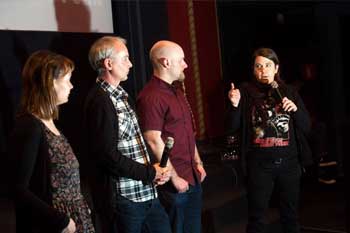
Presenter: Russ Hunter, Senior Lecturer, Film & Television, Northumbria University
There are more than one-hundred horror, cult and fantastic film festivals held in Europe on an annual basis, with the twenty-two festivals of the European Fantastic Film Festivals Federation alone boasting an overall annual attendance of more than 450,000 visitors. Dirk van Extergem (2004) articulates this preference for genre cinema as cultivating and providing for an audience that have a love for ‘bad’ films as well as ‘good’ ones, and therefore providing a genuine alternative to the commonly accepted formula of the film festival. The genre film is a key part of providing that alternative as not only is it loosely defined and inclusive of many popular forms, but it has also endured dismissal as ‘unworthy’ of serious consideration for many years. This talk will explore my recent work with Abertoir Horror Festival (Aberystwyth, Wales), Offscreen (Brussels, Belgium) and Kurja Polt (Ljubljana, Slovenia), examining how the participation of academics has impacted upon these festivals in a variety of ways. It will look at how the nature of this involvement has led to the development of an Impact Case Steady for REF2020 that builds upon a previous case successful case study for REF 2014.
Bio : Russ Hunter is a Senior Lecturer in Film & Television at the University of Northumbria. His research is focused upon genre film festivals, Italian genre cinema, European horror cinema and critical reception. His most recent publication is Italian Horror Cinema (Edinburgh University Press, 2016) and his monograph, An Introduction to European Horror Cinema is due to be published with Edinburgh University Press in 2017.
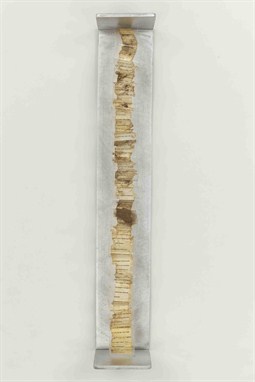
29 March: "Could I introduce the meanings of this body?[...]Could I make it insist upon meanings conventionally resisted?"
Date: 29 March, 2017
Time: 4:00 pm
Location: LIP033
Presenter: Victoria Horne, Lecturer, Art and Design History, Northumbria University
Carolee Schneemann (b.1939) performed Interior Scroll twice. In 1975 at an exhibition of women’s art in East Hampton and, subsequently in 1977, as an unplanned intervention at Telluride Film Festival in Colorado. Both performances consisted of Schneemann removing her clothing, painting upon her naked body, adopting a sequence of static poses, reading from her 1976 book Cézanne She Was a Great Painter, and notoriously culminated in the removal of a scroll from her vagina, which she read aloud to the audience. The artist described the unfurling scroll, which she addressed to other women, ‘like ticker tape, rainbow…plumb line… the umbilicus and tongue’.
Interior Scroll has since entered the canon of twentieth-century performance art; photographs of the performance have been reproduced in textbooks and collected by major museums. However, little attention has been paid to Schneemann’s unusually active role in the management of these images, nor her assertive control of the work’s critical meanings. It emerges in studying the reception history of Interior Scroll that Schneemann’s performed, written, and spoken words have dictated the discourse – a significant observation in light of coincident discussions on feminist politics, women’s creativity, and history agency.
This paper focusses on the themes of embodiment, labour and knowledge; ideas that are concretised in Schneemann’s performance and subsequent authorial interventions. Given current attacks on women’s reproductive rights, bodies and lives, it is instructive to revisit Schneemann’s powerful performance, remembering Susan Gubar’s significant observation that ‘…the female body has been feared for its power to articulate itself’.
Bio: Victoria Horne is a Lecturer in Art and Design History at Northumbria University. Her writing on feminism and art has been published in Journal of Visual Culture, Feminist Review, Radical Philosophy and (forthcoming) Third Text. A co-edited volume of essays will be published this summer, entitled Feminism and Art History Now.
1 March: "Art Organisation"

Time: 5:00 pm
Location: LIP121
Presenter: Julie Crawshaw, Lecturer, Creative & Cultural Industries, Northumbria University
'Artist-led’ is a term used to denote art practices mobilised beyond artworks to making, for example, living spaces, studios, galleries and other modes of exhibitionary or distributive projects. How do these works ‘work’? What do they mobilise?
In the literature of art practice the term ‘artist-led’ (alongside related terminology, including self-organisation, alternative, non-profit and artist-run) is most often discussed in relation to the art institution and institutional theories of the art world. In practice, the work takes place in multiple fields of social practice, as related to planning and organisation studies. Despite increased interest in what art does there is little pollination, however, between artist-led discourse and these arenas. To consider artist-led projects in relation to planning and organisation processes, this paper contributes an ethnographic study of artist-led practice across Sweden, including farming, scrapyard redevelopment and gallery exhibition making.
Funded by the Swedish Research Council, this research is part of ‘Stretched: Expanded notions of artistic practice through artist-led cultures’, Valand Academy, University of Gothenburg. http://akademinvaland.gu.se/english/research-/research-projects/stretched
BIO: Julie Crawshaw is an art anthropologist with an experimental practice developed through an interdisciplinary pathway. In tandem with artists, planners, community members and others, her research explores human non-human relations towards making future plans. Before academia she worked in arts management with particular interest in the role of art in social contexts and artist-led practice. This professional experience closely informs her academic work as combining scholarship and engagement. She is a Lecturer in Art and Design History at Northumbria University. https://www.northumbria.ac.uk/about-us/our-staff/c/julie-crawshaw/
25 Jan: "A People’s Photography: Researching Photographic Practices in Orkney and Shetland"

Time: 5:00 pm (revised time)
Location: LIP 121 (revised location)
Presenter: Rupert Ashmore, Senior Lecturer, Art & Design History, Northumbria University
Rupert will talk about his current research into historic and contemporary photography in Orkney and Shetland. As photographic historian Tom Normand points out, the majority of Scottish photography until the 1970s was driven by commercial, press and amateur practices, rather than the avant-garde and documentary impulses seen in England, Europe and the USA. However, this “vernacular” photography was just as effective in establishing narratives of what Scotland was and is, and those narratives were often refreshed as much as challenged when a home-grown documentary movement began to focus on social issues from the 1970s onwards. Vernacular photography is now highly accessible through public exhibitions, online museum archives, “Town X in Old Photographs” publications, and social media groups, and closer inspection complicates binaries of art / commerce, amateur / professional, and those accepted narratives of identity. Rupert will outline some of the challenges of, and approaches to unpicking this vast vernacular, documentary and artistic archive of “people’s photography”.
BIO: Rupert is an art and design historian whose research spans fine art, photography, film and digital communications media. He completed his doctoral thesis in 2011, examining the filmic and photographic portrayal of the 2001 Foot and Mouth Disease epidemic and the collapse of the County Durham mining industry from the late 1970s. His research examines the use of visual media to construct and disseminate narratives of cultural memory, and enrich spaces with meaning and value in northern British and European communities. From 2012 he has been investigating photographic, film and internet media in Scotland’s Northern Isles.
Event and Lecture Series 2015/2016
Culture, (anti)Aesthetics, Activism and Social Practice
Presenter: Stephen Pritchard, PhD student and Senior Research Assistant, FADSS, Northumbria University. Director, dot to dot active arts
Date: 27 April, 2016 Image: Liberate Tate intervention, Martin LeSanto-Smith, 2015 ABSTRACT: Herbert Marcuse’s later writings offer an incredibly insightful analysis of the power of the Establishment and the expansion of capitalism at a time pre-dating neoliberalism. His predictions about the strengths and weaknesses of both consumer society and oppositional movements were (and remain) amazingly accurate; perhaps even more relevant today. But his preoccupation with a certain form of aesthetics and associated artistic practices greatly weakens his otherwise deeply inspiring philosophical theories – an Achilles heel that undoubtedly reflects his own personal preferences and beliefs. This paper seeks to rethink Marcuse’s revolutionary and utopian ideas from a cultural perspective that rejects any notion that a paradigm shift can somehow supported by the discredited aesthetics of a bourgeois elite. It seeks to reconceive of the aesthetic experience as intensely personal and relational which can be stimulated by a range of socially engaged and activist practices that Marcuse may have considered to be ‘anti-art’. The intention is to re-contextualise Marcuse in light of contemporary acts of resistance which may and may not be considered as art, but which can never be canonised as Art. BIO: Stephen Pritchard is a second-year PhD researcher at Northumbria University exploring the potentialities of art as social practice in creating spaces for acts of resistance and liberation and in supporting movements towards radical democracies. His work is deeply rooted in the critical theory of Herbert Marcuse as well as Bakhtin’s notions of the carnival and the critical utopias of Tom Moylan et al. His approach is deeply intradisciplinary spanning politics and political theory, cultural policy, economics, decolonisation and border thinking, psychodynamic and psychoanalytic theories, sociology, and visual and material cultures. He has lectured widely including at Durham University, BALTIC Centre for Contemporary Arts and Arts Council England National Office, is a published academic and an established blogger. |
|
Treasures of Islamic ArchitectureDate: Thursday 10 March Location: Northumberland Building Room 252 Time: 6:30 - 7:30
Organised in collaboration with the University’s Islamic Society |
|
|
Presenter: Dr Charis Theodorakopoulos
Date: Thursday 28 January, 2016
In the last two decades there are remarkable advances in the technologies developed for a wide range of art conservation treatments. This talk is about cleaning of painted surfaces of a variety of works of art. Cleaning aims at the removal of accumulated soils and pollutants, degraded and discoloured aged varnishes, and/or non-original overpaint layers, which impede the intended viewing and the accurate study of the artworks. Ideally, the treatment should leave the paint layers intact so that the post-treatment aesthetics as well as the mechanical, physical and chemical post-treatment condition of conserved works of art will not be affected.
These objectives justify multidisciplinary collaborations of physicists, chemists, polymer scientists, art conservation scientists, art history technologists with conservators to generate and evaluate new cleaning methods incorporating organic solvents and aqueous solutions, lasers, laborious micro-emulsions, smart gels of advanced polymer networks with properties assisted by nanotechnology. The advances of the paint industry – from traditional natural resins and drying oils, proteins and inorganic pigments employed mainly up to the early twentieth century, to synthetic media and pigments employed since the mid-twentieth century – intensify the treatment challenges, transforming art conservation into a technology-intensive and science-rich field. |
|
Date: 14th January 2016
St Nicholas' Cathedral in Newcastle upon Tyne has some beautiful examples of Victorian stained glass, some of which are believed to be close copies of the original medieval windows.
This short series of talks will introduce you to some of the saints and their European legends via the windows of one of Newcastle's most famous churches . The stories of the Virgin Mary, St Cuthbert, St Margaret, St George, and St Oswald will be analysed in exciting detail.
A talk on Victorian glass in the cathedral and beyond will help you understand how the Victorians approached these medieval legends - plus, modern glassmakers will share some of their trade secrets with you.
To purchase tickets and discover more about the event including running order of talks please visit the Saints in Glass event page here |
|
Presenter: Dr Michael Johnson
Date: Wed. Dec 9
Michael Johnson, Lecturer in Design History, will give an informal talk on his research into the histories of 19th and 20th century architecture. Recently completed projects include the Victoria County History’s study of Sunderland, due for launch on 14 November, and a new book on working class housing. With longstanding interests in the architecture of North East England, Michael is currently writing a monograph on country houses in the North East in collaboration with Dr Richard Pears of Durham University. Provisionally entitled The Northumbrian Country House, this will examine the history of elite dwellings in Durham and Northumberland from the Tudor period to the present. Independently, he is working on a monograph on the architects Dunn and Hansom, who spearheaded the resurgence of Catholic architecture and ecclesiology in the 19th century. Developing from his MA dissertation and entitled Dunn and Hansom: Architects of the Catholic Revival, this research will situate this important architectural practice within a national context. |
|
Presenter: The Design History Society Symposium co-organised by CloTHINK and Visual and Material Culture Research Group
Date: Friday, 27 November
Transnational Textile: New Directions examines whether the movement of textiles and fashion across borders removes distinctions and boundaries, or reinforces them. The close analysis of African, Chinese, European, Indian, Japanese, North American, and Scandinavian examples from the nineteenth century to the present will demonstrate an ongoing cross-cultural dialogue rather than single journey from one culture to another in design inspiration, manufacturing, marketing and consumption. Papers will explore the ways in which new productions and uses occur in the interstitial space created in exchange between cultures.
For full details visit the Transnational Textiles page here. |

 Talk by Michael Johnson:
 Keeping the bits alive: authenticity and longevity for digital art
 "Technology advanced treatments for the conservation of traditional and modern paintings"
 'Saints in Glass'
 “Recent and future projects: 19th and 20th century architecture”
 "Transnational Textiles: New Directions” The Design History Symposium
Event and Lecture Series 2014/2015
|
Presenter: Dr Joanne Gooding I will revisit my MA research which considered the design and production of spectacles in Britain following the introduction of standardised frame styles under the National Health Service. The actions of the Government and professional bodies greatly affected the trade in eyewear and thus restricted opportunities for innovative design; but the wider impact was upon a generation of patients for whom NHS specs represented “a badge of poverty across their faces”. (B. Castle, 1976). My current research considers the changing representation of spectacle-wearers in popular visual culture and how glasses contribute to identity. Sunglasses have always been seen as fashionable accessories, retro and vintage revival of styles is commonplace, so are spectacles, and even the once-reviled NHS glasses, now chic? |
|
Presenter: Dr Susan Ashley Dr Ashley offers some personal thoughts about the ‘value’ of heritage, with stories of work and research experiences over the years with sites of heritage-making, from Algonquian rock art to Black history to the Chattri memorial group in Brighton. Image: Rock Art, Writing-on-Stone, Canada |
|
Presenter: Shelagh Wilson |
|
Presenter: Dr Malcolm Gee The Visual and Material Culture research group honours the career of Dr Malcolm Gee through an illustrated talk by Malcolm about his research and work at Northumbria University Department of Arts. Malcolm will present: Sites and paths of consecration – Artwork destinies of the 20th century This talk will illustrate through a range of case studies the ways in which the functioning of the art market has structured the histories of individual works from the point of production to their current situation, mainly as key elements in a hierarchy of values secured by art history. It will consider the different agents involved in this process, the sites through which works passed and their impact on their status, and also the ways in which economic and political factors contributed in determining their destinies. |
 “Geek Chic ? The Design of National Health Service glasses and questions of Identity”
 "Heritage as Process"
 "Slave Trade to Fair Trade: Change and Development in Philanthropy and Craft"
 Celebrating the work of Dr Malcolm Gee
Page last updated 03/05/20
