Researchers within our Extreme Environments multidisciplinary research theme are using novel techniques and approaches to shed new light on the impact of climate change on the planet’s natural systems.

One example of the research being carried out is Northumbria's role in a joint UK/US project, exploring if, when, and how, a huge Antarctic glacier might collapse:
Miami, Rio de Janeiro, Shanghai, Hong Kong and London are just some of the world’s major cities that could be devastated by rising global sea levels.
These five cities alone are home to almost 40 million people who live and work within their thriving centres and suburban areas. All are based by the sea or have extensive networks of rivers and canals running through their centres. And all are at risk of being submerged when climate change warms the planet, causing ice at the North and South Poles to melt leading sea levels to rise.
 One huge Antarctic glacier is proving to be a major
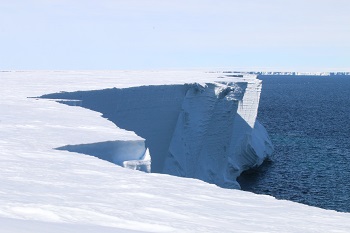
cause for concern. Thwaites Glacier is almost the size of Great Britain and
contains enough ice to lift global sea levels by up to five metres. Over the
past 30 years, the amount of ice flowing out of this region has nearly doubled
and this lone glacier accounts for around 4% of global sea level rise. When it
finally collapses and releases its vast hoard of ice into the oceans, it will
fundamentally change the world’s geography. Millions of people living in
coastal regions, islands and cities based on rivers will be displaced.
One huge Antarctic glacier is proving to be a major
cause for concern. Thwaites Glacier is almost the size of Great Britain and
contains enough ice to lift global sea levels by up to five metres. Over the
past 30 years, the amount of ice flowing out of this region has nearly doubled
and this lone glacier accounts for around 4% of global sea level rise. When it
finally collapses and releases its vast hoard of ice into the oceans, it will
fundamentally change the world’s geography. Millions of people living in
coastal regions, islands and cities based on rivers will be displaced.
But when will the glacier collapse, and how? Will it begin to break apart within the next few decades, or will it be within centuries? How exactly will it break up? These are the questions that Northumbria University researchers are now trying to answer. They are part of a £20 million UK-US research collaboration working on eight different projects to understand how the glacier is behaving.
Thanks to the extensive world-leading expertise in cold and palaeo environmental research based at Northumbria, two of these eight projects are being delivered by the University. No other university in the UK was selected to be involved in more than one project.
Our researchers are using specialist techniques to examine how the glacier has evolved over time. If they can understand how it has responded to changing climates throughout history, they can predict how it will behave in future.
Their research will take place both here in Newcastle-upon-Tyne and out in Antarctica. On campus, our glaciology experts are using technology to create a modelling tool that will predict how the glacier will behave under certain conditions. They will be able to make flexible data calculations to model how different environmental circumstances will affect how the ice flows.
Meanwhile, in Antarctica, our researchers will be navigating the continent looking for the best sites to drill deep into the bedrock 200 metres below the ice.
They want to find out if the glacier has collapsed in the past. If it has, its bedrock will have been uncovered and exposed to cosmogenic rays from space. These rays will have altered the composition of the rock, changing the way its nuclei decays over time. If the researchers can find evidence of atmospheric exposure in the past, they can then assess whether the way the glacier is behaving today is a unique, rapid and catastrophic response to climate change, or if it is simply part of the normal life cycle of these Antarctic glacier systems.
This research is funded by the UK Natural Environment Research Council and the US National Science Foundation.
A version of this article originally appeared in the Northumbria University supplement produced with Times Higher Education.
Researchers within our Extreme Environments multidisciplinary research theme are using novel techniques and approaches to shed new light on the impact of climate change on the planet’s natural systems.
Geography at Northumbria University encompasses all of our work in physical and human geography, environmental science and management, health & safety, and disaster management.

A new national network led by Newcastle University and Northumbria University, in partnership…

A Northumbria University criminologist has been awarded a Philip Leverhulme Prize, one of the…

Pioneering data platform maps where the Armed Forces community receive support from charities

A major study co-led by Northumbria University will test whether attachment assessments lead…

New research published today by the AHRC Creative Communities programme provides fresh evidence…

Northumbria University's award-winning Student Law Office is launching SEND Decoded, a series…

The Net Zero Polar Science (NZPS) Doctoral Training Programme (DTP) has welcomed its first…

A new drop-in service is bringing health and wellbeing support for students at both Newcastle…

Manchester Marriott Hotel Piccadilly
-

Sutherland Building

Northumbria University
-
Page last reviewed: 22 July 2026