English Literature and History BA (Hons)
 Option for Placement Year
Option for Study Abroad

Option for Placement Year
Option for Study Abroad
If you have a love of both literature and history, this course is for you. There are enormous benefits to studying the two disciplines in tandem.
You will use poems, novels, and other works of literature to interpret and understand past societies and cultures, and, at the same time, you will bring textual analysis to historical sources. You’ll be asking questions about how the two disciplines differ, but also how the methods and approaches of the historian and literature specialist overlap. By the end of the course, you will have developed both the rigorous research skills of the historian and the advanced communication skills of the literature student.
The distinctiveness of the course lies in its combination of academic rigour with a concern for employability and developing ‘citizen scholars’. As part of this, we offer options to broaden your experience and cultural sensitivity by studying abroad for a semester.
The uniqueness of our Literature degrees lies in how they bring together the study of stories and how we tell them across hundreds of years, with a contemporary focus on your career, helping you take your cultural understanding into the twenty-first century world of work.
Academic Support: Over 90% of Literature in English students surveyed in the 2026 National Student Survey positively rated the academic support on their course.
Learning Resources: Literature in English at Northumbria is ranked joint 11th out of 58 UK providers for Learning Resources (NSS, 2026).
Check out similar courses such as our English Literature BA
UCAS Code
QV31
Level of Study
Undergraduate
Mode of Study
3 years Full Time or 4 years with a placement (sandwich)/study abroad
School
Humanities and Social Sciences
Location
City Campus, Northumbria University
City
Newcastle
Start
September 2027
Fees
Fee Information
Modules
Module Information
Explore ideas, drive change.
.jpg?modified=20201119191734)
School

Study

Northumbria historian receives prestigious research prize.
Find out more.
Northumbria student signs major book publishing deal.
Find out more.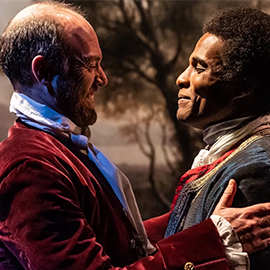
Northumbria Professor wins 'best new play' at national theatre awards.
Find out more.
From care leaver to government AI leader: Northumbria's graduate's extraordinary journey
Read MoreDiscover more about what you will learn on the course, more about our academics research interests, and hear from our alumni's by watching our videos.
Our students learn from the best inspirational academic staff with a genuine passion for their subject. Our courses are at the forefront of current knowledge and practice and are shaped by world-leading and internationally excellent research.
At the heart of each Northumbria campus, our libraries provide a range of study space and technology to suit every learning style.
Studying English Literature and History together means you can be taught research across both disciplines. Discover examples of our English research below.
You can boost your CV and develop your experience whilst studying at Northumbria.
From first year through to final year and beyond graduation, we are here to help.
Visit an Open Day to get an insight into what it's like to study English Literature and History. Speak to staff and students from the course and get a tour of the facilities.
96 to 112 Tariff Points
From a combination of acceptable Level 3 qualifications which may include: A-level, T Level, BTEC Diplomas/Extended Diplomas, Scottish and Irish Highers, Access to HE Diplomas, or the International Baccalaureate.
Find out how many points your qualifications are worth by using the UCAS Tariff calculator: www.ucas.com/ucas/tariff-calculator
Northumbria University is committed to supporting all individuals to achieve their ambitions and we understand that every applicant’s circumstances can be different, which is why we take a flexible approach when making offers for this course. We have a range of schemes and alternative offers to make sure as many individuals as possible are given an opportunity to study at our university regardless of personal circumstances or background. Typically, offers range from 96 to 112 UCAS tariff points, but we’ll assess your individual circumstances and potential when reviewing your application
To find out more, review our Northumbria Entry Requirement Essential Information page for further details www.northumbria.ac.uk/entryrequirementsinfo
Subject Requirements:
There are no specific subject requirements for this course.
GCSE Requirements:
Applicants will need Maths and English Language at minimum grade 4/C, or an equivalent.
Additional Requirements:
There are no additional requirements for this course.
International Qualifications:
We welcome applicants with a range of qualifications which may not match those shown above.
If you have qualifications from outside the UK, find out what you need by visiting www.northumbria.ac.uk/yourcountry
English Language Requirements:
International applicants should have a minimum overall IELTS (Academic) score of 6.0 with 5.5 in each component (or an approved equivalent*).
*The university accepts a large number of UK and International Qualifications in place of IELTS. You can find details of acceptable tests and the required grades in our English Language section: www.northumbria.ac.uk/englishqualifications
UK Fee in Year 1: £9,790
The UK tuition fee for 26/27 is £9,790 and is set in line with the UG Government's tuition fee cap. The University may increase this fee in subsequent years in line with any changes to the tuition fee cap. Students will be notified of any increase ahead of it taking effect. The remaining fees relate to the International Soccer Academy and accommodation fees. Accommodation fees may increase in subsequent years. Students will be notified of any increase ahead of the re-issuing of tenancy agreements. Tuition fees in the academic year 2027/28* will be £10,050. Fees are set in line with the UK Government's tuition fee cap. The University may increase fees in subsequent years in line with any changes to the tuition fee cap. Increases will be linked to inflation. For example, increases may be linked to RPIX (Retail Price Index excluding mortgage interest payments) Students will be notified of any increase ahead of it taking effect. Student fee loans rise in line with the tuition fees cap. *if your course is longer than one year
* Fees subject to annual increases over the course of the period of study. Students will be liable for payment of any/all tuition fees which are not sponsored by their employer or other third party.
International Fee in Year 1:
This is the tuition fee for your first year of study. You should expect to pay tuition fees for every year of study. The University may increase fees in the second and subsequent years of your course at our discretion in line with any inflationary or other uplift. Students will be notified of any increase ahead of it taking effect.
Tuition fees in the academic year 2027/28* will be £10,050. Fees are set in line with the UK Government's tuition fee cap. The University may increase fees in subsequent years in line with any changes to the tuition fee cap. Increases will be linked to inflation. For example, increases may be linked to RPIX (Retail Price Index excluding mortgage interest payments) Students will be notified of any increase ahead of it taking effect. Student fee loans rise in line with the tuition fees cap.
This is the programme fee for your first year of study. The programme fee includes the international tuition fee, International Soccer Academy and accommodation fees. Accommodation fees may increase in subsequent years. Students will be notified of any increase ahead of the re-issuing of tenancy agreements.
ADDITIONAL COSTS
As the degree programme centres on reading and analysing literary and critical articles, students are expected to purchase or print copies of primary materials (novels, collections of poetry, plays, etc.) for their own personal use to allow for annotation and close engagement. The combined cost of purchasing and/or printing primary texts is approximately £100 per year, though this figure depends on editions purchased and can be reduced significantly by using the library, accessing e-books, buying secondhand, and locating articles electronically where possible and appropriate.
* At Northumbria we are strongly committed to protecting the privacy of personal data. To view the University’s Privacy Notice please click here
Module information is indicative and is reviewed annually therefore may be subject to change. Applicants will be informed if there are any changes.
EL4001 -
Introduction to Literary Studies (Core,20 Credits)
You will be given the opportunity to familiarise yourself with conceptual issues such as canonicity, the unconscious, the tragic, the nature of the author, gender and postmodernity. Lectures will introduce you to these concepts and modes of applying these to literary texts as well as introducing you to new material in the texts themselves. Seminars will follow the lectures, where you will discuss and explore with your tutor and with your fellow students both the texts and their historical and theoretical contexts.
More informationEL4016 -
Talking Texts (Core,20 Credits)
This module offers you a forum to develop academic skills in close reading and analysis. You will explore a range of texts within a reading-focussed workshop, such as the novel, short stories, poetry, plays, and journalism. By exploring such a wide range of texts you will reconsider and develop your reading practices. The discursive workshops develop speaking, listening, and critical skills through participation in classroom activities. The module prepares you for work at degree level, encouraging you to become an independent learner in a supportive environment.
More informationEL4017 -
Gothic Stories: Nineteenth Century to the Present (Core,20 Credits)
In this module you will be given the opportunity to study a range of gothic texts from the nineteenth century to the contemporary period. This will provide you with the opportunity to explore the conventions of the genre as well as some of the ways in which gothic writing reflects and/or questions assumptions about race, gender, social class and sexuality. You will learn about the cultural significance of many familiar gothic motifs and figures such as ghosts, uncanny doubles, haunted houses and vampires.
More informationHI4003 -
The Making of Contemporary Europe (Core,20 Credits)
This module will enable you to learn about the emergence of contemporary Europe by surveying the continent’s history from the 18th century to the present. Its thematic overview of the history of Europe and its relationship with the non-European world will provide you with an introductory knowledge and understanding of global developments. It covers key issues in the social, economic and political transformation of Europe during this period, dwelling on events in Britain and Europe where necessary, but always maintaining an international perspective. You will be encouraged to think in terms of European development as a whole, and not in terms of discrete national histories, and to make comparisons between different parts of the continent, often on a regional rather than a national basis. Many of the important events which are often seen to be rooted in a particular national considerations are nevertheless also part of broader contexts which transcend national boundaries. For example, the collapse of the old aristocratic order, profound long-term upheavals in the international economy, the spread of communist ideology, and the rise of fascism, to name but a few.
More informationHI4006 -
Late Medieval and Early Modern Europe 1200-1720 (Core,20 Credits)
You will be introduced to the history of late medieval and early modern Europe from 1200 to 1720, and to a variety of topics including the interaction between Jews, Muslims, and Christians, the growing power of the monarchies of England, France, and Spain, and the development of print culture. You will engage with broader themes in medieval and early modern history, such as rural and urban society, the economy, religion, gender, culture, warfare and state formation, and voyages of discovery, and follow these comparatively across period and place. You will also learn about the different types of source material used by historians of this period of European history, such as medieval court records, state documents, popular literature, and visual images.
More informationHI4007 -
Making History (Core,20 Credits)
History is not only characterised by knowledge and understanding of past developments, but also by a broad range of skills and methods that are directly applicable to academic research. Within this wider context, this module will give you a firm grounding in the skills and methods needed for the study of history, introducing you to a range of source materials from a broad chronological spectrum. In so doing, the module explores traditions in criticism and explains the ways in which sources can be read and utilised. The module is structured along five ‘core skills’ blocks (Writing History, Handling Sources, Approaches to History, Researching & Interpreting History, and Feedback and Careers) which progress logically from each other and provide students with ample opportunities to engage with how historians make history. The first block introduces you to how to study and write history through an analysis of the historian’s key skills. The block also develops skills in three areas: (1) writing history; (2) reading history (3) researching history. The second block examines key approaches to historical sources. In addition to allowing you to demonstrate the skills gained in block one, the block concentrates on how to find primary sources, how to read them, and how to deploy them in written work. Block three considers key conceptual approaches to the past, including race, class and gender. Block four draws the skills you have learnt in a concentrated study of a single secondary source book. . The final block introduces you to careers in and beyond History, and asks you to reflect on your progress over the year. You will develop a critical capacity to scrutinize sources and interpretations of the past.
More informationSC5000 -
Skills for Academic Success in a UK University (Core – for International and EU students only,0 Credits)
You will develop your understanding of academic conventions in UK higher education aligned to your level of study, including expectations around critical analysis, structure, argumentation, evidencing, and referencing. The module focuses on developing communication strategies that will help you express your ideas clearly and coherently in written assignments and spoken activities. You will also reflect on your current academic and language skills and develop strategies for development ahead of your assessments.
More informationEL5003 -
Early Modern Cultures (Core,20 Credits)
On this module you will learn to read texts written in the period 1500-1700 historically. Lectures and seminars will encourage you to learn about the early modern period, and to situate texts by authors such as William Shakespeare, Christopher Marlowe, Thomas More, and Philip Sidney. You will learn about poetry, prose, and drama – situating literary genres from the period in relation to themes that include: class, race, sexuality, politics, authority, gender, and ideas of literary production itself. Lectures will trace the afterlives of some of the most influential texts ever written, and will encourage you to read these textual traditions in light of a range of western literary ideologies.
Building upon work completed at Level 4 on early modern authors like Shakespeare and Donne, this module offers students a more comprehensive survey of the early modern period. Encouraging students to read literature historically, Early Modern Cultures fosters key skills in tutor-led and independent reading and research that will complement a range of studies at level 6.
EL5004 -
Modernism and Modernity (Core,20 Credits)
Through this module you will not only gain an understanding of the relation between literary modernism and modernity in the early part of the twentieth century but you will also think about the critical construction of modernism, its relation to ‘mass’ culture and twentieth-century print culture. The module provides you with conceptual and historical frameworks for understanding the relation between art and social life. It gives you an opportunity to engage with the ways in which different literary genres prompted modernist experiments in form and with the various debates taking place between literary critics, writers, philosophers and cultural historians in early-twentieth-century Britain and the USA.
More informationEL5026 -
Literary Revolutions, Eighteenth Century to Romanticism (Core,20 Credits)
In this module you will study a range of texts from the eighteenth century to the Romantic period. The module considers a period in which literature and culture witnessed a succession of revolutionary changes. The novel emerged as a new form; female writers and readers took on a new prominence; the print market expanded enormously; and writers responded to the seismic changes in society caused by a period of war, imperial expansion, and political and social revolution. You will study a diverse and unusual range of texts that emerged from this period, and learn how to link the texts to the period’s context.
More informationHI5004 -
Affluence and Anxiety: The US from 1920 to 1960 (Optional,20 Credits)
Historians and other researchers have often used the terms of ‘affluence’ and ‘anxiety’ to describe US history and culture from 1920 to 1960. According to a traditional narrative, Americans enjoyed unprecedented ‘affluence’ in the 1920s and in the postwar period, while experiencing great ‘anxiety’ in the context of the Cold War. While useful, these narratives do not fully account for the complexity of this period. In this module, we will ask questions such as: Who took advantage of affluence (pre- and post-WW2)? Who was excluded from it and how? How did American conceptions of affluence fundamentally shape our current climate crisis? Beyond Cold War anxieties, what were Americans, in their diversity, worried about? How did foreign policy anxieties reveal themselves at home? And how did racial and gender anxieties shape US politics and culture?
With these questions in mind, we will assess and analyse major developments and events of the period, including, but not limited to: the roaring 1920s, the Great Depression, the Dust Bowl, the New Deal, World War II, the Cold War, the postwar “economic miracle,” the suburban boom, and the beginnings of the Civil Rights Movement. By narrowing our focus on four crucial decades of the 20th century, we will be able to look at these events from various angles. In accordance with recent developments in the field, we will pay particular attention to historiographical interpretations that emphasize race, gender, sexuality, and class, as well as the environment. This will mean, for instance, that you will not only learn about the anti-communist ‘Red Scare’ of the 1950s, but also about the lesser known ‘Lavender Scare’ that targeted gay men and women working for the US government. Similarly, we will study Rosa Parks’ efforts to desegregate the buses in 1950s Birmingham, but we will also pay attention to ordinary actors of the Civil Rights Movement, such as the African-American youths who desegregated swimming pools and amusement parks.
Primary and secondary source readings, along with classroom activities, will help you to critically engage this key era of American development and develop the interpretive skills of a historian.
HI5005 -
America in the 1960s (Optional,20 Credits)
This module offers you the opportunity to study the domestic social, cultural, political, and economic history of the United States during the “long 1960s” (roughly 1956-1974). Interdisciplinary in approach the module allows you to examine a range of secondary and primary sources – including television, literature, music, film and visual culture – that illuminate the history and culture of the US during this period. The module also encourages you to consider the perils and advantages of dealing with the 1960s as a discrete historical period, involves you in some of the most important scholarly debates in the field, and asks you to consider how the decade has been remembered and misremembered in popular consciousness by exploring later cultural representations and political uses of the 1960s. Key topics include the Cold War and Vietnam; consumerism; the civil rights and black power movements; national and local politics; science, technology and the environment; youth culture; gender and sexuality; identity politics; regionalism; the New Left and the Counterculture; conservatism and the New Right; mass media and popular music.
More informationHI5009 -
Your Graduate Future (Optional,20 Credits)
This module aims to ensure that you will be equipped with employability-related skills appropriate to graduates of History and associated degrees. The module adapts to your interests, whether you choose to pursue postgraduate study, enter the job market seeking graduate level employment, or establish your own enterprise. One of the purposes of Your Graduate Future is to raise your awareness of the wide range of possibilities, and to equip you with the knowledge, the skills and the experiences that may enable you to respond effectively to future opportunities. This module now includes a “Standard Pathway” and a “Law Pathway”, delivered in collaboration with Northumbria School of Law. For the Standard Pathway, in semester 1 you will attend lectures and participate in seminars that will present the intricacies of contemporary job seeking in different sectors. These will include guest lectures. You will then work with a group of your peers on an outward-looking project that will enable you to display your specific skills, to establish and nurture internal and external contacts, and to express your interests in a public outcome of your choice. In semester 2, you will develop your CV and further explore your evolving skillsets by means of engaging on your choice of work experience, volunteering, enterprise planning or a placement abroad. These will take the shape of supported independent activities. Assessment consists of a group project with a public outcome, an individual report reflecting on the scholarly basis of your project and your assessment of the process, and a placement report (at the end of semester 2). Students in the Law Pathway will also attend the lectures, and will follow a bespoke schedule of workshops, seminars, a field visit to The National Archives in London including archival training and a private tour of the archives. They will also undergo two specialised training sessions in Newcastle. Students in both pathways will follow the same assessment pattern, but those in the Law Pathway will work alongside students from the Law School to investigate a historical legal case using original archival material from The National Archives and Tyne & Wear Archives & Museums, and their group project will see them produce public facing history outputs for these external clients, including exhibitions, website blogs, and contributions to their official social media channels. In Semester 2, the ‘Placement’ element will work with Law students to design and stage a reconstruction of the trial itself.
More informationHI5017 -
Into the Dark Valley: Europe, 1919-1939 (Optional,20 Credits)
This module familiarises you with a turbulent era in European history. Between the First and Second World War, European societies faced a variety of challenges, from depression and dictatorship to civil war and international conflict. After fighting had ended in November 1918, countries had to cope with a shattered economy, traumatised soldiers and a volatile political situation. Over the subsequent two decades, they experienced a clash between competing political forces: liberal democracy, communism and fascism. Yet, this module also considers arguments that contradict notions of a permanent crisis. For instance, rather than viewing the Weimar Republic as being doomed to fail, you will also learn about its rich cultural life. In France, the Popular Front defended democracy at a time when fascist or authoritarian movements had grasped power elsewhere. At the international level, the foundation of the League of Nations was an ambitious attempt to create a global order.
This module pursues two major lines of enquiry. You will first study some countries in greater depth (Weimar Germany, early Soviet Russia, the French Third Republic, Republican Spain, the new states in Central Europe). You will then tackle broader international developments (European empires, the League of Nations, campaigns waged by political activists, the international impact of communism) and different aspects of European dictatorships (e.g. leisure). As a whole, the module highlights the connections between events in different countries and presents you with fresh research on Europe’s ‘twenty-year crisis’.
HI5022 -
The Holocaust (Optional,20 Credits)
In this module you will learn about the Holocaust in its full global, historical context. You will engage with the major historiographical debates surrounding the Shoah. Crucially, throughout the module, there will be a dual focus on the Holocaust’s perpetrators and its victims. The breadth of this focus ensures that the module will be interdisciplinary and you will learn how to navigate historical, literary and sociological perspectives on the Holocaust and its memory.
More informationHI5027 -
Enlightenment to Empire: France in an Age of Revolution, 1715-1815 (Optional,20 Credits)
In this module you will explore French history during a century of revolutionary political and cultural change, from the death of the ‘Sun King’ Louis XIV in 1715 to the fall of Napoleon at Waterloo. You will assess and analyse how, in the space of less than one hundred years, France transformed itself from the quasi-feudal society of the ‘Old Regime’ to a republic built on the revolutionary principles of liberty, equality and fraternity. You will examine key aspects of this transformation, such as the Enlightenment and the influence of its ideas, the nature of Old Regime society, the origins of the Revolution of 1789, the so-called ‘Reign of Terror’, and the rise to power of Napoleon Bonaparte. In addition, you will evaluate gender and race in these events by studying the role of women in the French Revolution and the impact of revolutionary ideas in France’s colonies. Throughout the module, you will also assess the varied and sometimes conflicting historiographical approaches to the French Revolution. Learning about France in the age of revolution will enable you to think critically about the relationship between different forces of change – political, economic, social and cultural – during historical periods of upheaval and transformation.
More informationHI5033 -
Civilians and the Second World War (Optional,20 Credits)
In this module, you will learn about the civilian experiences of total warfare during the period of the Second World War (bearing in mind that exact dates of conflict and occupation vary from nation to nation). The class will take an international comparative approach, examining civilian experiences not just on the British ‘Home Front’ but also experiences in America, Germany, Japan, the Soviet Union as well the states under enemy occupation. The module will take a thematic rather than nation based approach to this area of study. Topics including bombardment, childhood, gender, work and labour, domestic life, internment, occupation, collaboration and resistance will all be explored internationally and comparatively. You will engage with a broad range of historical debates and concepts as well as engaging with a wide variety of primary materials including state propaganda, film, radio broadcasts, oral testimony, diaries, memoirs and archival material. This will equip you to think critically about both historiography and primary sources.
More informationHI5034 -
Setting America Right: Conservatism in the United States, 1933 - 2016 (Optional,20 Credits)
This module will explore the history of conservatism in the United States of America from the 1930s to the present day. Beginning with opposition to Franklin Roosevelt and the New Deal, this module will trace the evolution of American conservatism through the era of Republican presidents Richard Nixon and Ronald Reagan, and all the way up to the emergence of Donald Trump and the ‘alt-right’. At the heart of this module is a simple question: did the U.S. ‘turn right’ during the twentieth century? In answering that question, you will grapple with the fundamental issue of what it means to be a ‘conservative’ in America and how that label has been used and fought over in different eras and contexts.
You will learn about developments in high politics and at the grassroots, and gain an understanding of conservative movements both within and without the Republican Party. As well as learning about crucial events in recent U.S. political history (such as Barry Goldwater’s transformational 1964 presidential campaign), you will learn about the ways that conservatives revolutionised the nation’s political culture, pioneering innovative electoral techniques such as direct mail and constructing formidable conservative media outlets like Fox News. The module is organised in a broadly chronological way, but you will also explore key themes and movements that span decades, such as the religious right, anti-feminism, and ‘colour-blind’ conservatism.
HI5035 -
Divisive Pasts: Legacies of Conflict and Oppression in the 20th and 21st Centuries (Optional,20 Credits)
This module concerns the ongoing force and power of history: how the past shapes the politics of the present and is deployed in contemporary political conflicts and challenges. It fuses history with politics and culture and will require you to think expansively about differing ways that nation-states negotiate a troubled and/or violent past. The module covers five case studies of countries which have dealt in differing ways with the legacy of conflict: modern South Africa (1994-), post-Franco Spain (1975-), Northern Ireland since the Good Friday Agreement (1998-), post-Second World War Germany (1945-), and Brazil since the end of the military dictatorship (1985-).
Each case study receives two weeks’ focus in lectures and seminars, granting the basics in understanding each example and the ways in which the violence and divisions of the past might be overcome (or not). It will help you consider themes of memory and the divergent ways in which history is commemorated or simply ignored. Similarly, you will consider the efficacy and value of ‘Truth Commissions’ – the contribution of an ‘honest broker’ (or outside perspective) – along with the ways in which debates and disputes at the past take place through culture or literature. Overall, this module will develop your interdisciplinary skills in combining history, politics and culture with the ongoing vibrancy of the past; how it can be understood and interpreted differently, and whether the official political sphere helps or hinders in the process.
HI5038 -
Early Modern Monarchies: Power and Representation, 1500-1750 (Optional,20 Credits)
This module will familiarise you with different aspects of monarchical rule in the early modern period. In particular, it will explore the history of royal courts between c. 1500 and 1750, ranging from England to Poland-Lithuania and covering dynasties such as the Valois and Bourbons, Habsburgs, Tudors and Stuarts, Jagiellonians, Vasas and Wettins. We will look at court intrigue, favourites and faction politics, gender, representation and political agency, ceremony, entertainments, fashion and royal palaces, and diplomacy as means of transnational contacts between royal courts. We will study various European concepts – including kingship and queenship, chivalry, divine right, ritual, and patronage – and consider how these were adapted to suit different styles of monarchies and courts. We will also think about the ways in which European royal houses were a connected network of cultural and political exchange.
You will learn about how early modern royal courts accommodated the needs of different political systems, for example absolute, elective, and parliamentary monarchy, while retaining key characteristics of European royal culture. We will tackle questions about representation in early modern politics and the day-to-day life at these centres of power by applying the most recent approaches from social, political and cultural history, including elements of archaeology, art history, gender history, and history of emotions. The module is organised thematically, but we will think about the degree of change between c. 1500 and 1750, as royal courts adapted to dynastic change and adopted emerging trends, such as the Renaissance, the Baroque and the Enlightenment.
HI5054 -
Field Notes: Politics and Policy Making in Place (Optional,20 Credits)
“Field Notes” will take you out of the classroom to immerse you in the major issues facing the contemporary world. The North East is a region alive with controversy and contested spaces which speak to larger challenges facing the nation and the global community in the 21st century. Landscapes throughout the region, from the coast to the Northumberland National Park, Newcastle city centre to the banks of the River Tyne, are inscribed with complex histories which intersect with, and inform, ongoing battles over how to manage, protect, and develop these spaces for a future informed by severe social and economic challenges and the upheaval caused by climate change. You will be taken to four different local sites that are at the centre of these larger environmental-social-political and economic battles and learn how to unravel the complex dynamics that underpin these spaces (from the choices made by policy makers at the local, national, and global level, to the role of communities, activist groups, and other stakeholders in shaping these places). You will be asked to complete a range of assessments from a group presentation to a public poster and site report responding to these field trips. Through the module, therefore, you will be taught how to understand the dynamics of place and policy making and most importantly how to apply historical research to contemporary social issues that impact our world today.
More informationHI5055 -
Migration Nation: Britain’s History of Immigration, Multiculturalism and Race (Optional,20 Credits)
This module introduces students to a long overview of migration and British history. This stretches back around five centuries, but the main focus is on the last 200 years. It explores how mobility, transnationalism, and ethnic diversity have played a transformative role in shaping British society, culture, economics and politics. The module considers diversity and difference from the early modern period, however primarily focuses on the nineteenth and twentieth centuries, and the significance of the colonial and postcolonial context. Students will examine patterns of mobility and circulation within the British Empire and how conceptions of subjecthood and citizenship shifted over the twentieth century with the advent of the Commonwealth.
The course will also explore the political dimensions of migration: forms of transnational activism and dissent, issues around political marginalisation and representation, refugees and asylum, and racist and anti-immigrant movements. We will consider the ways in which diaspora communities have transformed the social and cultural fabric of areas to, and from, which they have moved. The module explores the evolution of British multiculturalism, ‘race relations’ and the era of interfaith relations.
The module also introduces students to some of the key concepts and debates in the study of migration, such as diaspora, transnationalism, circulation, mobility and hybridity. Students will be encouraged to engage with a wide range of primary and secondary material, foregrounding the voices and struggles of immigrants, interrogating a full range of historical sources, and reflecting on the extent to which official archives and versions of British history represent – or ignore – the stories of minority communities.
HI5057 -
People Power before Democracy: The United Kingdom, 1790-1914 (Optional,20 Credits)
How did ordinary people make their voices heard before democracy? In this module you will learn how to answer this question through examining the UK’s ‘long’ nineteenth century (roughly 1790-1914). This was a period in which few men and no women could vote and political institutions were dominated by an aristocratic elite. Yet, this era was characterised by ‘people power’. Mighty movements such as anti-slavery and women’s suffrage mobilised massive numbers of people to make powerful demands for political change. The module explores this topic, firstly through studies of specific movements, such as Chartism and popular radicalism, before providing a broader thematic focus on different types of political practices and activities that were used by ordinary people, such as petitions or meetings and demonstrations. During the course of the module you will learn about the links between these movements and practices and important historical processes such as the development of democracy in the modern UK. During the module you will engage with a variety of historical debates, such as why was there no revolution in the UK?; and with a wide selection of primary sources, including newspapers, official records, and visual images.
More informationHI5059 -
People’s Histories: Independent Research Project (Optional,20 Credits)
In this module, you will have the opportunity to write an independent, extended essay of 4500 words, on an individual from history who you will choose yourself, who connects to one of the core themes of the Northumbria History programme:
• Environmental Change
• Global Connections
• Struggles for Race and Gender Equality
• War and Conflict
• Media and Culture
You will learn how to frame research questions, how to manage a project independently, how to find primary sources and develop your academic writing.
Along the way you will also learn how to pitch a project plan, through research conversations that help build your independent research in collaboration with advice and feedback from other students.
As you study your chosen individual, you will address key questions:
• How does this person’s career or experience shed light on the history of [one of our five themes]?
• How characteristic is their connection to the chosen theme, and what makes their perspective unique?
• Did the individual try to articulate their own life-story (in letters, diaries, memoirs), and how important is their writing of the self to our critical understanding of their experience?
• What have other historians or critics made of their career experience and what different perspectives could in future, be drawn from studying their life?
• How can we assess the circle of family, friends, education, workplace and other influences that shaped the individual?
• How important were aspects of their individual identity such as race, ethnicity, religion, class, gender, local or regional background, their other pursuits?
ML5001 -
Unilang - Languages for all - Level 5 Placeholder (Optional,20 Credits)
The 20-credit yearlong Unilang modules (stages 1 – 5 depending on language) aim to encourage a positive attitude to language learning and to develop and practise the four language skills of speaking, listening, reading and writing introducing the basic/increasingly complex grammatical structures and vocabulary of the spoken and written language (depending on stage) and developing your ability to respond appropriately in the foreign language in spoken and written form in simple and increasingly complex everyday situations.
These modules also introduce you to the country and the culture of the country. In doing this, Unilang modules are intended to encourage and support international mobility; to enhance employability at home and abroad; to improve communication skills in the foreign language as well as English; to improve cultural awareness and, at the higher stages, to encourage access to foreign sources.
SC5000 -
Skills for Academic Success in a UK University (Core – for International and EU students only,0 Credits)
You will develop your understanding of academic conventions in UK higher education aligned to your level of study, including expectations around critical analysis, structure, argumentation, evidencing, and referencing. The module focuses on developing communication strategies that will help you express your ideas clearly and coherently in written assignments and spoken activities. You will also reflect on your current academic and language skills and develop strategies for development ahead of your assessments.
More informationAD5009 -
Humanities Work Placement Year (Optional,120 Credits)
The Work Placement Year module is a 120 credit year-long module available on degree courses which include a work placement year, taken as an additional year of study at level 5 and before level 6 (the length of the placement(s) will be determined by your programme but it can be no less than 30 weeks. You will undertake a guided work placement at a host organisation. This is a Pass/Fail module and so does not contribute to classification. When taken and passed, however, the Placement Year is recognised in your transcript as a 120 credit Work Placement Module and on your degree certificate in the format – “Degree title (with Work Placement Year)”. The learning and teaching on your placement will be recorded in the work placement agreement signed by the placement provider, the student, and the University.
Note: Subject to placement clearance; this is a competitive process and a place on the module cannot be guaranteed.
AD5010 -
Humanities Study Abroad Year (Optional,120 Credits)
The Study Abroad Year module is a full year 120 credit module which is available on degree courses which include a study abroad year which is taken as an additional year of study at level 5 and before level 6. You will undertake a year abroad at a partner university equivalent to 120 UK credits. This gives you access to modules from your discipline taught in a different learning culture and so broadens your overall experience of learning. The course of study abroad will be dependent on the partner and will be recorded for an individual student on the learning agreement signed by the host University, the student, and the home University (Northumbria). Your study abroad year will be assessed on a pass/fail basis. It will not count towards your final degree classification but, if you pass, it is recognised in your transcript as a 120 credit Study Abroad Module and on your degree certificate in the format – “Degree title (with Study Abroad Year)”.
Note: Subject to placement clearance; this is a competitive process and a place on the module cannot be guaranteed.
AM6005 -
Red, White and Green: The American Environment Through Time (Optional,20 Credits)
The US is a paradox when it comes to nature: it is both the country that invented the national park concept and the biggest carbon dioxide emitter historically; it was the first country to celebrate Earth Day in 1970, but it is also where the hyper consumerist lifestyle first emerged; it is the birthplace of some of the oldest and most important environmental NGOs and of climate denial. How can we make sense of the US and its relationship to nature? Are Americans doomed to destroy the natural wonders of their nation? Can we envision a red, white and green nation that would put science and technology at the service of sustainability and environmental justice?
The module will answer these questions by examining the US’ complicated relationship to nature chronologically. In doing so, we will re-examine and challenge conventional narratives of US history by integrating the role of nature as a historical actor in its own right. Examples of themes covered include: nature and conquest; Native American environments; nature and technology; the wilderness myth; animals in US history; environmental disasters; urban nature; the rise of environmentalism; environmental justice and environmental racism; waste and pollution; toxicities, etc.
The module will approach these themes using the tools of the environmental humanities. Combining historical, visual and literary analysis with insights from ecology and other ‘hard’ sciences, we will achieve a thorough understanding of environmental phenomena in their full complexity.
EL6004 -
Vamps and Virgins: Gothic Sexualities (Optional,20 Credits)
From Samuel Taylor Coleridge’s Christabel (1816) to Alan Ball’s True Blood (2008-), this module invites you to explore the dark, shadowy world of the Gothic in relation to a diverse range of literary texts and modern media. Combining the study of familiar canonical fictions with new and challenging material, we will train our focus on the enigmatic figure of the vampire, examining its various transitions and developments through the lens of critical and cultural theory.
Through an analysis of the Gothic, the module aims to develop your critical thinking, as well as your existing knowledge of literature, film, and television dating from 1816 to the present day. In doing so, it will encourage you to reflect on and interrogate the complex ways in which Gothic texts engage with, and intervene in, broader cultural debates about gender and sexuality.
EL6007 -
Sin, Sex, and Violence: Marlowe in Context (Optional,20 Credits)
This module will enhance your awareness and appreciation of one of the most controversial and stimulating authors of the early modern period (and beyond!), Christopher Marlowe (1564-1593). Marlowe wrote plays and poems that expose our darkest hearts, showing characters lusting for power, and each other. Building on your brief contact with Marlowe at Level 5, this module will offer a chronological survey of his short but staggering career, situating each of his works in relation to the tumultuous contexts of their production and reception, including later appropriations. This will involve looking at Marlowe in relation to discussions of early modern politics, religious conflict, sexuality, urbanisation, imperialism, science and magic, ethnicity, geography, and historiography. The module therefore offers a unique opportunity to see how one writer’s remarkable career developed.
More informationEL6017 -
History, Myth, Narrative: Prose Writing about the First World War (Optional,20 Credits)
You will explore a selection of key prose texts (novels and short stories) about the First World War that were written between 1914 and the present day. You will relate these novels and short stories to a range of influential critical ideas across literary studies and history. The module will help you to understand the close links between literary writing about the war and the way the war has been remembered in Britain at different points in time and will develop your research skills beyond your own discipline by allowing you to engage with scholarly concepts and sources in history, psychology and sociology. By reading a range of autobiographical and fictional prose texts, you will think about the value of literary texts as sources of cultural history, and you will investigate the changing historical contexts in which these texts have been produced, published and read. Themes and topics you will cover include the representation of soldiers, enemies and allies, class and gender in war writing, formal and publishing aspects and memory and remembrance.
More informationEL6020 -
Boxing with Byron: Romanticism and Popular Culture (Optional,20 Credits)
The Romantic period (1789-1832) was a time of revolutionary change in literature, yet the literature of the period is typically represented by a narrow list of elite poets. On this module you will learn about a much more diverse range of writing: by men and women, by the poor and the rich, and taking in styles from satirical poetry, to advertising, to magazine fiction, to essays about opium addiction. Is there a distinction between ‘high’ and ‘popular’ culture, and who gets to decide the answer? This was a question the Romantics asked, and it is one you will learn to answer. You will also learn to investigate the diverse range of literature produced in the period yourself by using e-resources to find texts from the period that you think are valuable. You will develop an enhanced knowledge of the literature and culture of the period and as a result you will learn to question the way that literary critics tell stories about who and what should count in literary history.
More informationEL6021 -
Shaking up Shakespeare (Optional,20 Credits)
This module develops your awareness and understanding of post-Renaissance adaptations and appropriations of Shakespeare’s work, from the seventeenth century to the present day. It engages with Shakespearean adaptations belonging to different literary genres (in particular, drama and prose fiction) and different media (written texts, films). It examines the ways in which selected Shakespearean texts are transformed in subsequent adaptations, and the issues underpinning these transformations, especially those concerning race, gender, and class. It also engages with theoretical debates surrounding authorship, literary value, canonicity, and popular/high culture.
More informationEL6047 -
Twenty First Century Literature: Writing in the Present (Optional,20 Credits)
From Margaret Atwood’s The Handmaid’s Tale (1985) and its popular television adaptation (2017) to Yorgos Lanthimos’ film The Lobster (2015), this module invites you to explore a wide and diverse range of novels, short stories and other media in order to promote and analyse the study of contemporary theoretical debates on gender, love, the body and sexuality.
Through the theoretical lens of feminism, psychoanalysis, queer theory and postmodernism, the module aims to develop your critical thinking and your existing knowledge of literature, film and television, from 1985 to the present day. It will encourage you to explore the complex issues raised by diverse critical theory and close analysis of a range of late twentieth and twenty-first century literature, film and television adaptation. By doing so, you will reflect on the ways that twenty-first literature and other media engages with, interrogates and often offers alternative narratives on present debates about gender, love, the body and sexuality.
EL6055 -
Writing and Environment (Optional,20 Credits)
You will study a selection of texts, written from the eighteenth century to the present day, that engage with the natural environment in various ways. These include natural histories and popular science, pastoral and environmental poems, environmental protest literature, apocalyptic novels, and the ‘new nature writing’. You will learn how literary writers describe the world around them and how they use the natural world to articulate their own personal needs, feelings, and desires. You will study texts that draw attention both to natural beauty and to environmental catastrophe. You will learn how writers as diverse as Gilbert White, William Wordsworth, Charles Darwin, Rachel Carson, and Robert Macfarlane have changed the ways in which readers engage with the world around them. As part of your studies, you will learn to produce your own literary engagement with the natural world in a ‘creative field journal’, inspired by the writings of Charles Darwin, Robert Macfarlane, Amy Liptrott, and others. By the end of the module, you will have gained a sophisticated understanding not only of the ways that writers can change the world, but also how they can save it.
More informationEL6060 -
Victorian Sensation Fiction (Optional,20 Credits)
This module will survey the ‘Sensation Mania’ of the 1860s as a historically significant literary phenomenon that seemed to threaten the growing respectability of the novel form. We will examine how a variety of sensation narratives, including novels, plays and short fiction, participated in contemporary debates over sexuality, morality, race and class. You will learn about the radical spaces these sensational texts provided for Victorian readers to question and to ‘queer’ societal ‘norms’. We will investigate the historical context in which sensation literature emerged, considering its debt to the Gothic; its strong ties to penny dreadfuls and tabloid journalism; the art of serial publication; the power of circulating libraries; the influence of notorious criminal trials, and important legislative changes such as divorce law reform.
More informationEL6061 -
Staging Early Modern Gender (Optional,20 Credits)
Early modern/Shakespearean theatre was fascinated by questions of gender and its representation onstage. Early modern drama offers us important insights into its culture because, as a popular form which has become enshrined in the canon as ‘high art’, it gives us access to both popular and elite culture. This module explores the drama of the early modern period through the lens of stage gender and its intersections with race and race-making, faith, sexuality, and women’s writing and performance.
You will read plays by early modern men and women to explore topics such as: early modern femininities and masculinities; women’s performance and the early modern boy-actor; trans, queer, non-binary and gender nonconforming identities. We will structure our reading around the intersections of gender with questions of (1) faith (how, for example, does the English stage depict the gendered Muslim or Jewish subject in travel plays?); (2) race-making (how does the English stage depict racialised blackness and whiteness on an actor’s body? How does the stage forge concepts of race that we have inherited today?); and (3) sexuality (how does the Shakespearean stage represent queer desire? Is the Shakespearean boy-actor an inherently queer figure?). Because we are students of literature, for all of these categories, we’ll examine how these forces shape the language of the stage and the plays performed there.
HI6004 -
The African American Freedom Struggle Since 1945 (Optional,20 Credits)
In this seminar-based module you will study the roots, trajectory, and legacies of the African American Freedom Struggle since 1945. Although the primary focus will be on the movement for racial justice in the US South between roughly 1954 and 1968, that history will be placed in longer chronological and broader national and international contexts. More specifically you will study the grass-roots activities of African Americans engaged in various forms of resistance and protest alongside the histories of the major civil rights groups – the National Association for the Advancement of Colored People (NAACP), the Southern Christian Leadership Conference (SCLC), the Student Non-Violent Coordinating Committee (SNCC), the Congress of Racial Equality (CORE). You will interrogate their tactics, examine their often fraught relationships with each other, and assess their achievements and failures in the face of widespread resistance to racial change. You will examine the contributions of the extraordinary ordinary people at the heart of the struggle, as well as those of nationally prominent leaders such as Martin Luther King. In this module you will also analyse the relationship between the civil rights movement and the federal government, address the role of the media and popular culture in shaping both the history and popular understandings of the post-war Freedom Struggle, and examine the international coordinates and impact of the struggles.
More informationHI6007 -
Civil War and Reconstruction (Optional,20 Credits)
You will learn about the causes, events, and results of the U.S. Civil War, a war which took over 620,000 lives; the bloodiest in American history. The Civil War and its aftermath are considered the dividing line between early and modern US history. The War ended the South’s dominance of American politics. It also led to three major constitutional amendments which ended slavery, defined American citizenship, and provided for African American votes respectively which still have implications in American life in the 21st century. The course begins in 1850 by looking at American sectionalism and how and why that caused the founding of the Republican party and the eventual secession of eleven southern states. It then examines the military aspects of the war and explores its social, political, economic, and diplomatic effects. The end of the term will be spent on the political and social aspects of the post-War period known as ‘Reconstruction.’ It will explain how American national identity became redefined during this tumultuous time, especially in popular memory around public commemorations, art, literature and film. You will also analyse the controversial historiography of this period throughout the semester.
More informationHI6010 -
Women, Crime and Subversion in Early Modern Europe (Optional,20 Credits)
In this module you will learn how different scholars have conceptualised and written about women, crime and subversion from 1400 to 1800. You will assess and analyse why and how tensions in the early modern period meant that authorities across Europe directed their attention upon women in specific ways. The influence of the Protestant reformation is examined in terms of its impact upon female behaviour. Female criminality and subversive behaviour will be examined through a variety of theoretical and methodological approaches, including feminist and gender theories. Key concepts at the fore of this module include witchcraft, petty treason, infanticide, female piracy, prostitution, adultery and fornication, lesbianism, the crime of cross-dressing, and women’s strategies in European court systems. You will move beyond areas classified as criminal to behaviour considered as subversive and deviant, such as domestic disorder. You will utilize a wide range of primary sources including court records, the Old Bailey legal records, assize court records and female testimonies from across Europe which will equip you to think critically about academic literature, primary sources and historical interpretation.
More informationHI6016 -
Italian Fascism (Optional,20 Credits)
In this module you will learn about the emergence, development and nature of fascism in Italy. It examines the history of Italy and the nature of Italian politics and considers the ways in which problems of Italian nationhood may have contributed to the rise of Fascism in that country. It looks at the origins and development of Fascism in Italy, the 'intervention crisis' of 1914-1915, and the various strands that made up Italian Fascism. It considers the manner in which fascist parties came to power, the myth of the 'March on Rome,' and the consolidation of Fascist Power, which took place after the Matteotti Crisis. The module covers key issues in the development of the Fascist regime in Italy including: Fascist mass organisations, the 'Fascist Style, and consensus coercion and resistance under the regime. It will enable you to engage with the various debates and questions of interpretation raised by the course.
More informationHI6022 -
Joint Honours Dissertation (Optional,40 Credits)
The dissertation gives you the opportunity to work on a sustained piece of research of your own (guided) choice and to present that research in an organised and coherent form in a major piece of writing. The module will teach you how to function as an independent researcher, learner and writer. The dissertation represents the culmination of your studies as a Joint Honours student. You will apply the skills developed in your earlier studies to a discrete body of primary sources, working upon a clearly defined topic. In designing and implementing your research project, you will draw on insights and approaches from both of the disciplines that from part of your degree. The dissertation will develop your research skills and allow you to work independently, drawing on the advice and guidance of a designated supervisor.
HI6026 -
Sex and the City: Urban Life in Eighteenth-Century Britain (Optional,20 Credits)
In this module you will learn about the ‘Urban Renaissance’ in Britain during the long eighteenth century, the period 1660-1830, focusing on Edinburgh, York and London, as well as several smaller urban centres. You will learn why urban populations expanded in this period, and you will be invited to consider the social, economic, cultural, environmental and intellectual consequences of urbanisation. You will learn about how and why town planning, sanitation and urban governance changed in this period, as many cities underwent dramatic physical improvements and alterations to their infrastructure, layout and environment. You will learn how all of these changes reshaped urban inhabitants’ daily lives, their social interactions, the gendering of urban life, and their sensory experiences (i.e. taste, smell, touch and sound as well as sight). You will be invited to consider key changes over time, such as the rise of the middle class, the treatment of social ‘problems’ such as crime and poverty, changes to the meaning and experience of neighbourliness, and improvements to water supply, waste disposal and street cleaning. The module will place a strong emphasis on the environmental governance of the townscape, exploring the complex negotiations between the top-down methods used by urban councils (bylaws, street inspections and court fines) and the bottom-up self-governance of neighbours (such as petitions). Using an environmental history approach, the module will explore in depth how townspeople interacted with the bio-physical flows of water, blood, manure, urine, livestock, beer, foodstuffs and each other.
More informationHI6036 -
Holocaust Testimony and Cultural Memory (Optional,20 Credits)
Dori Laub and Shoshana Felman have claimed that the twentieth century was an ‘era of testimony’. This module addresses the ways survivors have attempted to bear witness to the Holocaust, the catastrophe at that century’s centre, and the cultural responses to that witness. We will consider how the tools and concepts of cultural analysis both speak to and are challenged by testimony, and how culture continues to work on the problem of representing the Holocaust. The course aims to enable students to consider the continuing impact of the Holocaust on the lives of its surviving witnesses and their children and how literature and films bear witness to it. To this end, the module draws on a variety of sources: video testimony, courtroom testimony, memoirs, diaries, different literary genres (novels, short stories, poems and graphic novels) and films.
More informationHI6037 -
Environmental disaster in modern Britain (Optional,20 Credits)
Sometimes it can seem that concern about climate change and the broader environmental crisis is a recent phenomenon whose effects are largely felt in other parts of the world. This module challenges these assumptions. You will learn about the origins of these concerns in their British context through five environmental disasters that shaped Britain after the Second World War. They are the devastating east coast floods of 1953, the collapse of the spoil heap onto a school at Aberfan in Wales in 1966, the wrecking of the Torrey Canyon, an oil tanker, off the Cornish coast in 1967, the near-extinction of birds of prey as a consequence chemical pesticides in the 1950s and 60s, and the hurricane that caused widespread destruction to woods and forests in 1987. You will spend two weeks on each of these case studies. The first week will focus on the event itself and its human and non-human causes and costs. The second week will focus on the event’s long-term political, social, and cultural consequences. Among the questions you’ll consider are: How did public opinion and the media respond to these disasters? What short and long-term effects did they have on government policy? In what ways did these disasters catalyse the development of the modern environmental movement? How has our understanding of what constitutes a natural disaster changed over time? You will learn about the historical development of theories of climate change and you will be able to contextualise historically the environmental crisis that is shaping political culture today and develop a greater understanding of why it is so difficult to agree on possible solutions.
More informationHI6040 -
Nicaragua in Revolution, 1979-1990 (Optional,20 Credits)
In July 1979 a broad-based opposition movement led by a small group of young guerrillas - the ‘Sandinistas’ - overthrew the Somoza dictatorship which had ruled Nicaragua for 43 years. The euphoria of triumph quickly soured, as the new Sandinista government faced division at home and aggression from overseas, in the form of a US-funded proxy conflict, known as the ‘Contra War’. In this module, you will learn how ordinary Nicaraguans experienced the revolutionary decade by working with a wide range of sources, including memoirs, poetry, and murals. You will draw on testimonios and oral histories to critically evaluate the impact of the revolution’s programmes in education, agrarian reform, and women’s rights; and you will explore the Contra War in the context of the wider Cold War struggle between the Soviet Union and the United States. Finally, you will use your detailed knowledge of the period to assess the relative importance of a number of factors, including US aggression and Sandinista failings, which together caused the eventual defeat of the revolution.
More informationHI6041 -
Russia Between Democracy and Dictatorship: Gorbachev to Putin, 1985-2008 (Optional,20 Credits)
This module explores a tumultuous period in Russian history when the pendulum swung from dictatorship towards increasing democracy and back again. Relatively freer politics and loosening of controls over the media were accompanied by economic dislocation and social instability under Gorbachev and Yeltsin, while conversely, the Putin era saw improved economic performance, stability and some restoration of order alongside the return of a creeping authoritarianism in politics and tighter censorship. Students will investigate why the Soviet regime, which ten years previously had seemed destined to last indefinitely, was so rapidly undermined. We will examine the political struggle that accompanied perestroika, as well as how official Soviet ideology unravelled under the impact of glasnost’ and the opening of public debate. The module considers Gorbachev’s government’s attempt to find economic solutions to stagnation and the disastrous effects of the collapse of faith in the command economy. Also, particular attention is paid to the role that nationalist movements in the Baltic, Ukraine, Transcaucasia and Central Asia played in tearing the Soviet system apart. The module then turns to Russia’s turbulent post-Soviet transition, the ‘Wild Years’, a dangerous and exciting period where, after the USSR legally ceased to exist on 31 December 1991, the new state, the Russian Federation, set off on the road to democracy and a market economy without any clear conception of how to complete such a transformation in the world’s largest country. As well as looking at Russia’s new political system, we will examine the economic reforms introduced as the country underwent ‘shock therapy’ to create a market economy, involving mass privatization, financial crisis, the rise of oligarchs. We will consider the devastating social impact of these policies, as life expectancy plummeted, birth rates collapsed and crime exploded. Students will assess how in these conditions Vladimir Putin, assumed power and explore how his presidency saw economic upswing and improvement in living standards but also a creeping authoritarianism in politics and media controls. Finally, we will investigate Putin’s cultivation of an aggressive, socially conservative Russian nationalism which grew from the shame and international humiliation derived from the catastrophic transition of the former superpower.
More informationHI6047 -
Dissertation with Public History (Optional,40 Credits)
In this module, you will be provided with the skills to complete a written dissertation and a public-facing output on a topic that you will agree with your supervisors. The dissertation with public history represents an opportunity to apply the skills you have acquired at earlier levels, as well as a chance to develop new skills, both theoretical and practical, associated with public history. In Semester One you will produce the written piece of work. This written piece, which can take the form of a ‘short dissertation’ or ‘extended essay’, may be an analysis of a discrete body of primary sources, a discussion of historiographical controversy, or an intervention in a current debate about the public understanding of the past. In Semester Two you will work with your supervisors to produce a public output (the ‘knowledge exchange’ component), such as a digital exhibition or public history podcast, based on your research for the short dissertation/extended essay. The knowledge exchange aspect may include work with an external partner. The ‘Dissertation with public history’ is an exercise in research and public engagement and is intended to develop your research and communication skills, as well as your ability to work independently. Topics will be supervised by two appropriate tutors, one with subject-specific knowledge, the second with knowledge exchange experience.
More informationHI6050 -
From Grand Tours to Dirty Weekends: Travellers and Tourists in Britain, Ireland and Beyond (Optional,20 Credits)
In this module you will discover how the histories of travel and tourism are deeply connected to the making of modern Britain and Ireland. You will explore the history of tourism from its eighteenth-century origins, when seaside towns and spas welcomed their first visitors and British and Irish aristocrats embarked on Grand Tours of Europe. You will learn how British and Irish landscapes were made iconic by Romantic writers, and how the development of steamships, railways, roads, bicycles, and motor travel revolutionised the way in which journeys were experienced and narrated.
You will discover how the royal tourism of Queen Victoria and her descendants helped strengthen the political union of the United Kingdom, and how the tourism industry forged cross-border links, promoted cooperation, and encouraged dialogue between Northern Ireland and the Irish Free State after the Partition of Ireland in 1921. You will also learn how tourism was connected to the expansion of the British Empire, as travellers on Thomas Cook’s tours followed missionaries, traders, and empire builders to the Middle East, Africa, and India. You will consider how Black British travellers have experienced city space and the countryside in different ways to their white counterparts, and the photography of Ingrid Pollard will prompt you to think about the relationship between race and national identity in Britain today.
You will learn about key concepts and debates in the history of tourism, such as mobility, authenticity, landscape and place, gender, post-colonialism, the interaction of ‘hosts’ and ‘guests’, and the growing importance of travel as part of individual and national identity. You will engage with a wide variety of primary source material, from personal travel accounts, guidebooks, and timetables to the rich visual and material culture of postcards, illustrations, paintings, photographs, and poster artwork.
HI6051 -
Ending the British Empire, 1930 – now (Optional,20 Credits)
How and why did the British empire end? And how did legacies of empire continue to shape the world, even after it had virtually disappeared from the map? During the 1930s, the British empire was the largest that the world had ever seen. In this module you will analyse how anti-colonial activism, shifting international contexts, and crises in Britain itself combined to make the empire untenable. You will explore both how British authorities sought to manage the end of empire to protect what they saw as their vital interests, and efforts by activists in decolonising and newly independent countries to challenge British visions for the postcolonial world. You will compare and contrast case studies of the end of empire including India, Ghana, Kenya, and Australia, examining how and why the end of empire took on different forms at different locations.
You will also consider how, even after most colonised territories had won independence, the empire never seemed to completely go away. You will assess the reasons for the stubborn intractability of legacies of empire, and study efforts to challenge these legacies, such as the Third Worldist project for a New International Economic Order in the 1970s, and recent campaigns to decolonise British society.
Drawing on a rich collection of primary sources and cutting edge scholarship, this module will introduce you to a vibrant field of interdisciplinary research that is vital for understanding the contemporary world.
SC6000 -
Skills for Academic Success in a UK University (Core – for International and EU students only,0 Credits)
You will develop your understanding of academic conventions in UK higher education aligned to your level of study, including expectations around critical analysis, structure, argumentation, evidencing, and referencing. The module focuses on developing communication strategies that will help you express your ideas clearly and coherently in written assignments and spoken activities. You will also reflect on your current academic and language skills and develop strategies for development ahead of your assessments.
More informationTo start your application, simply select the month you would like to start your course.
Our Applicant Services team will be happy to help. They can be contacted on 0191 406 0901 or by using our Contact Form.
All information is accurate at the time of sharing.
Full time Courses are primarily delivered via on-campus face to face learning but could include elements of online learning.
Most courses run as described on our website and in our marketing materials. Occasionally we may need to make changes, for example due to a change in the law or regulatory requirements, requirements of a Professional, Statutory or Regulatory Body, or our quality assurance processes. Where a change is significant (in line with the Competition and Markets Authority's guidance on "substantial changes"), we will consult with affected students in advance where the change is being decided, and will explain the reason for the change and inform you at the earliest opportunity.
If we make a significant variation to your programme, you are entitled to: request a transfer to an alternative, appropriate programme; withdraw and have your tuition fees adjusted; or raise a complaint through the Student Complaints Procedure.
Optional modules listed on course pages may be subject to change depending on uptake numbers each year. Where a module you selected is withdrawn, the options above apply.
Contact time is subject to increase or decrease in line with possible restrictions imposed by the government or the University in the interest of maintaining the health and safety and wellbeing of students, staff, and visitors if this is deemed necessary in future.
The photography and video on this page are used for illustration. They may have been taken at different times and in different parts of the University, and may show facilities, equipment, staff, students or activities that are not part of this course. They are not a guarantee of the specific facilities or equipment you will use.
The course content, entry requirements and fees sections of this page, together with the Programme Specification, set out what this course includes. Our facilities are updated over time and may change during your studies.
Northumbria University is committed to developing an inclusive, diverse and accessible campus and wider University community and are determined to ensure that opportunities we provide are open to all.
We are proud to work in partnership with AccessAble to provide Detailed Access Guides to our buildings and facilities across our City, Coach Lane and London Campuses. A Detailed Access Guide lets you know what access will be like when you visit somewhere. It looks at the route you will use getting in and what is available inside. All guides have Accessibility Symbols that give you a quick overview of what is available, and photographs to show you what to expect. The guides are produced by trained surveyors who visit our campuses annually to ensure you have trusted and accurate information.
You can use Northumbria’s AccessAble Guides anytime to check the accessibility of a building or facility and to plan your routes and journeys. Search by location, building or accessibility feature to find the information you need.
We are dedicated to helping students who may require additional support during their student journey and offer 1-1 advice and guidance appropriate to individual requirements. If you feel you may need additional support you can find out more about what we offer here where you can also contact us with any questions you may have:
Page last updated 29/09/26