
Running projects without international volunteers will not help “decolonise development”, according to new collaborative research by international development charity Voluntary Service Overseas (VSO), and Northumbria University.
The first-ever focus on “blended volunteering”, VSO’s flagship approach that brings together international and national volunteering skills, concludes that local volunteers are experts and should be recognised as such. A report outlining the key findings suggests the knowledge of national volunteers needs to be valued equally with that of their international counterparts, if they are to help tackle global poverty and inequality.
The research questions assumptions about volunteering for development programmes aiming to contribute to the United Nations Sustainable Development Goals (SDGs). Professor Matt Baillie Smith led the study with Professor Katy Jenkins from Northumbria’s Centre for International Development, working alongside researchers in the UK, Nepal, Tanzania, and Uganda.
The report looked at practical examples from VSO projects. Some of the projects covered in the study include Improving Children’s Learning and Participation (ICLP) in Tanzania, Driving Youth Led Agrobusiness and Micro Enterprises (DYNAMIC) in Uganda, and Sisters for Sisters’ Education (S4S) in Nepal.
 “There's been a huge debate
during the pandemic about whether we can do everything without international volunteers and
how ‘this is a good way to ‘decolonise development’,” said Professor Baillie Smith, whose current work focuses on volunteering in humanitarian
and development settings. “But just removing international volunteers isn’t
going to ‘decolonise development’ and there are some risks of relying on this
approach.
“There's been a huge debate
during the pandemic about whether we can do everything without international volunteers and
how ‘this is a good way to ‘decolonise development’,” said Professor Baillie Smith, whose current work focuses on volunteering in humanitarian
and development settings. “But just removing international volunteers isn’t
going to ‘decolonise development’ and there are some risks of relying on this
approach.
“The burden on local volunteers may increase. We will miss out on the dynamic interaction of a blended team. Whether international volunteers exist or not, there are still power hierarchies that need addressing.”
The research, based on interviews and participatory workshops with volunteers, community representatives, and VSO staff, found that there was no “one-size fits all” approach to designing and putting in place successful “volunteer combinations”. There is a need to adapt volunteer planning and management in programmes based on local requirements and local learning, it found.
“The presence of international volunteers brings energy and donor attention to projects, whilst community and national volunteers enable effective engagement with local communities and increase the likelihood that impacts can be sustained due to their particular knowledges and longer-term involvement,” the report explains.
As one volunteer for Tanzania’s Lake Zone Youth Empowerment (LZYE) project said, “community volunteers continue to perform their duties and better even after the departure of the national volunteers”.
Much existing research on volunteering in the development sector focuses on the role of “international volunteers” like short-term Western gap year participants, or on “voluntourism”, where travellers participate in voluntary work which is often for charities.
 Professor Jenkins, who is committed to working in
partnership with development NGOs and grassroots and community organisations
with a particular focus on the impact of community volunteering, said
that past understandings of local community volunteers have often focused on
where they are, not the fact that they are experts in their own right.
Professor Jenkins, who is committed to working in
partnership with development NGOs and grassroots and community organisations
with a particular focus on the impact of community volunteering, said
that past understandings of local community volunteers have often focused on
where they are, not the fact that they are experts in their own right.
“The research shows that local community volunteers are not just important because of where they live but rather they bring knowledge and expertise, including context specific experiences, which can hold the blend together,” she said.
Dr Philip Goodwin, VSO’s Chief Executive, said: “This study demonstrates the importance of a blended volunteering approach which brings together international, national, and community volunteers to maximise development outcomes.
“A blended volunteering approach is a significant new way of thinking about how countries can succeed in their development journey.”
Read the full research report, Volunteering Together: Blending knowledge and skills for development, here.
To find out more about the work of the Centre for International Development team and studying International Development at Northumbria, visit northumbria.ac.uk
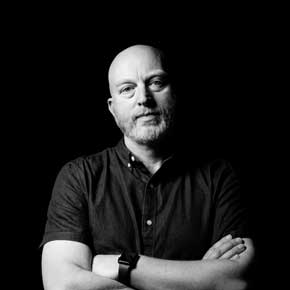
Professor of International Development
Geography at Northumbria University encompasses all of our work in physical and human geography, environmental science and management, health & safety, and disaster management.
Latest News and Features

UK network to accelerate the development of sustainable surface technologies
A new national network led by Newcastle University and Northumbria University, in partnership…

Criminologist wins acclaimed Philip Leverhulme Prize to pioneer a new criminology of the offshore world
A Northumbria University criminologist has been awarded a Philip Leverhulme Prize, one of the…
New platform maps charity support for the Armed Forces community
Pioneering data platform maps where the Armed Forces community receive support from charities

Northumbria co-leads study on fairer support for families
A major study co-led by Northumbria University will test whether attachment assessments lead…

New AHRC research shows how community innovation can power the next phase of devolution.
New research published today by the AHRC Creative Communities programme provides fresh evidence…

Free sessions to help families navigate the SEND system
Northumbria University's award-winning Student Law Office is launching SEND Decoded, a series…

New Doctoral Training Programme will tackle key polar science questions with a reduced carbon footprint
The Net Zero Polar Science (NZPS) Doctoral Training Programme (DTP) has welcomed its first…

New Student Health Hub brings joint health and wellbeing support
A new drop-in service is bringing health and wellbeing support for students at both Newcastle…
More events
Upcoming events

Next Stop Northumbria
Manchester Marriott Hotel Piccadilly
-

-
Magnetospheric Multiscale Science Working Team Meeting
Sutherland Building

Christmas Market and Tree lighting
Northumbria University
-
