
Major differences in the way that Antarctica’s ice sheets formed millions of years ago could be the reason why ice is melting faster today than predicted, especially in West Antarctica, an international research team has discovered.
The surprising findings, detailed in unique geological sediment samples from drill cores, provide insights into when and where today’s Antarctic ice sheets formed, and are published today in the prestigious journal Science.
The analysis of sediment samples combined with complex climate and ice-sheet modelling has revealed that while the permanent glaciation of Antarctica began around 34 million years ago, the ice did not immediately cover the whole continent, as had been previously assumed.
Instead, it took almost seven million years before climate conditions in West Antarctica changed to allow ice sheets to form on this side of the continent.
The findings have been describef by the research team as “completely changing what we know about the first Antarctic glaciation,” establishing the history of the formation of the icy Antarctic continent for the first time. They also provide key insights into how the East and West Antarctic ice sheets react to external influences and fundamental climatic changes.
During the 2017 Polarstern expedition, a specialist seafloor drilling rig retrieved samples of sediment core from 10 metres into the seabed, near Pine Island and Thwaites Glaciers on the Amundsen Sea coast of West Antarctica.

The samples were analysed by an international team of geoscientists and palaeoclimate modellers, who combined the newly obtained data with existing data on air and water temperatures and the occurrence of ice to better understand where the first permanent ice formed in Antarctica.
Their data sets revealed that the basic climactic conditions required for the formation of permanent ice only existed in East Antarctica, and that there was no presence of ice in this region during the first major phase of Antarctic glaciation.
In East Antarctica, moist air masses in the coastal regions of the East Antarctic Northern Victoria Land reached the high Transantarctic Mountains, creating ideal conditions for permanent snow and the subsequent formation of ice caps. From there, the ice sheet spread rapidly inland.
West Antarctica, however, was largely covered by dense broadleaf forests at the time – similar to Patagonia today – with its cool-temperate climate preventing ice from forming.
It was almost seven million years later before climate conditions would allow for the ice sheet to advance towards the West Antarctic coast.
This outlines how differently the East and West Antarctic ice sheets react to external influences and fundamental climatic changes.
Ulrich Salzmann, a Professor of Palaeoecology and Palaeoclimatology in Northumbria University’s Department of Geography and Environmental Sciences, is an expert in reconstructing the Earth’s past environments.
He was part of the research team led by the Alfred Wegener Institute, Helmholtz Centre for Polar and Marine Research (AWI) in Germany, and also involved researchers from the British Antarctic Survey, Heidelberg University and the MARUM Center for Marine Environmental Sciences at the University of Bremen.
Professor Salzmann analysed pollen grains and microfossils recovered from the sediment to reconstruct the vegetation and climate conditions.

He explained: “Around 34 million years ago, our planet underwent one of the most fundamental climate shifts that still influences global climate conditions today: the transition from a greenhouse world, with no or very little accumulation of continental ice, to an icehouse world, with large permanently glaciated areas.
“During this time, the Antarctic ice sheet built up, but how, when and, above all, where, this occurred was not known due to a lack of reliable data and samples from key regions, especially from West Antarctica, that document the changes in the past. This study has now closed this knowledge gap.
“The preserved pollen and spores in the sediment reveal a detailed picture of the past West Antarctic landscape that was similar to Patagonia today with a cool-temperate, southern beech-rich forests and woodlands.
“Our findings are critical for understanding the extreme climate transition from the greenhouse climate to our current icehouse climate.”
Importantly, the study also provides new insight that allows climate modellers to simulate more accurately how permanently glaciated areas affect global climate dynamics – the interactions between ice, ocean and atmosphere.
Geologist Dr Johann Klages from the AWI, who led the research team said: “This is of crucial importance, especially in light of the fact that we could be facing such a fundamental climate change again in the near future.”
Northumbria University is a world-leader in research on cold and palaeo environments and the future of ice on Earth.
The paper, Ice sheet-free West Antarctica during peak early Oligocene glaciation is now published in Science.
Geography At Northumbria University Encompasses All Of Our Work In Physical And Human Geography, Environmental Science And Management, Health & Safety, And Disaster Management.
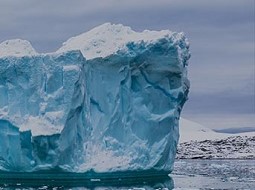
Northumbria's academics are studying the future of ice sheets and glaciers worldwide in a warming world. This involves understanding the causes of ongoing changes in Antarctica, Greenland and alpine areas, as well as assessing future changes and resulting impacts on human environments globally.
This is the place to find all the latest news releases, feature articles, expert comment, and video and audio clips from Northumbria University
Latest News and Features

UK network to accelerate the development of sustainable surface technologies
A new national network led by Newcastle University and Northumbria University, in partnership…

Criminologist wins acclaimed Philip Leverhulme Prize to pioneer a new criminology of the offshore world
A Northumbria University criminologist has been awarded a Philip Leverhulme Prize, one of the…
New platform maps charity support for the Armed Forces community
Pioneering data platform maps where the Armed Forces community receive support from charities

Northumbria co-leads study on fairer support for families
A major study co-led by Northumbria University will test whether attachment assessments lead…

New AHRC research shows how community innovation can power the next phase of devolution.
New research published today by the AHRC Creative Communities programme provides fresh evidence…

Free sessions to help families navigate the SEND system
Northumbria University's award-winning Student Law Office is launching SEND Decoded, a series…

New Doctoral Training Programme will tackle key polar science questions with a reduced carbon footprint
The Net Zero Polar Science (NZPS) Doctoral Training Programme (DTP) has welcomed its first…

New Student Health Hub brings joint health and wellbeing support
A new drop-in service is bringing health and wellbeing support for students at both Newcastle…
More events
Upcoming events

Next Stop Northumbria
Manchester Marriott Hotel Piccadilly
-

-
Magnetospheric Multiscale Science Working Team Meeting
Sutherland Building

Christmas Market and Tree lighting
Northumbria University
-
