-
Study
-
Quick Links
- Open Days & Events
- Real-World Learning
- Unlock Your Potential
- Tuition Fees, Funding & Scholarships
- Real World Learning
-
Undergraduate
- Application Guides
- UCAS Exhibitions
- Extended Degrees
- School & College Outreach
- Information for Parents
-
Postgraduate
- Application Guide
- Postgraduate Research Degrees
- Flexible Learning
- Change Direction
- Register your Interest
-
Student Life
- Students' Union
- The Hub - Student Blog
- Accommodation
- Northumbria Sport
- Support for Students
-
Learning Experience
- Real-World Learning
- Research-enriched learning
- Graduate Futures
- The Business Clinic
- Study Abroad
-
-
International
International
Northumbria’s global footprint touches every continent across the world, through our global partnerships across 17 institutions in 10 countries, to our 277,000 strong alumni community and 150 recruitment partners – we prepare our students for the challenges of tomorrow. Discover more about how to join Northumbria’s global family or our partnerships.
View our Global Footprint-
International Students
- Information for International Students
- Northumbria and your Country
- International Student Events
- Application Guide
- Entry Requirements and Education Country Agents
- Global Offices and Regional Teams
- English Requirements
- English Language Centre
- International student support
- Cost of Living
-
International Fees and Funding
- International Undergraduate Fees
- International Undergraduate Funding
- International Masters Fees
- International Masters Funding
- International Postgraduate Research Fees
- International Postgraduate Research Funding
- Useful Financial Information
-
International Partners
- Agent and Representatives Network
- Global Partnerships
- Global Community
-
International Mobility
- Study Abroad
- Information for Incoming Exchange Students
-
-
Business
Business
The world is changing faster than ever before. The future is there to be won by organisations who find ways to turn today's possibilities into tomorrows competitive edge. In a connected world, collaboration can be the key to success.
More on our Business Services-
Business Quick Links
- Contact Us
- Business Events
- Research and Consultancy
- Education and Training
- Workforce Development Courses
- Join our mailing list
-
Education and Training
- Higher and Degree Apprenticeships
- Continuing Professional Development
- Apprenticeship Fees & Funding
- Apprenticeship FAQs
- How to Develop an Apprentice
- Apprenticeship Vacancies
- Enquire Now
-
Research and Consultancy
- Space
- Energy
- AI Futures
- CHASE: Centre for Health and Social Equity
- NESST
-
-
Research
Research
Northumbria is a research-rich, business-focused, professional university with a global reputation for academic quality. We conduct ground-breaking research that is responsive to the science & technology, health & well being, economic and social and arts & cultural needs for the communities
Discover more about our Research-
Quick Links
- Research Peaks of Excellence
- Academic Departments
- Research Staff
- Postgraduate Research Studentships
- Research Events
-
Research at Northumbria
- Interdisciplinary Research Themes
- Research Impact
- REF
- Partners and Collaborators
-
Support for Researchers
- Research and Innovation Services Staff
- Researcher Development and Training
- Ethics, Integrity, and Trusted Research
- University Library
- Vice Chancellors Fellows
-
Research Degrees
- Postgraduate Research Overview
- Doctoral Training Partnerships and Centres
- Academic Departments
-
Research Culture
- Research Culture
- Research Culture Action Plan
- Concordats and Commitments
-
-
About Us
-
About Northumbria
- Our Strategy
- Our Staff
- Our Schools
- Place and Partnerships
- Leadership & Governance
- University Services
- Northumbria History
- Contact us
- Online Shop
-
-
Alumni
Alumni
Northumbria University is renowned for the calibre of its business-ready graduates. Our alumni network has over 253,000 graduates based in 178 countries worldwide in a range of sectors, our alumni are making a real impact on the world.
Our Alumni - Work For Us
Academics are calling for early intervention for those at risk of becoming food insecure within the veteran community, potentially introducing cost-saving benefits for the NHS and supporting charities.
A study led by Northumbria University’s Northern Hub for Veterans and Military Families Research looked at wider household poverty among veterans, with a particular focus on food security in veterans’ families – meaning they are without reliable access to nutritious and healthy food.
The Tri-Service Food Insecurity Study, which was funded by the Armed Forces Covenant Fund Trust and SSAFA, the UK’s oldest tri-service military charity, found that younger veterans of working age are most at risk of becoming food insecure.
Using survey data from UK veterans and their families, researchers have identified those veterans who may be at greater risk of food insecurity, which can be used to help identify those within the community who are likely to experience food insecurity, and wider financial hardship, before they reach a ‘crisis’ point.
Age, having a long-term medical condition, living in rented accommodation, receiving benefits, lower military rank on leaving the services and marital status are all associated risk factors. This information creates an opportunity to provide veterans who are at the most risk of food insecurity, with tailored support and in doing so, enables early intervention and the early allocation of resources.
Professor Matthew Kiernan, Director of the Northern Hub for Veterans and Military Families Research at Northumbria University said: “Now that we have an idea of what a veteran who is experiencing food insecurity and financial hardship looks like, we can consider how we might coordinate services to intervene to avoid crisis and build support around the causes of food insecurity and not just addressing the symptoms. A multi-organisational approach needs to be adopted so that the findings of studies such as this can make a difference to the everyday lives of veterans.
“The next step is to look at how health and social care services can better work in tandem with military charities to identify veterans who might be reporting, or experiencing, these difficulties, so that they are referred to an appropriate service within the military charities sector.”
Using preventative measures would not only benefit veterans and their families, but could also reduce the economic cost of crisis and the need for additional support from the NHS and charities, which is often costly.
Anna Wright, Chief Executive of the Armed Forces Covenant Fund Trust, said: “‘The Trust welcomes this important work to identify the risk factors of food insecurity. This knowledge could help organisations to provide early intervention and support that is tailored to individuals, particularly those most at risk. Early intervention means that less resource is required and, crucially, that Veterans are supported before they reach crisis point.”
The research team now want to understand what drives the identified risk factors to address these issues within a proposed model for early referral within primary healthcare.
This study is part of a programme of research from the Northern Hub for Veterans and Military Families Research and the Healthy Living Lab at Northumbria University, working closely with SSAFA and their volunteer network to collect and analyse a range of anonymised data from serving personnel, veterans and families from all three branches of the Armed Forces community.
The Tri-Service Food Insecurity Study can be found on TheArmed Forces Covenant Fund Trust website.
Visit the Northern Hub for Veterans and Military Families Research’s webpages to find out more about their work to improve the health and social wellbeing of veterans and their families.
Northumbria University is dedicated to reducing health and social inequalities and improving social, economic and health outcomes for the most marginalised in society. Through its new Centre for Health and Social Equity, known as CHASE, researchers will be delivering world-leading health and social equity research and creating innovative, evidence-based policies and data-driven solutions to bring impactful change across the region, the UK and globally.
This is the place to find all the latest news releases, feature articles, expert comment, and video and audio clips from Northumbria University
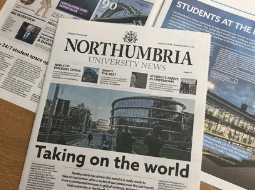
Northumbria University News is packed full of news and features covering everything from research projects and business partnerships to student and staff awards.
Latest News and Features
Recognition for researcher dedicated to tackling food insecurity in the UK
A Northumbria University academic who has played a key role in bringing breakfast clubs and…
University partnership brings space research to life for school pupils
A North East school has partnered with solar and space physics experts from Northumbria University…
Telescope reveals surprising secrets in Jupiter's northern lights
An international team of scientists, led by a PhD researcher from Northumbria University, has…
Northumbria Film graduates receive Royal Television Society honours
Two Northumbria University Film graduates have won Royal Television Society (RTS) Student Awards…
Scientists reveal the best and worst-case scenarios for a warming Antarctica
A new analysis of decades of research on the Antarctic Peninsula, involving experts from Northumbria…
PhD student maps mysterious upper atmosphere of Uranus for the first time
A Northumbria University PhD student has led an international team of astronomers in creating…
Developing technology to help empower young innovators across the globe
Northumbria University researchers have joined forces with the International Federation of…
Working-class roots drive North East graduate’s AI healthcare revolution
A Northumbria University graduate has developed groundbreaking AI technology that could save…
Upcoming events
Launch of the Northern Interprofessional Education Strategy
Northumbria University
-