
-
Study
-
Quick Links
- Open Days & Events
- Real-World Learning
- Unlock Your Potential
- Tuition Fees, Funding & Scholarships
- Real World Learning
-
Undergraduate
- Application Guides
- UCAS Exhibitions
- Extended Degrees
- School & College Outreach
- Information for Parents
-
Postgraduate
- Application Guide
- Postgraduate Research Degrees
- Flexible Learning
- Change Direction
- Register your Interest
-
Student Life
- Students' Union
- The Hub - Student Blog
- Accommodation
- Northumbria Sport
- Support for Students
-
Learning Experience
- Real-World Learning
- Research-enriched learning
- Graduate Futures
- The Business Clinic
- Study Abroad
-
-
International
International
Northumbria’s global footprint touches every continent across the world, through our global partnerships across 17 institutions in 10 countries, to our 277,000 strong alumni community and 150 recruitment partners – we prepare our students for the challenges of tomorrow. Discover more about how to join Northumbria’s global family or our partnerships.
View our Global Footprint-
International Students
- Information for International Students
- Northumbria and your Country
- International Student Events
- Application Guide
- Entry Requirements and Education Country Agents
- Global Offices and Regional Teams
- English Requirements
- English Language Centre
- International student support
- Cost of Living
-
International Fees and Funding
- International Undergraduate Fees
- International Undergraduate Funding
- International Masters Fees
- International Masters Funding
- International Postgraduate Research Fees
- International Postgraduate Research Funding
- Useful Financial Information
-
International Partners
- Agent and Representatives Network
- Global Partnerships
- Global Community
-
International Mobility
- Study Abroad
- Information for Incoming Exchange Students
-
-
Business
Business
Northumbria University is proud to offer a range of Professional, Statutory and Regulatory Body (PSRB) approved & accredited courses and programmes. Explore our list of courses and programmes under our Education and Training page.
More on our Business Services-
Business Quick Links
- Contact Us
- Business Events
- Research and Consultancy
- Education and Training
- Workforce Development Courses
- Join our mailing list
-
-
Research
Research
Northumbria is a research-rich, business-focused, professional university with a global reputation for academic quality. We conduct ground-breaking research that is responsive to the science & technology, health & well being, economic and social and arts & cultural needs for the communities
Discover more about our Research-
Quick Links
- Research Peaks of Excellence
- Academic Departments
- Research Staff
- Postgraduate Research Studentships
- Research Events
-
Research at Northumbria
- Interdisciplinary Research Themes
- Research Impact
- REF
- Partners and Collaborators
-
Support for Researchers
- Research and Innovation Services Staff
- Researcher Development and Training
- Ethics, Integrity, and Trusted Research
- University Library
- Vice Chancellors Fellows
-
Research Degrees
- Postgraduate Research Overview
- Doctoral Training Partnerships and Centres
- Academic Departments
-
Research Culture
- Research Culture
- Research Culture Action Plan
- Concordats and Commitments
-
-
About Us
-
About Northumbria
- Our Strategy
- Our Staff
- Our Schools
- Place and Partnerships
- Leadership & Governance
- University Services
- Northumbria History
- Contact us
- Online Shop
-
-
Alumni
Alumni
Northumbria University is renowned for the calibre of its business-ready graduates. Our alumni network has over 253,000 graduates based in 178 countries worldwide in a range of sectors, our alumni are making a real impact on the world.
Our Alumni - Work For Us
In its 10th anniversary, National Hoarding Awareness Week took place in May with a theme focusing on ‘Then and Now’ regarding education and awareness of the disorder.
The week is a stakeholder awareness campaign across the political, health and social care communities to raise awareness of the risks associated with hoarding.
It aims to spread more widely an awareness of hoarding facts, promote greater understanding and acceptance across those who can influence change through education, and encourage a stronger tendency for key influencers to support and promote at key moments.
In conversation with BBC Radio Newcastle, Professor Nick Neaves gave insight into the possible causes of hoarding and deriving from his research, he discusses the effects of living with hoarding on individuals and their friends and family.
The full interview is available online here, but here are some of the key takeaways.
Hoarding
Hoarding is a recognised mental health condition, associated with anxiety and depression which can ruin people’s lives.
The definition of hoarding is someone who accumulates too much stuff and attaches sentimental labels to these objects. This makes it difficult for them to disregard things they no longer need which results in clutter affecting their quality of life.
There are also different types of hoarding, including digital hoarders and animal hoarding.
Hoarder or collector?
Hoarders tend to be different from collectors, collectors accumulate specific ‘sets of things’ and their motivations are different from people who hoard who tend to treat possessions as a kind of ‘comfort blanket’.
Collecting also tends to be “finite” and there is a clear end, whereas the items that people can hoard tend to be unlimited.
Causes
The exact cause of hoarding requires more research, however people who hoard have incredibly strong attachment to every item and associate it with emotion, significance, memory.
In some cases, hoarders transfer their need for security, certainty and reassurance onto objects where they have lacked to get these things from other people. In fact some people who hoard come to associate people with trauma, stress, abuse and uncertainty.
These behaviours that have been there for many years become ingrained. In many cases hoarders have experienced some kind of trauma in their past, typically childhood. The loss of a parent/parents, abuse, lack of certainty over basic needs such as food, shelter or affection.
There can also be very close links with conditions such as autism, OCD, anxiety, depression, poor working memory. How they all interact we don’t yet fully understand.
Effects
Hoarders end up with clutter, most of which will take over their living quarters and make it difficult for them to lead normal lives. Due to the stigma surrounding hoarding they may feel ashamed of the way they live and hide it from friends/family/colleagues by isolating themselves and withdrawing from others.
People who hoard also may experience depression, anxiety, and helplessness from feeling overwhelmed and/or not knowing how to improve their lives or where to get help.
Support available for hoarders
There are many options available for people to get help with their hoarding disorder. This can be through more “traditional” routes such as going to their GP and getting a diagnosis. Whilst this may be beneficial to some, other may prefer accessing help from charities and local organisations.
Some organisation mentioned by Professor Neave include Hoarding UK, Hoarding Disorders UK and Clouds End. These organisations have resources, support services and people available to talk.
Additional resources:
National Hoarding Awareness Week
https://www.nhs.uk/mental-health/conditions/hoarding-disorder/
Dr Nick Neave is a Professor within the Department of Psychology. He is Director of the Hoarding Research Group, and Chair of the UK Hoarding Partnership. With his colleague Claire Murphy-Morgan he runs a support group for people who hoard, which meets at Bensham Grove Community Centre on the first Monday of the month from 11am-1pm.
*Image Credit: gettyimages/trekandshoot.
Northumbria University's Department of Psychology demonstrates a commitment to excellence, manifest in first-class teaching and learning underpinned by high quality research, and promoting business facing professional engagement.

Northumbria University News is packed full of news and features covering everything from research projects and business partnerships to student and staff awards.
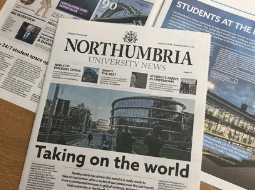
This is the place to find all the latest news releases, feature articles, expert comment, and video and audio clips from Northumbria University
Latest News and Features
Northumbria University delivers diverse programme of public engagement events for ESRC Festival of Social Science 2025
Northumbria University delivered fifteen innovative public engagement events as part of the…
Recognition for researcher dedicated to tackling food insecurity in the UK
A Northumbria University academic who has played a key role in bringing breakfast clubs and…
University partnership brings space research to life for school pupils
A North East school has partnered with solar and space physics experts from Northumbria University…
Telescope reveals surprising secrets in Jupiter's northern lights
An international team of scientists, led by a PhD researcher from Northumbria University, has…
Northumbria Film graduates receive Royal Television Society honours
Two Northumbria University Film graduates have won Royal Television Society (RTS) Student Awards…
Scientists reveal the best and worst-case scenarios for a warming Antarctica
A new analysis of decades of research on the Antarctic Peninsula, involving experts from Northumbria…
PhD student maps mysterious upper atmosphere of Uranus for the first time
A Northumbria University PhD student has led an international team of astronomers in creating…
Developing technology to help empower young innovators across the globe
Northumbria University researchers have joined forces with the International Federation of…
Upcoming events
Launch of the Northern Interprofessional Education Strategy
Northumbria University
-