
The 40-year mystery behind the cause of Jupiter’s spectacular natural light displays has finally been explained thanks to research by a team of international physicists, including Northumbria University’s Professor Jonathan Rae.
Jupiter’s spectacular X-ray auroral displays are the most powerful in the solar system, much stronger than Earth’s aurora borealis or ‘Northern Lights’ for example. However, since their discovery 40 years ago, the processes that produce Jupiter’s X-ray flares have remained unknown.
Over the last four years a team of scientists have been combining data gathered by the European Space Agency’s XMM-Newton telescope, which is situated in Earth’s orbit and carries out remote observations of Jupiter; with NASA’s Juno spacecraft, which is located within Jupiter’s magnetic environment and takes readings from within the giant planet’s magnetic field.
This has revealed for the first time that Jupiter’s X-ray auroras are caused by particles called ions ‘surfing’ magnetic waves down into Jupiter’s atmosphere and colliding with plasma waves.
The research was led by Zhonghua Yao, of the Chinese Academy of Sciences, Beijing; and William Dunn, of UCL; in collaboration with Professor Rae of Northumbria University, as well as academics from the UK, Spain, Belgium and the United States. Their findings have today been published in the American Association for the Advancement of Science’s prestigious journal Science Advances.
Using the data from ESA’s XMM-Newton telescope and NASA’s Juno spacecraft, the research team discovered that Jupiter’s pulsating X-ray aurorae could be linked to planetary sized electromagnetic waves travelling along the magnetic field of Jupiter for millions of kilometres close to the planet.
Energetic heavy ions are trapped by these expanded field lines, and from time to time planetary-sized electromagnetic waves could expel them into Jupiter’s atmosphere, producing the stunning X-ray aurorae.
 In July 2017,
XMM-Newton observed Jupiter continuously for 26 hours and saw X-ray aurorae
pulsating every 27 minutes. Simultaneously, the Juno spacecraft had been
travelling between 62 and 68 Jupiter radii above the planet’s pre-dawn areas.
This was exactly the area that the team’s simulations suggested were important
for triggering the pulsations. So, the team searched the Juno data for any
magnetic processes that were occurring at the same rate.
In July 2017,
XMM-Newton observed Jupiter continuously for 26 hours and saw X-ray aurorae
pulsating every 27 minutes. Simultaneously, the Juno spacecraft had been
travelling between 62 and 68 Jupiter radii above the planet’s pre-dawn areas.
This was exactly the area that the team’s simulations suggested were important
for triggering the pulsations. So, the team searched the Juno data for any
magnetic processes that were occurring at the same rate.
They found that the pulsating X-ray aurora are caused by vibrations of Jupiter’s magnetic field. As the field vibrates, it heats particles trapped in Jupiter’s magnetic field, triggering a phenomenon called electromagnetic ion cyclotron (EMIC) waves, in which the particles are accelerated along the field lines.
The particles themselves, are electrically charged atoms called ions. Guided by the field, the ions ‘surf’ the EMIC wave across millions of kilometres of space, eventually slamming into the planet’s atmosphere and triggering the X-ray aurora.
Speaking about the research, Professor Jonathan Rae of Northumbria University said: “Jupiter and Earth are very different environments, but this research is a wonderful example of how the knowledge that we’ve gained from Earth about fundamental plasma physics can be used to understand other space environments. If you know how the aurora are made, then you can use it as a remote sensing tool to help us understand more about Jupiter’s huge space environment from afar.”
Professor Rae, from Northumbria University’s Department of Mathematics, Physics and Electrical Engineering, is a member of the University’s internationally renowned Solar-Terrestrial Science research group and is involved in a number of other high profile research projects. These include playing a key role in the UKRI SWIMMR Project which provides £20M support to operational space weather forecasting and mitigation in the UK in support of the UK Met Office. The Solar-Terrestrial Science research group is also supported by funding from STFC, NERC, the Leverhulme Trust, Royal Astronomical Society and the UK Space Agency.
Professor James McLaughlin leads Northumbria’s Solar-Terrestrial Science research group. Speaking about Professor Rae’s latest research he said: “It is fantastic to finally see an explanation to the 40-year-old mystery of Jupiter’s beautiful X-ray light show. I am delighted that Professor Rae is playing a leading role in this area, and this ground-breaking result has been achieved via a strong international team combining NASA and ESA data. I am constantly amazed that fundamental plasma processes, including those studied at undergraduate level, can be used to explain and predict these highly-energetic space environments.”
Now that the process that causes Jupiter’s X-ray auroras has been identified, it opens up a wealth of possibilities for where it could be studied next. For example, Jupiter’s magnetic field is filled with sulphur and oxygen ions that are being emitted by the volcanoes on the moon Io. On Saturn, the moon Enceladus jets water into space, filling Saturn’s magnetic field with water group ions.
“This is a fundamental process that’s applicable to Saturn, Uranus, Neptune and probably exoplanets as well,” explained principal author Zhonghua Yao.
Beyond planets, there are larger environments where this process could be taking place too. In the study of galaxy clusters, astronomers see gas flowing between clusters that have similar densities, similar temperatures and other properties to that in Jupiter's magnetosphere. So, it could be that EMIC waves play an important role there too in transferring energy from one place to another.
Northumbria University’s Solar-Terrestrial Science research group is part of Unit of Assessment 14 Geography and Environmental Studies in the Research Excellence Framework (REF) 2021. Find out more about Northumbria University’s REF 2021 submission here.
Department of Mathematics, Physics and Electrical Engineering
This department encompasses all of our work in Mathematics, Statistics and Physics including Astrophysics, Electrical and Electronic Engineering, Energy, Smart Materials, Microelectronics and Communications.

Northumbria has submitted 1096 staff across thirteen Units of Assessment (UoA) to the Research Excellence Framework (REF) 2021. This submission reflects our research across four Faculties and nineteen Departments, incorporating traditional disciplines, such as English and Engineering, modern disciplines, such as Business and Design, and professional disciplines, such as Architecture and Nursing.
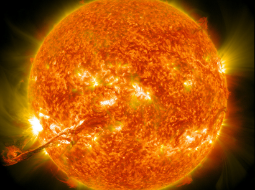
The Solar-Terrestrial Science group has a long-term research programme to investigate how the Sun drives space weather (a term describing a series of phenomena originating from the Sun).
Geography and Environmental Studies investigates the increasingly urgent issues affecting the world and its people such as the climate crisis, global sustainable development, solar-terrestrial science and cold climates.

This is the place to find all the latest news releases, feature articles, expert comment, and video and audio clips from Northumbria University
Latest News and Features

UK network to accelerate the development of sustainable surface technologies
A new national network led by Newcastle University and Northumbria University, in partnership…

Criminologist wins acclaimed Philip Leverhulme Prize to pioneer a new criminology of the offshore world
A Northumbria University criminologist has been awarded a Philip Leverhulme Prize, one of the…

New platform maps charity support for the Armed Forces community
Pioneering data platform maps where the Armed Forces community receive support from charities

Northumbria co-leads study on fairer support for families
A major study co-led by Northumbria University will test whether attachment assessments lead…

New AHRC research shows how community innovation can power the next phase of devolution.
New research published today by the AHRC Creative Communities programme provides fresh evidence…

Free sessions to help families navigate the SEND system
Northumbria University's award-winning Student Law Office is launching SEND Decoded, a series…

New Doctoral Training Programme will tackle key polar science questions with a reduced carbon footprint
The Net Zero Polar Science (NZPS) Doctoral Training Programme (DTP) has welcomed its first…

New Student Health Hub brings joint health and wellbeing support
A new drop-in service is bringing health and wellbeing support for students at both Newcastle…
More events
Upcoming events

Next Stop Northumbria
Manchester Marriott Hotel Piccadilly
-

-
Magnetospheric Multiscale Science Working Team Meeting
Sutherland Building

Christmas Market and Tree lighting
Northumbria University
-
