
Extreme weather is becoming more common around the world, with climatic events such as storms often causing damage to power networks, resulting in a loss of electricity – but could satellites prove to be a solution to maintaining energy supplies on earth?
Storms and floods can have devastating consequences, leaving thousands of homes without power, with vulnerable people particularly effected.
At the same time, the amount of renewable energy entering the UK power grid is increasing significantly as the UK aims to reach Net Zero by 2050.
Unlike fossil fuels or nuclear power, the amount of energy generated through solar or wind is much harder to predict, with sudden surges placing pressure on the power grid, also potentially causing disruption to power supply.
A new research project aims to tackle both these issues by using satellite technology to monitor and manage power grids more effectively, as well as helping restore power following an extreme weather event.
The SAT-Guard project (Satellite-Aided Technologies for advancing resilience - Guarding energy services under climate hazards, risks, and disasters) has received funding of approximately £1 million through UK Research and Innovation’s new cross research council responsive mode scheme.
It will be led by Durham University in partnership with Northumbria University, with support from industry partners including Northern Gas Networks.
 Dr Jing Jiang of Northumbria’s Department of Mathematics, Physics and Electrical Engineering will lead Northumbria’s involvement, which centres around the use
of satellite technology and data-driven energy scheduling to restore power.
Dr Jing Jiang of Northumbria’s Department of Mathematics, Physics and Electrical Engineering will lead Northumbria’s involvement, which centres around the use
of satellite technology and data-driven energy scheduling to restore power.
She said: “By using satellite images we will be able to get a much clearer picture of the amount and location of wind turbines, solar panels and other distributed energy resources in a local area.
“This will not only allow us to more accurately predict the energy which could potentially be entering the power grid, but also greatly improve energy coordination and management.
“In addition, if terrestrial communications systems are compromised due to extreme weather events, satellite communications can provide a reliable alternative, providing high-speed and reliable data transmission.”
Small-scale energy generation and storage units, such as rooftop solar panels, small wind turbines, batteries and electric vehicles, are known as distributed energy resources (DERs).
They are often owned and operated by homeowners at a consumer level and can be connected to the local power grid or used to power stand-alone applications.
With the amount of solar and wind power produced in the UK increasing, there are expected to be several million DERs connected to the power grid over the next decade.
It is also almost impossible to accurately predict the amount of energy generated by these renewable DERs due to a lack of information about their number and location and variations in weather conditions, which will only become more challenging with climate change.
If DERs are not managed correctly in future it could lead to power grid congestion, or extreme fluctuations in voltage which may cause widespread power outages.
 One of the key
elements of the SAT-Guard project will be the development of ‘digital twins’ – digital
replicas of real-world systems, such as the power grid, which can be used to
monitor, test and predict how the real system is working.
One of the key
elements of the SAT-Guard project will be the development of ‘digital twins’ – digital
replicas of real-world systems, such as the power grid, which can be used to
monitor, test and predict how the real system is working.
This will allow researchers to predict the impact extreme weather will have on DERs and consequently the power grid, and how to coordinate DERs to restore power, enhancing overall grid resilience.
The models will be tested at Northern Gas Network’s National Energy Research Village (NERV).
Situated on the outskirts of Gateshead this ‘living lab’ is home to a wide range of facilities including a solar farm, standby generation, two fully-functioning ‘hydrogen homes’, and a battery storage facility.
There is also a domestic test zone with nine residential dwellings of different ages, from 1910s era terrace building to 1990s era homes.
The SAT-Guard project was one of only 36 selected from 900 applications to the UKRI’s cross research council responsive mode pilot scheme, which shared over £32 million of funding across new and creative interdisciplinary ideas emerging from the research community.
Professor Alison Park, Deputy Executive Chair of the Economic and Social Research Council (ESRC) and UKRI Cross Research Council Responsive Mode Senior Responsible Officer said: “The perspectives of different disciplines, working together in collaboration, are vital to solving some of the most pressing problems we face as a society.
“The UKRI cross research council responsive mode scheme is designed to break down silos and champion research that transcends, combines and significantly spans traditional discipline boundaries.”
“We were all excited to see the innovative and bold approaches being adopted to tackle major issues ranging from climate change to global healthcare and look forward to following their progress.”
 Northumbria
University is currently constructing a £50 million
North East Space Skills and Technology Centre (NESST), with investment from the UK Space Agency and Lockheed Martin UK Space.
Northumbria
University is currently constructing a £50 million
North East Space Skills and Technology Centre (NESST), with investment from the UK Space Agency and Lockheed Martin UK Space.
Described as a “game-changer” for the UK space economy, NESST will bring together industry and academia to collaborate on internationally significant space research and technological developments.
Northumbria’s Professor Eamon Scullion is a leading expert on satellite-based laser communications systems and is working alongside Dr Jiang on the SAT-Guard project.
He said: “There is an ever-growing list of extremely varied an interesting applications of satellite technology, directly impacting and improving our everyday lives here on Earth.
“These applications can be very influential in providing new real-time information on both national and local activity.
“This project will uniquely address key challenges in the energy sector at a very local level in the UK, and through exploiting the novel satellite communications technology also developed at Northumbria University.”
Northumbria University researchers are specialising in developing new energy materials and systems to help deliver a cleaner, greener future. Using fundamental physics, chemistry and engineering, they are creating new ways of generating and storing renewable energy to help reach net zero targets.
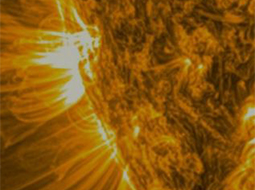
Northumbria University is powering the next generation of space innovation. Learn more about our expert academics, world class research and state of the art facilities.

Our North East Space Skills and Technology Centre will be a state of the art £50M facility developed by Northumbria, with investment from the UK Space Agency and the space and satellite division of industry giant Lockheed Martin.
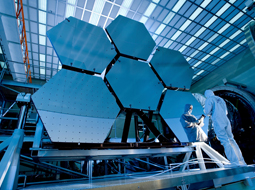
Department of Mathematics, Physics and Electrical Engineering
This department encompasses all of our work in Mathematics, Statistics and Physics including Astrophysics, Electrical and Electronic Engineering, Energy, Smart Materials, Microelectronics and Communications.

Space brings together research from multiple fields including engineering (electrical, mechanical, information technology, communications, power, propulsion, aerospace), and science (physics, chemistry, biology, materials) to stimulate new ideas, enhance excellence and drive innovation in the exploration and use of space for humankind.

Northumbria’s Solar and Space researchers work to understand the physics of the Sun and all aspects of the solar-terrestrial connection to improve space weather forecasting.

This is the place to find all the latest news releases, feature articles, expert comment, and video and audio clips from Northumbria University

Northumbria University News is packed full of news and features covering everything from research projects and business partnerships to student and staff awards.
Latest News and Features

New AHRC research shows how community innovation can power the next phase of devolution.
New research published today by the AHRC Creative Communities programme provides fresh evidence…

Free sessions to help families navigate the SEND system
Northumbria University's award-winning Student Law Office is launching SEND Decoded, a series…

New Doctoral Training Programme will tackle key polar science questions with a reduced carbon footprint
The Net Zero Polar Science (NZPS) Doctoral Training Programme (DTP) has welcomed its first…

New Student Health Hub brings joint health and wellbeing support
A new drop-in service is bringing health and wellbeing support for students at both Newcastle…

Researchers aim to grow optical fibres using biology instead of machinery
A new project led by Northumbria University aims to grow optical fibres using proteins, mimicking…

Training the next generation of space scientists
Northumbria University has hosted a major international workshop, bringing together leading…
.png?modified=20261006102851)
International design competition to grow the colour of the future
Researchers at Northumbria University and Imperial College London have launched an international…

Northumbria graduates celebrated at North East Business Awards
Graduate entrepreneurs from Northumbria University are celebrating after winning recognition…
More events
Upcoming events

Next Stop Northumbria
Europa Hotel
-
The Past We Inherit. The Future We Build: Better Decisions Happen Together
The Great Hall, Sutherland Building
-
Next Stop Northumbria
Manchester Marriott Hotel Piccadilly
-
