
Volunteers with different backgrounds, skills and experience have always worked together to make a difference on an international scale, yet there is little evidence about how ‘volunteering together’ can be utilised to have a bigger development impact.
As we approach International Volunteer Day on 5 December, academics from Northumbria University have prepared a briefing paper, which will be the first in a series, to highlight key findings from a collaborative research project between Northumbria and Voluntary Service Overseas (VSO). The international charity works to recruit skilled volunteers from across the globe who work to bring about change by empowering people living in some of the world’s poorest and most overlooked regions.
A team of six Northumbria staff, including project co-directors Professor Katy Jenkins and Professor Matt Baillie Smith, have been collaborating with researchers carrying out fieldwork in locations across Africa and Asia. They have built up a picture of the complexity of VSO’s ‘blended volunteering’ model, where volunteers who have travelled from overseas (international volunteers), work with volunteers offering support in their own country (national volunteers), alongside volunteers who give their time to help in their local area (community volunteers).
 The
research includes case studies from Tanzania, Uganda and Nepal, helping to understand
the different experiences and skills of individuals and communities who take
part in or benefit from VSO’s development projects.
The
research includes case studies from Tanzania, Uganda and Nepal, helping to understand
the different experiences and skills of individuals and communities who take
part in or benefit from VSO’s development projects.
So far, almost 160 participants - including current and former volunteers, representatives from partner organisations, and local stakeholders - have taken part in the research, through participatory workshops, interviews, and an online survey.
The participants who shared their views as part of the research have been involved in projects which support young people, education, livelihoods and healthcare programmes
Key research findings include:
- Diverse skills, behaviours and attributes of volunteers need to be identified and incorporated during the planning stages of a project with the fluidity of blended skills harnessed to ensure resilience, particularly in times of shock or crisis.
- Community volunteers have a unique role to play and organisations should spend time compiling more in-depth information on the skills and experience of individuals to ensure sustained impacts.
- Developing horizontal structures and management strategies for each project is key to empowering community volunteers and ensuring local knowledge is used to its full potential.
As a Professor of International Development at Northumbria, Katy is committed to working in partnership with development NGOs, and grassroots and community organisations, with a particular focus on the impact of community volunteering.
Speaking about the VSO research project findings so far, she said: “I think the findings to date show quite clearly that there needs to be a shift in focus from the individual volunteer to thinking about volunteers in teams. Our data shows that skillsets are not specific to one type or modality of volunteer.
“Blended volunteering is typically a mix of international, national and community volunteers and what we are seeing is, particularly in the context of the pandemic, blended volunteering has enabled greater flexibility, with national and community volunteers using their skills to keep projects running in the absence of international volunteers who haven’t been able to travel.
 “Therefore, our recommendations so far include
placing the diversity of volunteering experiences at the front and centre of each
project and ensuring community volunteers feel valued and that their
contributions are more visible. Often their local knowledge and experience is
essential to success.”
“Therefore, our recommendations so far include
placing the diversity of volunteering experiences at the front and centre of each
project and ensuring community volunteers feel valued and that their
contributions are more visible. Often their local knowledge and experience is
essential to success.”
She added that the team behind the research, including those on the ground in Tanzania, Uganda and Nepal, hoped the findings would encourage a step change in how volunteering is understood and enacted by development organisations.
Final outcomes from the research, which is funded by VSO, are expected to be published in the spring.
Ezekiel Esipisu, VSO’s Head of Programme Development, said: “The University of Northumbria study is a valuable addition to the increasing body of evidence about the value of the Blended volunteering model. These findings show that the diverse expertise, skills, knowledge and understanding contributed by different volunteer typologies informs the design and delivery of high-quality development programmes implemented by Voluntary Service Overseas.
“Particularly significant is the study’s evidence of the role community and youth volunteers have continued to play in delivering Volunteering for Development programme impact. Community and youth volunteers play an integral part in successfully delivering VSO’s programmes. They are trusted, enthusiastic and show unwavering commitment in supporting their communities, especially during the COVID19 pandemic response and the current building back phase.”
The roles of volunteers and activists as development and humanitarian actors is a significant theme for researchers of different disciplines at Northumbria, who work together as part of the University’s Centre for International Development research group.
Their research addresses the activities of local volunteers in conflict settings, the roles of local volunteers in health promotion, the activities of international volunteers from across the globe, and the relationships between different types of volunteers and volunteering.
To find out more about the work of the Centre for International Development team and studying International Development at Northumbria, visit northumbria.ac.uk
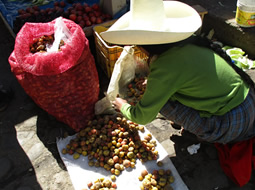

Professor of International Development
Geography At Northumbria University Encompasses All Of Our Work In Physical And Human Geography, Environmental Science And Management, Health & Safety, And Disaster Management.

The Department Offers An Exciting And Extensive Range Of High-Quality Undergraduate And Post-Graduate Courses In Criminology, Politics, And Sociology.
Latest News and Features
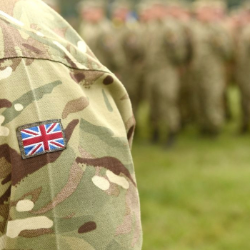
New platform maps charity support for the Armed Forces community
Pioneering data platform maps where the Armed Forces community receive support from charities

Northumbria co-leads study on fairer support for families
A major study co-led by Northumbria University will test whether attachment assessments lead…

New AHRC research shows how community innovation can power the next phase of devolution.
New research published today by the AHRC Creative Communities programme provides fresh evidence…

Free sessions to help families navigate the SEND system
Northumbria University's award-winning Student Law Office is launching SEND Decoded, a series…

New Doctoral Training Programme will tackle key polar science questions with a reduced carbon footprint
The Net Zero Polar Science (NZPS) Doctoral Training Programme (DTP) has welcomed its first…

New Student Health Hub brings joint health and wellbeing support
A new drop-in service is bringing health and wellbeing support for students at both Newcastle…

Researchers aim to grow optical fibres using biology instead of machinery
A new project led by Northumbria University aims to grow optical fibres using proteins, mimicking…

Training the next generation of space scientists
Northumbria University has hosted a major international workshop, bringing together leading…
More events
Upcoming events

Next Stop Northumbria
Europa Hotel
-
The Past We Inherit. The Future We Build: Better Decisions Happen Together
The Great Hall, Sutherland Building
-
Next Stop Northumbria
Manchester Marriott Hotel Piccadilly
-
