English Language and Literature (Extended Degree) (BA Hons)
 Option for Placement Year
Option for Study Abroad

Option for Placement Year
Option for Study Abroad
On our English Language and Literature course, you will study fantastically stimulating and distinctive modules that range from Shakespeare to contemporary fiction, and that explore how the English language works, where it comes from, and why people use English in different ways.
We aspire to help you as you help yourself in becoming a ‘citizen scholar’ who is able to think independently and make your own contribution to the world. As part of this, we ensure that you engage with advanced linguistic concepts and literature from around the world. We also offer options to broaden your experience and cultural sensitivity by studying abroad for a semester in your second year, usually in North America or mainland Europe.
This English degree is for you, if you are passionate about understanding language, literature, and how the two connect. Enthusiastic, research-active staff ensure you will study a stimulating, distinctive, and wide range of modules, covering topics, issues, texts and concepts in both language and literature, from canonical figures like Shakespeare, to cutting-edge contemporary fiction and theory, from the fundamentals of how the English language works, how people use it, and how that knowledge can help us to communicate more effectively.
You will develop the transferable skills in analysis, interpretation, communication, argument and research needed to excel at university and after, as we help you become a confident, independent, critical and active learner able to think and thrive as you make your contribution to the world.
Similar courses you may be interested in: English Language Studies BA, English Literature BA or discover all of our available English Courses and find the course for you.
This extended degree provides an alternative route to higher education and supports those who don’t meet the standard entry requirements for an undergraduate degree. It includes a foundation year where you will explore a wide range of topics taken from across the real-world subject areas such as history, literature, language and linguistics, creative writing and American studies.
Immersed in a stimulating and challenging learning environment, in your foundation year you will explore a wide range of key areas, including history, literature, and politics, as well as the digital humanities. Teaching methods include lectures, workshops and seminars, guided study and self-directed learning. You will learn to share ideas with your peers and work as a productive member of a team. Guest speakers from across the humanities will put what you have learnt into context and give you a real-world perspective.
The foundation year of the course delivered at level 3 which develops your ability to study in Higher Education is not accredited. Subsequent levels and years are accredited and deliver the knowledge, competencies, and skills required to meet the specific course accreditation requirements that relate to the approved accredited award title.
UCAS Code
Z009
Level of Study
Undergraduate
Mode of Study
4 years Full Time or 5 years with a placement (sandwich)/study abroad
School
Humanities and Social Sciences
Location
City Campus, Northumbria University
City
Newcastle
Start
September 2027
Fees
Fee Information
Modules
Module Information
Explore ideas, drive change.
.jpg?modified=20201119191734)
School

Study

Northumbria historian receives prestigious research prize.
Find out more.
Northumbria student signs major book publishing deal.
Find out more.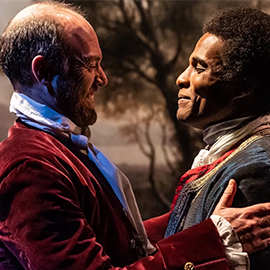
Northumbria Professor wins 'best new play' at national theatre awards.
Find out more.
From care leaver to government AI leader: Northumbria's graduate's extraordinary journey
Read MoreDiscover more about what you will learn on the course, more about our academics research interests, and hear from current students by watching our videos
At the heart of each Northumbria campus, our libraries provide a range of study space and technology to suit every learning style.
Find out about some of the key research areas in our department and discover how this research enhances your learning.
You can boost your CV and develop your experience whilst studying at Northumbria.
From first year through to final year and beyond graduation, we are here to help.
Visit an Open Day to get an insight into what it's like to study English Literature. Speak to staff and students from the course and get a tour of the facilities.
Standard Offer 72 UCAS Tariff Points
From a combination of acceptable Level 3 qualifications which may include: A-level, T Level, BTEC Diplomas/Extended Diplomas, Scottish and Irish Highers, Access to HE Diplomas, or the International Baccalaureate.
Find out how many points your qualifications are worth by using the UCAS Tariff calculator: www.ucas.com/ucas/tariff-calculator
Contextual Admissions 56 UCAS Tariff points
Northumbria University is committed to supporting all individuals to achieve their ambitions and we understand that every applicant’s circumstances can be different, which is why we take a flexible approach and assess your individual circumstances and potential when reviewing your application.
To find out more, review our Northumbria Entry Requirement Essential Information page for further details www.northumbria.ac.uk/entryrequirementsinfo
GCSE Requirements:
Applicants will need Maths, Statistics, or Physics and English Language at minimum grade 4/C, or equivalents.
International Qualifications:
We welcome applicants with a range of qualifications which may not match those shown above.
If you have qualifications from outside the UK, find out what you need by visiting www.northumbria.ac.uk/yourcountry
English Language Requirements:
International applicants should have a minimum overall IELTS (Academic) score of 6.0 with 5.5 in each component (or an approved equivalent*).
*The university accepts a large number of UK and International Qualifications in place of IELTS. You can find details of acceptable tests and the required grades in our English Language section: www.northumbria.ac.uk/englishqualifications
UK Fee in Year 1: £5,760
The UK tuition fee for 27/28 is £10,050 and is set in line with the UK Government's tuition fee cap. The University may increase this fee in subsequent years in line with any changes to the tuition fee cap. Students will be notified of any increase ahead of it taking effect. The remaining fees for 27/28 are to be confirmed and relate to the International Soccer Academy and accommodation fees. Accommodation fees may increase in subsequent years. Students will be notified of any increase ahead of the re-issuing of tenancy agreements. The University may increase tuition fees in the second and subsequent years of your course at our discretion in line with any inflationary or other uplift, as decided by the UK Government, up to the maximum amount for fees permitted by UK law or regulation for that academic year. To give students an indication of the likely scale of any future increase, the UK government has suggested that increases may be linked to RPIX (Retail Price Index excluding mortgage interest payments). If the University intends to exercise this right to increase tuition fees, notification will be communicated with all students affected by the end of June in the academic year before the one in which we intend to exercise that right. Student fee loans have risen in line with the level of uplift decided by the UK Government. Extended Degrees: Students will pay the applicable Foundation Year fee in Year 0. Tuition fees will follow the Year 1 (Level 4) cap in the first year of Undergraduate study, with tuition fees in subsequent years increasing as per the above information. * Fees subject to annual increases over the course of the period of study. Students will be liable for payment of any/all tuition fees which are not sponsored by their employer or other third party.
International Fee in Year 1:
This is the tuition fee for your first year of study. You should expect to pay tuition fees for every year of study. The University may increase fees in the second and subsequent years of your course at our discretion in line with any inflationary or other uplift. Students will be notified of any increase ahead of it taking effect.
Tuition fees in the academic year 2027/28* will be £10,050. Fees are set in line with the UK Government's tuition fee cap. The University may increase fees in subsequent years in line with any changes to the tuition fee cap. Increases will be linked to inflation. For example, increases may be linked to RPIX (Retail Price Index excluding mortgage interest payments) Students will be notified of any increase ahead of it taking effect. Student fee loans rise in line with the tuition fees cap.
This is the programme fee for your first year of study. The programme fee includes the international tuition fee, International Soccer Academy and accommodation fees. Accommodation fees may increase in subsequent years. Students will be notified of any increase ahead of the re-issuing of tenancy agreements.
ADDITIONAL COSTS
There are no Additional Costs
* At Northumbria we are strongly committed to protecting the privacy of personal data. To view the University’s Privacy Notice please click here
Module information is indicative and is reviewed annually therefore may be subject to change. Applicants will be informed if there are any changes.
AD3009 -
Exploring Identity (Core,20 Credits)
On this module you will explore concepts and theories of identity. You will engage with ideas of class, sexual difference, gender, racial and ethnic identity across the Humanities. You will then apply these theoretical understandings of personal and collective identities, analysing and interpreting identity represented and embodied in textual, linguistic, visual, filmic, and televisual sources. You will explore the ways in which notions of identity have evolved historically, and the ways in which particular identity groups have suffered exclusion and oppression.
More informationAD3014 -
Humanities Portfolio: Skills for University (Core,20 Credits)
On this module you will complete a released test and develop a 1500-word essay demonstrating and evidencing the broad range of academic, professional and transferable employability skills you have developed throughout the Foundation year. These will include demonstrations of cogent academic prose, accurate academic citation, research skills, independent learning, oral presentation, and team work. You will develop the skills required to complete these assignments throughout semester one, drawing on the content of the module’s lectures, workshops and seminars.
More informationAD3034 -
Trigger-happy: The Language and Literature of Offence and Discrimination (Core,20 Credits)
This module challenges you to analyse the themes of ‘offence’, ‘discrimination’ and ‘censorship’ across the disciplines of English Language and Linguistics, Literature and Creative Writing. From Shakespearean insults to the language of hip-hop, from banned books to non-standard language, this module explores the question of what is ‘offensive’ language and literature, and asks what responses, if any, offensive language and literature provoke in society?
Using theories drawn from language and linguistic study, and from critical and cultural theory, and through reference to a range of cultural forms – including drama, novels, poetry, pop music and ‘everyday discourse’ – this module interrogates the concept of offence from a variety of perspectives. What is offence? Why are certain terms, aspects of language-in-use, and texts deemed offensive? How do ideas about what is offensive change over time and in different contexts?
In asking these questions, this module will provide you with an exciting opportunity to explore language, and a range of canonical and non-canonical texts, in relation to broader debates about what is deemed acceptable – and unacceptable – in language and literature at particular historical moments.
AD3047 -
Public Humanities: Academic Research in the Wider World (Core,20 Credits)
This module showcases the wider applications of Humanities research outside of the academic sector, ensuring that students are aware of the potential uses and value of their university degree from the outset. It achieves this by exploring just some of the many ways in which Humanities academics (especially from the fields of History, Politics and English studies) work with external groups and organisations in the wider world beyond universities. In turn the module encourages students to reflect on the ways in which their degree offers a wide set of skills and approaches to learning that can be deployed in an enormous range of settings including: human resources; local councils; police, the NHS, the legal sector; government work and policy; cultural and heritage institutions; environmental agencies; the charitable and NGO sector; schools and education. Whilst teaching students about the potential relevance and application of their degree in the widest sense, the module also helps students to refine their individual research interests and strengths by reflecting on, and developing, their own specific interests and skills whilst also working collaboratively on a bigger team project. The module therefore prepares Humanities students for future undergraduate study and graduate careers by making clear the role of universities as outward-facing institutions, and providing an opportunity for students to explore future professional interests within a supported environment.
More informationAD3050 -
War and Words (Core,20 Credits)
On this module, you will learn about different ways that war, language and literature are linked – how war drives change in how we speak and write, how the written and spoken word influences the conduct and experience of war, and how war can serve as a rhetorical or conceptual device to interpret, understand and shape the world we live in. Content will be split between language studies and linguistics, literary studies, and Creative Writing, and you will learn research and writing skills relevant to each of these subjects, as well as understanding how they can enrich each other.
More informationAD3053 -
Foundations of Creative Writing (Core,20 Credits)
This course introduces you to theoretical and practical issues involved in the composition of prose fiction, poetry and theatre. Taught through a combination of textual analysis and writing exercises through which students will write their own short works You will explore key ideas in prose fiction such as point of view, character and voice, story and plot; in poetry, sound and rhythm, lines and line breaks, imagery and language; and in theatre, character and action, dialogue, plot and structure, and the transition from page to stage.
In offering you a chance to practice drafting and redrafting their work, to give and receive feedback on your through a series of workshops on your own work, by the end of the module you will have gained insight into the fundamentals of creative writing, of different genres, and have increased skills in literary criticism, through learning how to critically read contemporary literature and give, receive, evaluate and apply feedback from both peers and professionals.
EL4001 -
Introduction to Literary Studies (Core,20 Credits)
You will be given the opportunity to familiarise yourself with conceptual issues such as canonicity, the unconscious, the tragic, the nature of the author, gender and postmodernity. Lectures will introduce you to these concepts and modes of applying these to literary texts as well as introducing you to new material in the texts themselves. Seminars will follow the lectures, where you will discuss and explore with your tutor and with your fellow students both the texts and their historical and theoretical contexts.
More informationEL4007 -
Understanding English Grammar (Core,20 Credits)
We will begin by asking what language is and how it is organised. What is it that we know when we know how to speak or write a language?
You will learn that language is systematically structured in various ways. You will learn how, as linguists, we can uncover some of those structures by investigating patterns and regularities in the way language is used. By examining everyday written and spoken language, you will learn about how language is organised, in terms of sounds (phonology), word forms (morphology), and sentence structures (syntax).
This module will introduce you to new ways of thinking about language and describing it. The concepts and terminology that you will learn on this module will provide you with an important foundation for studying many other questions and issues in linguistics. In addition, you will develop the ability to work independently as well as collaboratively with others. These transferable skills will in turn contribute to your personal and professional development.
EL4008 -
Introduction to Language and Literature (Core,20 Credits)
In this module, you will be studying the dynamic connection between language and literature. You will be introduced to the field of stylistics, which examines literary texts through linguistic analyses. This module focuses on the discussion of how literary effects are created, and how they can be analysed through linguistic means. You will study relevant linguistic theories and frameworks in this module, and will develop their abilities by applying linguistic theories to examine selected literary texts of differing genres.
In addition, you will have the opportunity to develop a number of transferable skills (e.g. communication, presentation and group work) when studying literary and linguistic texts within a wide range of cultural, social and political contexts. This will help develop your employability skills, as well as to improve your cultural awareness and intellectual openness.
EL4009 -
Approaches to Language Study (Core,20 Credits)
This module provides an introduction to the study of language. It begins with a consideration of the nature of language including its origins and properties. It then looks at the various levels of analysis open to the linguist starting with the sound of languages and how these are combined, moving on to words and sentences and then examining the construction of meaning. The module also looks at how languages are acquired, how they are stored in the brain and how this knowledge is deployed in communication. From a social point of view we will examine the factors that influence different varieties of a language at any point in time, and also how and why languages change and sometimes die. While the focus will be on English, other languages will be used to illustrate the range of features that languages may incorporate. In addition, you will develop the ability to work independently as well as collaboratively with others. These transferable skills will in turn contribute to your personal and professional development.
More informationEL4016 -
Talking Texts (Core,20 Credits)
This module offers you a forum to develop academic skills in close reading and analysis. You will explore a range of texts within a reading-focussed workshop, such as the novel, short stories, poetry, plays, and journalism. By exploring such a wide range of texts you will reconsider and develop your reading practices. The discursive workshops develop speaking, listening, and critical skills through participation in classroom activities. The module prepares you for work at degree level, encouraging you to become an independent learner in a supportive environment.
More informationEL4017 -
Gothic Stories: Nineteenth Century to the Present (Core,20 Credits)
In this module you will be given the opportunity to study a range of gothic texts from the nineteenth century to the contemporary period. This will provide you with the opportunity to explore the conventions of the genre as well as some of the ways in which gothic writing reflects and/or questions assumptions about race, gender, social class and sexuality. You will learn about the cultural significance of many familiar gothic motifs and figures such as ghosts, uncanny doubles, haunted houses and vampires.
More informationSC5000 -
Skills for Academic Success in a UK University (Core – for International and EU students only,0 Credits)
You will develop your understanding of academic conventions in UK higher education aligned to your level of study, including expectations around critical analysis, structure, argumentation, evidencing, and referencing. The module focuses on developing communication strategies that will help you express your ideas clearly and coherently in written assignments and spoken activities. You will also reflect on your current academic and language skills and develop strategies for development ahead of your assessments.
More informationAD5012 -
Humanities Study Abroad (40 credit) (Optional,40 Credits)
The Study Abroad module is a semester based 40 credit module which is available on degree courses which facilitate study abroad within the programme. You will undertake a semester of study abroadat an approved partner University elsewhere. This gives you access to modules from your discipline taught in a different learning culture and so broadens your overall experience of learning. The course of study abroad will be constructed to meet the learning outcomes for the programme for the semester in question, dependent on suitable modules from the partner and will be recorded for an individual student on the learning agreement signed by the host University, the student, and the home University (Northumbria). The module will be assessed by conversion of graded marks from the host University.
Learning outcomes on the year-long modules on which the student is unable to attend the home institution must be met at the host institution, and marks from the host are incorporated into the modules as part of the overall assessment.
EL5003 -
Early Modern Cultures (Core,20 Credits)
On this module you will learn to read texts written in the period 1500-1700 historically. Lectures and seminars will encourage you to learn about the early modern period, and to situate texts by authors such as William Shakespeare, Christopher Marlowe, Thomas More, and Philip Sidney. You will learn about poetry, prose, and drama – situating literary genres from the period in relation to themes that include: class, race, sexuality, politics, authority, gender, and ideas of literary production itself. Lectures will trace the afterlives of some of the most influential texts ever written, and will encourage you to read these textual traditions in light of a range of western literary ideologies.
Building upon work completed at Level 4 on early modern authors like Shakespeare and Donne, this module offers students a more comprehensive survey of the early modern period. Encouraging students to read literature historically, Early Modern Cultures fosters key skills in tutor-led and independent reading and research that will complement a range of studies at level 6.
EL5004 -
Modernism and Modernity (Core,20 Credits)
Through this module you will not only gain an understanding of the relation between literary modernism and modernity in the early part of the twentieth century but you will also think about the critical construction of modernism, its relation to ‘mass’ culture and twentieth-century print culture. The module provides you with conceptual and historical frameworks for understanding the relation between art and social life. It gives you an opportunity to engage with the ways in which different literary genres prompted modernist experiments in form and with the various debates taking place between literary critics, writers, philosophers and cultural historians in early-twentieth-century Britain and the USA.
More informationEL5013 -
Language and Society (Core,20 Credits)
You will examine the social meaning of variation in language use and language perception through the critical evaluation of the main research themes in sociolinguistics. As such, you will pay particular attention to historical, contemporary and emerging empirical research investigating social and regional linguistic variation in the UK and elsewhere; the relationship between language and identity, language and ethnicity, age, gender and social class; the investigation and implications of public attitudes towards linguistic diversity, the conscious and unconscious linguistic choices speakers make in specific contexts, and the development and identification of speech communities; and stylistic variation in language use.
You will also pay particular attention to current issues and debates within the field, again in terms of the findings of key empirical research investigating socio-psychological and contextual perspectives to the study of sociolinguistics. Throughout the module, you will evaluate the many varied perspectives regarding the role of language in society which you encounter, and establish your own view of and position within these debates, developing your ability to present your own viewpoint, both in speech and in writing.
EL5014 -
History of English (Core,20 Credits)
This module will place Present-day English in an historical context, examining some of the diachronic processes which have shaped the Present-day language. You will learn what earlier forms of English look like, how they differ from Present-day English and how to interpret evidence for language change. The main focus of the module will be on how and why English changes during its history. We will examine the role that speakers play in shaping the language by situating changes within their social context.
Through detailed examination of particular changes, we will identify recurrent patterns of change. You will learn to reconstruct patterns of change from textual evidence. We will engage with the key debates within historical linguistics, by evaluating and critiquing the work of researchers in the field. By engaging you with current research findings and methods, the module will equip you with skills for empirical analysis of historical linguistic data. Practical work with computerised datasets (corpora) will develop key transferrable skills in ICT, data analysis and your abilities to solve problems independently and/or collaboratively. Employers value these skills, so they will enhance your employability.
EL5015 -
Language and Literature (Core,20 Credits)
In this module, you will develop a thorough and comprehensive understanding of the field of stylistics. You will study the history and development of modern stylistics, and the key principles and theories of literary linguistics. Surrounding the key principles of texualism and contextualism, you will study three strands of stylistics, namely functional stylistics, narrative stylistics and cognitive stylistics. Within each of these strands, you will study how relevant research methods can help you explore a wide variety of linguistic features in prose fiction, poems, plays and other literary and non-literary discourses.
Through learning about the different ways in which stylistics theories and methods develop over time and interact with different academic disciplines, you will further develop and enhance your critical analytical skills and creative thinking when approaching complex and diverse issues in language use.
EL5026 -
Literary Revolutions, Eighteenth Century to Romanticism (Core,20 Credits)
In this module you will study a range of texts from the eighteenth century to the Romantic period. The module considers a period in which literature and culture witnessed a succession of revolutionary changes. The novel emerged as a new form; female writers and readers took on a new prominence; the print market expanded enormously; and writers responded to the seismic changes in society caused by a period of war, imperial expansion, and political and social revolution. You will study a diverse and unusual range of texts that emerged from this period, and learn how to link the texts to the period’s context.
More informationSC5000 -
Skills for Academic Success in a UK University (Core – for International and EU students only,0 Credits)
You will develop your understanding of academic conventions in UK higher education aligned to your level of study, including expectations around critical analysis, structure, argumentation, evidencing, and referencing. The module focuses on developing communication strategies that will help you express your ideas clearly and coherently in written assignments and spoken activities. You will also reflect on your current academic and language skills and develop strategies for development ahead of your assessments.
More informationAD5009 -
Humanities Work Placement Year (Optional,120 Credits)
The Work Placement Year module is a 120 credit year-long module available on degree courses which include a work placement year, taken as an additional year of study at level 5 and before level 6 (the length of the placement(s) will be determined by your programme but it can be no less than 30 weeks. You will undertake a guided work placement at a host organisation. This is a Pass/Fail module and so does not contribute to classification. When taken and passed, however, the Placement Year is recognised in your transcript as a 120 credit Work Placement Module and on your degree certificate in the format – “Degree title (with Work Placement Year)”. The learning and teaching on your placement will be recorded in the work placement agreement signed by the placement provider, the student, and the University.
Note: Subject to placement clearance; this is a competitive process and a place on the module cannot be guaranteed.
AD5010 -
Humanities Study Abroad Year (Optional,120 Credits)
The Study Abroad Year module is a full year 120 credit module which is available on degree courses which include a study abroad year which is taken as an additional year of study at level 5 and before level 6. You will undertake a year abroad at a partner university equivalent to 120 UK credits. This gives you access to modules from your discipline taught in a different learning culture and so broadens your overall experience of learning. The course of study abroad will be dependent on the partner and will be recorded for an individual student on the learning agreement signed by the host University, the student, and the home University (Northumbria). Your study abroad year will be assessed on a pass/fail basis. It will not count towards your final degree classification but, if you pass, it is recognised in your transcript as a 120 credit Study Abroad Module and on your degree certificate in the format – “Degree title (with Study Abroad Year)”.
Note: Subject to placement clearance; this is a competitive process and a place on the module cannot be guaranteed.
EL6001 -
English Dissertation (Optional,40 Credits)
In your third year you will be ready to become an independent thinker and researcher. The dissertation is your opportunity to research and write a substantial investigation of a topic that you are really passionate about. Your tutors will support you as you learn how to work independently and to manage a large project. You will also learn project-management, research, presentation and writing skills. You will learn to be self-motivated and independent. By the end of the module you will have produced a major piece of work that you can be proud of, and you will be ready to continue as an independent thinker in further study or in the graduate job you go on to at the end of your third year.
More informationEL6004 -
Vamps and Virgins: Gothic Sexualities (Optional,20 Credits)
From Samuel Taylor Coleridge’s Christabel (1816) to Alan Ball’s True Blood (2008-), this module invites you to explore the dark, shadowy world of the Gothic in relation to a diverse range of literary texts and modern media. Combining the study of familiar canonical fictions with new and challenging material, we will train our focus on the enigmatic figure of the vampire, examining its various transitions and developments through the lens of critical and cultural theory.
Through an analysis of the Gothic, the module aims to develop your critical thinking, as well as your existing knowledge of literature, film, and television dating from 1816 to the present day. In doing so, it will encourage you to reflect on and interrogate the complex ways in which Gothic texts engage with, and intervene in, broader cultural debates about gender and sexuality.
EL6007 -
Sin, Sex, and Violence: Marlowe in Context (Optional,20 Credits)
This module will enhance your awareness and appreciation of one of the most controversial and stimulating authors of the early modern period (and beyond!), Christopher Marlowe (1564-1593). Marlowe wrote plays and poems that expose our darkest hearts, showing characters lusting for power, and each other. Building on your brief contact with Marlowe at Level 5, this module will offer a chronological survey of his short but staggering career, situating each of his works in relation to the tumultuous contexts of their production and reception, including later appropriations. This will involve looking at Marlowe in relation to discussions of early modern politics, religious conflict, sexuality, urbanisation, imperialism, science and magic, ethnicity, geography, and historiography. The module therefore offers a unique opportunity to see how one writer’s remarkable career developed.
More informationEL6017 -
History, Myth, Narrative: Prose Writing about the First World War (Optional,20 Credits)
You will explore a selection of key prose texts (novels and short stories) about the First World War that were written between 1914 and the present day. You will relate these novels and short stories to a range of influential critical ideas across literary studies and history. The module will help you to understand the close links between literary writing about the war and the way the war has been remembered in Britain at different points in time and will develop your research skills beyond your own discipline by allowing you to engage with scholarly concepts and sources in history, psychology and sociology. By reading a range of autobiographical and fictional prose texts, you will think about the value of literary texts as sources of cultural history, and you will investigate the changing historical contexts in which these texts have been produced, published and read. Themes and topics you will cover include the representation of soldiers, enemies and allies, class and gender in war writing, formal and publishing aspects and memory and remembrance.
More informationEL6020 -
Boxing with Byron: Romanticism and Popular Culture (Optional,20 Credits)
The Romantic period (1789-1832) was a time of revolutionary change in literature, yet the literature of the period is typically represented by a narrow list of elite poets. On this module you will learn about a much more diverse range of writing: by men and women, by the poor and the rich, and taking in styles from satirical poetry, to advertising, to magazine fiction, to essays about opium addiction. Is there a distinction between ‘high’ and ‘popular’ culture, and who gets to decide the answer? This was a question the Romantics asked, and it is one you will learn to answer. You will also learn to investigate the diverse range of literature produced in the period yourself by using e-resources to find texts from the period that you think are valuable. You will develop an enhanced knowledge of the literature and culture of the period and as a result you will learn to question the way that literary critics tell stories about who and what should count in literary history.
More informationEL6021 -
Shaking up Shakespeare (Optional,20 Credits)
This module develops your awareness and understanding of post-Renaissance adaptations and appropriations of Shakespeare’s work, from the seventeenth century to the present day. It engages with Shakespearean adaptations belonging to different literary genres (in particular, drama and prose fiction) and different media (written texts, films). It examines the ways in which selected Shakespearean texts are transformed in subsequent adaptations, and the issues underpinning these transformations, especially those concerning race, gender, and class. It also engages with theoretical debates surrounding authorship, literary value, canonicity, and popular/high culture.
More informationEL6024 -
English Language Dissertation (Optional,40 Credits)
This module will offer you the opportunity to complete a large scale independent research project (10,000 words) on an English Language or Linguistics topic of your choice. You will learn how to plan, manage and organise a large scale research project; how to identify suitable research questions and methods; how to apply these methods appropriately to primary and/or secondary materials; and how to structure and write a sustained academic argument, following academic conventions appropriate to the discipline.
In designing and implementing your research project, you will draw on skills and knowledge developed during the programme. The dissertation will allow you to work independently, drawing on the advice and guidance of a designated supervisor.
Students will develop abilities that are highly valued by employers. These include the abilities to think and work systematically and independently, to interpret data and arguments, and to communicate coherently verbally and in writing.
Throughout your dissertation project, you will therefore draw upon, and, in your final submission demonstrate, key transferable skills which are essential for employment in the contemporary world, ranging from intellectual, to organisational, to communication skills.
EL6026 -
Cognitive Linguistics (Optional,20 Credits)
This module studies cognitive linguistics, which is a sub-discipline of linguistic studies that explores the link between language and mind, and examines linguistic phenomena in the light of our cognitive processes (i.e. the way we think). You will examine the key principles, approaches and concepts in cognitive linguistics. Building upon this, you will be guided to take up further explorations in research areas of particular interest to you.
On completion of the module, you will be have an advanced knowledge of the fundamental aspects of cognitive linguistics, including topics such as embodiment, categorisation, metaphors, conceptual blending, and cognitive approaches to grammar. You will develop an appreciation of the place of cognitive linguistics within its intellectual context; an ability to reflect critically on the key topics; as well as an ability to carry out research tasks to support or refute central claims of cognitive linguistics. In fostering your ability to develop and undertake research tasks, the module contributes to your employability skills.
EL6029 -
World Englishes (Optional,20 Credits)
This module will examine the role of English in the world today, as you learn about the development of English as a world language and also as a language which has many global and local varieties.
You will develop your knowledge and critical understanding of the historical, social and political contexts of the global expansion and development of English and Englishes, and will explore types of variation across Englishes (variation across time, places and spaces). You will examine the emergence of new standard Englishes, and further develop your understanding of the debates surrounding standard language ideology. You will also explore the internationalisation and globalisation of English, examining the ways in which English is ‘marketed’ as the language of opportunity, but also acts as a ‘gatekeeper’ in our contemporary globalized world. You will examine the role of world Englishes in language death, and discuss possible future scenarios for new and world Englishes.
Throughout the module, you will evaluate the many varied perspectives about English which you encounter, and establish your own view of and position within these debates, developing your ability to present your own viewpoint in speech and in writing – a key employability skill.
EL6032 -
Variation, Change and Corpus Linguistics (Optional,20 Credits)
In this module, you will learn how to use recently developed corpora of written or spoken language to investigate patterns of grammatical variation and/or change. You will learn what a corpus is, and the research skills necessary to use it. These skills including how to identify research questions and hypotheses, how to select research methods appropriate to particular hypotheses (including qualitative and quantitative approaches to corpus data), how to select and evaluate appropriate sources of corpus data, how to extract relevant data from the corpus to test a research hypothesis, and how to interpret those data in the light of theories of language variation and change. Through the practical experience of using corpora you will gain on this module, you will learn about the issues involved in conducting this kind of research, so that you will be able to evaluate the advantages and disadvantages of particular research techniques, methods or strategies that are applied within corpus studies of language variation and change Not only will this enable you to see how research in this field is conducted, it will provide you with opportunities to develop key transferable skills in the quantitative and qualitative analysis of large datasets, the interpretation of qualitative and quantitative data (particularly quantitative reasoning skills), the use of computerised databases and tools for statistical analysis, and the presentation of research data and analysis both verbally and in writing. Working in small groups will enhance your abilities to collaborate with others, to justify and take decisions, to manage a research project and to work independently.
More informationEL6033 -
Language and Social Disadvantage (Optional,20 Credits)
In this module, you will critically analyse and review the development of language in direct relation to social disadvantage in young children, adolescents and adults. You will examine the theoretical associations and relationships between social disadvantage and language taking into account issues of cognition, literacy, behaviour, learning, socio-emotional development, intervention and its outcomes. You will develop your understanding of how theory applies to practice by critically evaluating various intervention studies designed to improve the spoken language abilities of young children and adolescents in various in nurseries, schools and other contexts.
You will consolidate and further develop your understanding of / critically evaluate relationship between methodology, data and theory which you developed on EL4011 ‘Doing Linguistics’ and EL5016 Psychology of Language.. During the module, you will develop your ability to present your own viewpoint in speech and in writing – a key employability skill.
EL6047 -
Twenty First Century Literature: Writing in the Present (Optional,20 Credits)
From Margaret Atwood’s The Handmaid’s Tale (1985) and its popular television adaptation (2017) to Yorgos Lanthimos’ film The Lobster (2015), this module invites you to explore a wide and diverse range of novels, short stories and other media in order to promote and analyse the study of contemporary theoretical debates on gender, love, the body and sexuality.
Through the theoretical lens of feminism, psychoanalysis, queer theory and postmodernism, the module aims to develop your critical thinking and your existing knowledge of literature, film and television, from 1985 to the present day. It will encourage you to explore the complex issues raised by diverse critical theory and close analysis of a range of late twentieth and twenty-first century literature, film and television adaptation. By doing so, you will reflect on the ways that twenty-first literature and other media engages with, interrogates and often offers alternative narratives on present debates about gender, love, the body and sexuality.
EL6055 -
Writing and Environment (Optional,20 Credits)
You will study a selection of texts, written from the eighteenth century to the present day, that engage with the natural environment in various ways. These include natural histories and popular science, pastoral and environmental poems, environmental protest literature, apocalyptic novels, and the ‘new nature writing’. You will learn how literary writers describe the world around them and how they use the natural world to articulate their own personal needs, feelings, and desires. You will study texts that draw attention both to natural beauty and to environmental catastrophe. You will learn how writers as diverse as Gilbert White, William Wordsworth, Charles Darwin, Rachel Carson, and Robert Macfarlane have changed the ways in which readers engage with the world around them. As part of your studies, you will learn to produce your own literary engagement with the natural world in a ‘creative field journal’, inspired by the writings of Charles Darwin, Robert Macfarlane, Amy Liptrott, and others. By the end of the module, you will have gained a sophisticated understanding not only of the ways that writers can change the world, but also how they can save it.
More informationEL6058 -
Language, Meaning and the Mind (Optional,20 Credits)
This module provides a detailed overview of the key concepts and issues in semantics (the study of language meaning). Along the way, we will discover a range of tools for analysing language and we will be engaging with current debates in linguistic theory. The module takes a problem-solving, interactive approach to analysing meaning and is designed to develop your ability to discover patterns (and exceptions) in language data.
More informationEL6060 -
Victorian Sensation Fiction (Optional,20 Credits)
This module will survey the ‘Sensation Mania’ of the 1860s as a historically significant literary phenomenon that seemed to threaten the growing respectability of the novel form. We will examine how a variety of sensation narratives, including novels, plays and short fiction, participated in contemporary debates over sexuality, morality, race and class. You will learn about the radical spaces these sensational texts provided for Victorian readers to question and to ‘queer’ societal ‘norms’. We will investigate the historical context in which sensation literature emerged, considering its debt to the Gothic; its strong ties to penny dreadfuls and tabloid journalism; the art of serial publication; the power of circulating libraries; the influence of notorious criminal trials, and important legislative changes such as divorce law reform.
More informationEL6061 -
Staging Early Modern Gender (Optional,20 Credits)
Early modern/Shakespearean theatre was fascinated by questions of gender and its representation onstage. Early modern drama offers us important insights into its culture because, as a popular form which has become enshrined in the canon as ‘high art’, it gives us access to both popular and elite culture. This module explores the drama of the early modern period through the lens of stage gender and its intersections with race and race-making, faith, sexuality, and women’s writing and performance.
You will read plays by early modern men and women to explore topics such as: early modern femininities and masculinities; women’s performance and the early modern boy-actor; trans, queer, non-binary and gender nonconforming identities. We will structure our reading around the intersections of gender with questions of (1) faith (how, for example, does the English stage depict the gendered Muslim or Jewish subject in travel plays?); (2) race-making (how does the English stage depict racialised blackness and whiteness on an actor’s body? How does the stage forge concepts of race that we have inherited today?); and (3) sexuality (how does the Shakespearean stage represent queer desire? Is the Shakespearean boy-actor an inherently queer figure?). Because we are students of literature, for all of these categories, we’ll examine how these forces shape the language of the stage and the plays performed there.
SC6000 -
Skills for Academic Success in a UK University (Core – for International and EU students only,0 Credits)
You will develop your understanding of academic conventions in UK higher education aligned to your level of study, including expectations around critical analysis, structure, argumentation, evidencing, and referencing. The module focuses on developing communication strategies that will help you express your ideas clearly and coherently in written assignments and spoken activities. You will also reflect on your current academic and language skills and develop strategies for development ahead of your assessments.
More informationTo start your application, simply select the month you would like to start your course.
Our Applicant Services team will be happy to help. They can be contacted on 0191 406 0901 or by using our Contact Form.
All information is accurate at the time of sharing.
Full time Courses are primarily delivered via on-campus face to face learning but could include elements of online learning.
Most courses run as described on our website and in our marketing materials. Occasionally we may need to make changes, for example due to a change in the law or regulatory requirements, requirements of a Professional, Statutory or Regulatory Body, or our quality assurance processes. Where a change is significant (in line with the Competition and Markets Authority's guidance on "substantial changes"), we will consult with affected students in advance where the change is being decided, and will explain the reason for the change and inform you at the earliest opportunity.
If we make a significant variation to your programme, you are entitled to: request a transfer to an alternative, appropriate programme; withdraw and have your tuition fees adjusted; or raise a complaint through the Student Complaints Procedure.
Optional modules listed on course pages may be subject to change depending on uptake numbers each year. Where a module you selected is withdrawn, the options above apply.
Contact time is subject to increase or decrease in line with possible restrictions imposed by the government or the University in the interest of maintaining the health and safety and wellbeing of students, staff, and visitors if this is deemed necessary in future.
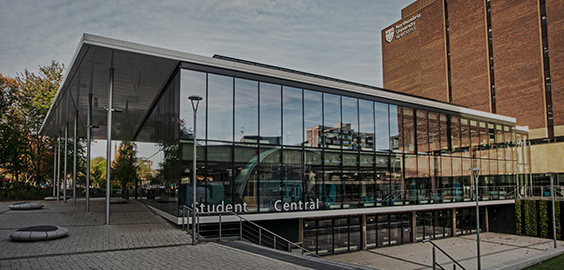
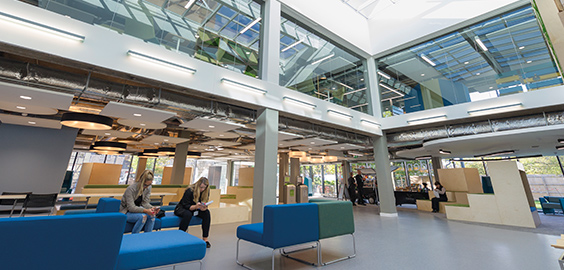
The photography and video on this page are used for illustration. They may have been taken at different times and in different parts of the University, and may show facilities, equipment, staff, students or activities that are not part of this course. They are not a guarantee of the specific facilities or equipment you will use.
The course content, entry requirements and fees sections of this page, together with the Programme Specification, set out what this course includes. Our facilities are updated over time and may change during your studies.
Northumbria University is committed to developing an inclusive, diverse and accessible campus and wider University community and are determined to ensure that opportunities we provide are open to all.
We are proud to work in partnership with AccessAble to provide Detailed Access Guides to our buildings and facilities across our City, Coach Lane and London Campuses. A Detailed Access Guide lets you know what access will be like when you visit somewhere. It looks at the route you will use getting in and what is available inside. All guides have Accessibility Symbols that give you a quick overview of what is available, and photographs to show you what to expect. The guides are produced by trained surveyors who visit our campuses annually to ensure you have trusted and accurate information.
You can use Northumbria’s AccessAble Guides anytime to check the accessibility of a building or facility and to plan your routes and journeys. Search by location, building or accessibility feature to find the information you need.
We are dedicated to helping students who may require additional support during their student journey and offer 1-1 advice and guidance appropriate to individual requirements. If you feel you may need additional support you can find out more about what we offer here where you can also contact us with any questions you may have:
Page last reviewed: 15 October 2026