
New platform maps charity support for the Armed Forces community
Pioneering data platform maps where the Armed Forces community receive support from charities

Wed, 16 March 2016, 12:00 – 18:00, Department of Chemistry Room CG218, Science Site, South Road, Durham University, Durham DH1 3LE, UK
Comparing stakeholder discourses about genetic technologies
The discussion in this seminar will focus on comparing and analysing the promissory narratives of various communities involved in the production and use of phenotyping, ancestry informative markers, and next generation sequencing. Expected impacts and safety discourses form the focus of the event.
Programme
12:00—13:00 Registration & lunch
13:00—13:15 Welcome (Matthias Wienroth)
13:15—14:15 Session I – Framing the use of forensic genetic innovations
Chair: Erica Haimes
1. Gillian Tully: ‘Quality standards for forensic genetics: Current & future challenges’
2. Helen Wallace: (tba)
Discussion
14:15—15:15 Session II – Providing innovative DNA services
Chair: Robin Williams
1. Angela Gallop: (tba)
2. Sheila Willis: (tba)
Discussion
15:15—15:45 Refreshments
15:45—16:45 Session III – The use of new and emergent forensic genetic technologies
Chair: Ernesto Schwartz-Marin
1. Shazia Khan: (tba)
2. Felicity Carlysle: ‘Phenotyping: Making the technology operational’
Discussion
16:45—17:45 Plenum discussion – Opportunities, gaps and themes for research & policy work
Chair: Chris Lawless
17:45—18:00 Close
Seminar PresentationsOutcomes
Bursaries for Early Career Researchers are available and will be granted on a first-come, first-serve basis. The bursary can cover reasonable travel costs and accommodation for together up to £250. Bursary holders will be asked to write a brief report about the seminar discussions for the seminar series website. Please contact matthias.wienroth@kcl.ac.uk for further information. |
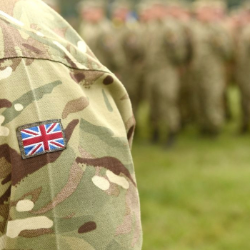
Pioneering data platform maps where the Armed Forces community receive support from charities

A major study co-led by Northumbria University will test whether attachment assessments lead…

New research published today by the AHRC Creative Communities programme provides fresh evidence…

Northumbria University's award-winning Student Law Office is launching SEND Decoded, a series…

The Net Zero Polar Science (NZPS) Doctoral Training Programme (DTP) has welcomed its first…

A new drop-in service is bringing health and wellbeing support for students at both Newcastle…

A new project led by Northumbria University aims to grow optical fibres using proteins, mimicking…

Northumbria University has hosted a major international workshop, bringing together leading…
The Great Hall, Sutherland Building
-

Manchester Marriott Hotel Piccadilly
-

Sutherland Building
Page last reviewed: 6 December 2022
