
Any Questions?
Our Applicant Services team will be happy to help. They can be contacted on 0191 406 0901 or by using our Contact Form.
All information is accurate at the time of sharing.
Full time Courses are primarily delivered via on-campus face to face learning but could include elements of online learning. Most courses run as planned and as promoted on our website and via our marketing materials, but if there are any substantial changes (as determined by the Competition and Markets Authority) to a course or there is the potential that course may be withdrawn, we will notify all affected applicants as soon as possible with advice and guidance regarding their options. It is also important to be aware that optional modules listed on course pages may be subject to change depending on uptake numbers each year.
Contact time is subject to increase or decrease in line with possible restrictions imposed by the government or the University in the interest of maintaining the health and safety and wellbeing of students, staff, and visitors if this is deemed necessary in future.
Accessibility and Student Inclusion
Northumbria University is committed to developing an inclusive, diverse and accessible campus and wider University community and are determined to ensure that opportunities we provide are open to all.
We are proud to work in partnership with AccessAble to provide Detailed Access Guides to our buildings and facilities across our City, Coach Lane and London Campuses. A Detailed Access Guide lets you know what access will be like when you visit somewhere. It looks at the route you will use getting in and what is available inside. All guides have Accessibility Symbols that give you a quick overview of what is available, and photographs to show you what to expect. The guides are produced by trained surveyors who visit our campuses annually to ensure you have trusted and accurate information.
You can use Northumbria’s AccessAble Guides anytime to check the accessibility of a building or facility and to plan your routes and journeys. Search by location, building or accessibility feature to find the information you need.
We are dedicated to helping students who may require additional support during their student journey and offer 1-1 advice and guidance appropriate to individual requirements. If you feel you may need additional support you can find out more about what we offer here where you can also contact us with any questions you may have:

+
Self funding PG students can now benefit from our flexible easy payment scheme

+
Graduates of the University are entitled to a 20% alumni discount on Masters study at Northumbria (T&C’s apply).

+
If you want to give your career an extra edge, change direction or simply want to love what you do, have a look at our full range of Masters Programmes
Latest News and Features
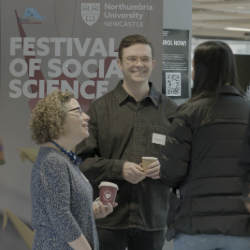
Northumbria University delivers diverse programme of public engagement events for ESRC Festival of Social Science 2025
Northumbria University delivered fifteen innovative public engagement events as part of the…

Recognition for researcher dedicated to tackling food insecurity in the UK
A Northumbria University academic who has played a key role in bringing breakfast clubs and…
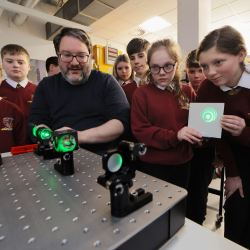
University partnership brings space research to life for school pupils
A North East school has partnered with solar and space physics experts from Northumbria University…
.png?modified=20250916102106)
Telescope reveals surprising secrets in Jupiter's northern lights
An international team of scientists, led by a PhD researcher from Northumbria University, has…

Northumbria Film graduates receive Royal Television Society honours
Two Northumbria University Film graduates have won Royal Television Society (RTS) Student Awards…

Scientists reveal the best and worst-case scenarios for a warming Antarctica
A new analysis of decades of research on the Antarctic Peninsula, involving experts from Northumbria…
Social
More events
Upcoming events
Launch of the Northern Interprofessional Education Strategy
Northumbria University
-
