Skip navigation

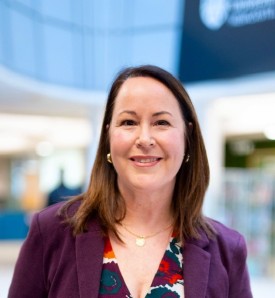
Dawn Scott

Professional Doctorate

What appealed to you about Northumbria University?

I have a long history of studying with Northumbria University having studied here for my first degree, BA (Hons) Education and Training, and my Masters course, Health Sciences – Research Methods. Both of these provided a good balance between theoretical and applied learning.

Why did you choose this course?

I was ready to study at Doctoral level but knew this would be difficult as a full-time Public Health Consultant. I had heard about Professional Doctorates and thought that this might allow me to study and research a work-related issue, thus allowing me to develop personally whilst contributing to my profession.

Have you found it difficult to balance your workload with your studies and home life?

It has been exceptionally challenging, however, the Professional Doctorate involved two years of university-based learning and it was invaluable to spend time with other professionals, and learn through and with them. The initial part of the course required coursework to be completed and this kept me on track. Managing my time was most challenging after completing the first two years, as the timetable of activities was down to me alone. The supervisors helped to keep me motivated and to timetable. I spent many weekends studying, analysing and writing up and this is challenging for both the student and their
family. No one should enter into it lightly, Doctorates are not given away; they are earned, and support from family is essential.

In what way has your study been useful or meaningful in your work?

I have been able to influence strategies and help with the development of tools in the workplace. I have also been able to share my research widely with a diverse range of colleagues to improve their thinking and knowledge.


What do you do when you’re not studying?


It is really important to have time to myself. I play tennis at weekends and I took up student walking; I also tried to spend time with the family. Both my children have been studying throughout the time I have been engaged in my studies, so I felt I was a good role model to them. However, we all need time to chill out, so shopping and meals out together were good too.

How do you get on with your tutors?


I was lucky to be part of a small student group, so interaction with the tutors was positive and meaningful. Often the learning was a two-way process.

If you have just one message to pass on to someone who’s just about to start a programme like yours, what would that be?

Firstly, study something you are passionate about and that you know will keep your interest over many years. Secondly, never underestimate the personal commitment required to gain a Doctoral level qualification – ensure you have some support outside of the University to compliment your supervisor’s support.


Latest News and Features
a group of five people pictured standing on a staircase
The first cohort of Civil Engineering Degree Apprentices from Northumbria University, at their graduation.
One year after Northumbria University was announced as the lead research partner on the 2026 State of the World's Volunteerism Report (SWVR) produced by United Nations Volunteers (UNV), the publication has been launched in New York on International Volunteer Day, 5 December.
Glasgow SEC
Northumbria University Graphic Design student, Adam Graham, with Director of Converge Northumbria, Ally Hunter-Byron.
Northumbria Campus at night
More news
More events

Upcoming events

Northumbria University Carol Service 2025
Collaborating for Capability: Shaping the Future of Supply Chain Talent
Viruses of Microbes-UK (VoM-UK) Conference 2026
-
Back to top