
It is Jupiter’s most recognisable feature – a storm that has been raging for hundreds of years – but up until now little has been known about how activity at the gas giant’s Great Red Spot affects its surroundings overhead.
Thanks to images taken by the world’s largest deep-space telescope, scientists have now been able to reveal fascinating new details about the effect the spot has on Jupiter’s upper atmosphere – a region known as the ionosphere.
By analysing images captured by the James Webb Space Telescope researchers have discovered that the region directly above the Great Red Spot features intricate structures and never-before-seen activity.
Their findings, published in Nature Astronomy, theorise that the storm surrounding the Spot creates gravity waves, which move upwards until they reach Jupiter’s ionosphere, where they break like waves on a beach.
This releases the energy within the gravity waves, shaping the structure of the ionosphere in this area.
The findings came as a surprise to the international team of scientists analysing the images, as research lead Dr Henrik Melin explains: “The ionosphere is generally a pretty boring region – there is some auroral activity around Jupiter’s poles, but the equatorial region where the Great Red Spot is located was expected to be very smooth.
“We were therefore surprised to see that the images from the James Webb Space Telescope showed there were some really interesting and unexpected small-scale structures such as arcs, bands and spots in the ionosphere in the region directly above the Spot.
“We believe the gravity waves produced by the huge storm beneath this area are actually shaping the density of the structure of the ionosphere when they reach the upper atmosphere and release their energy.”
Until now our understanding of the upper atmosphere of Jupiter – the largest planet in our solar system – has mostly come from images of the planet captured from Earth.
However, in recent years access to NASA’s James Webb Space Telescope (JWST) has allowed scientists to take new images in unprecedented detail.
Launched in 2021, JWST uses infrared radiation to look deep into space, meaning it can observe the first stars and even the formation of the first galaxies.
The power of the telescope means when it is directed at planets closer to home we can uncover incredible detail, allowing us to gain better understanding of our solar system.
 Tom Stallard, Professor of Planetary Astronomy at Northumbria University, was part
of the team behind the new findings. His research focusses on the upper
atmospheres of giant gas planets such as Jupiter, Saturn and Uranus.
Tom Stallard, Professor of Planetary Astronomy at Northumbria University, was part
of the team behind the new findings. His research focusses on the upper
atmospheres of giant gas planets such as Jupiter, Saturn and Uranus.
He said: “We used to think of a planet’s aurora as the only interesting place in terms of ionospheric activity, but these new images show that is not always the case.
“Even spacecraft which have gone to Jupiter, such as the NASA Juno mission, have not had the sensitivity required to pull out this level of ionospheric detail.
“In future it would be interesting to observe how the patterns we see over the Great Red Spot change, and how these waves move throughout Jupiter’s upper atmosphere.
“Although Jupiter appears very different to Earth there is actually much we can learn about our own planet by studying Jupiter. The processes going on are very similar, but Jupiter’s magnetic field is much stronger, and stranger.”
Access to JWST is highly competitive, with scientists allowed to apply for an opportunity to access the telescope once a year, with only one in nine proposals being accepted.
The images used for this latest finding were taken in July 2022 and were among the first captured as part of ‘early release observations’ designed to mark the beginning of the telescope’s operations and demonstrate its capabilities.
Professor Stallard, who is a member of Northumbria University’s Solar and Space Physics research group, was successfully awarded time during cycle 2, which took place in September last year, and is currently analysing the results.
Both he and Dr Melin, who will join the group this summer, have also been awarded time during cycle 3, which runs from July 2024 to June 2025.
Professor Stallard will observe Saturn’s northern auroral region through an entire Saturnian day, 10.6 hours in length, to observe the changing temperature of this region as the planet rotates.
During his time with the telescope, Dr Melin will observe the aurora of Uranus, capturing images over the course of a single Uranian day, or one full rotation of the planet.
Proposals for cycle 4 of JWST will be submitted in October this year.
Northumbria’s Solar and Space Physics researchers collaborate extensively with partners including UK Research and Innovation, the UK Space Agency, the European Space Agency, the UK Met Office, and over 40 industrial partners.
Last year the University announced ambitious plans to develop a £50 million space skills, research and development centre, set to transform the UK space industry. The North East Space Skills and Technology centre (NESST) is expected to directly support the creation of over 350 jobs and inject over £260 million into the North East economy over the next 30 years, playing a critical role in the government’s levelling-up agenda and immediately becoming a catalyst for the wider development of the UK space sector in the North East region.
Visit www.northumbria.ac.uk/space to discover more about how Northumbria University is powering the next generation of space innovation.
Photo credit: Jupiter’s atmosphere around the Great Red Spot (NIRCam and NIRSpec). ESA/Webb, NASA & CSA, Jupiter ERS Team, J. Schmidt, H. Melin, M. Zamani (ESA/Webb)
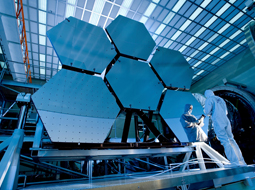
Department of Mathematics, Physics and Electrical Engineering
This department encompasses all of our work in Mathematics, Statistics and Physics including Astrophysics, Electrical and Electronic Engineering, Energy, Smart Materials, Microelectronics and Communications.
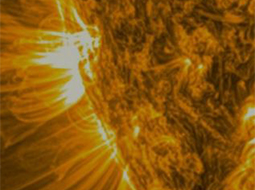
Northumbria University is powering the next generation of space innovation. Learn more about our expert academics, world class research and state of the art facilities.
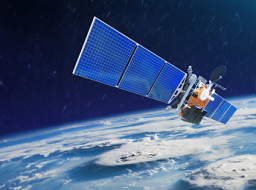
Our North East Space Skills and Technology Centre will be a state of the art £50M facility developed by Northumbria, with investment from the UK Space Agency and the space and satellite division of industry giant Lockheed Martin.

Northumbria’s Solar and Space researchers work to understand the physics of the Sun and all aspects of the solar-terrestrial connection to improve space weather forecasting.

This is the place to find all the latest news releases, feature articles, expert comment, and video and audio clips from Northumbria University

Northumbria University News is packed full of news and features covering everything from research projects and business partnerships to student and staff awards.
Latest News and Features

Training the next generation of space scientists
Northumbria University has hosted a major international workshop, bringing together leading…
.png?modified=20261006102851)
International design competition to grow the colour of the future
Researchers at Northumbria University and Imperial College London have launched an international…

Northumbria graduates celebrated at North East Business Awards
Graduate entrepreneurs from Northumbria University are celebrating after winning recognition…

How facial recognition failures harm people with facial differences
Researchers at Northumbria University's Centre for Responsible AI are working with Face Equality…

New Master Research Agreement strengthens commitment to cutting-edge research and innovation
Northumbria University and Lockheed Martin Space UK have signed a new Master Research Agreement,…

Speeding glaciers drive half a century of polar ice loss
The longest satellite record ever assembled shows that Greenland and Antarctica have lost 11.3…

Northumbria physicist elected Fellow of the Institute of Physics
Dr Juna Sathian, an Associate Professor at Northumbria University, has been elected a Fellow…

Northumbria helps shape national plan to boost graduate employability
Northumbria University has played a key role in shaping a new national plan designed to help…
More events
Upcoming events

Next Stop Northumbria
Europa Hotel
-
The Past We Inherit. The Future We Build: Better Decisions Happen Together
The Great Hall, Sutherland Building
-
Next Stop Northumbria
Manchester Marriott Hotel Piccadilly
-
