
A Planetary Astronomer who has spent more than two decades exploring the upper atmospheres of the largest and most distant planets in our solar system has been given a unique opportunity to gain new insight into their workings.
Professor Tom Stallard, of Northumbria University, specialises in exploring auroral activity in giant gas planets such as Jupiter, Saturn, Uranus and Neptune.
He is now part of a team of scientists who have been given access to the world’s largest deep-space telescope – allowing them to capture images and video footage which will explain the spectacular light shows seen at the poles of two of these planets.
The researchers have been awarded observation time with the James Webb Space Telescope (JWST) by the Space Telescope Science Institute (STScI) for two programmes that will focus on the mysterious aurorae of the gas giants Saturn and Uranus. Their successful proposals were among 1,931 submissions for the James Webb Space Telescope (JWST) Cycle 3 General Observer Program.
Both planets show auroral emissions, caused by highly energetic charged particles, which are funnelled down and collide with a planet's atmosphere via the planet's magnetic field lines. On Earth, the most famous results of this process are the spectacles of the Northern and Southern Lights.
During the first project, which is co-led by Professor Stallard and Luke Moore at the Boston University Center for Space Physics, the astronomers will observe Saturn’s northern auroral region through an entire Saturnian day, 10.6 hours in length, to observe the changing temperature of this region as the planet rotates.
Unlike Earth, where auroras occur when charged particles hurtle towards us from space and collide with our atmosphere driven by interactions with the stream of material from the Sun, on Saturn it is thought the driving force for these particles originates from within the planet itself, reaching out into the surrounding space and pulling charged particles into its atmosphere, where stunning auroral lightshows then occur.
By observing Saturn for a full day, researchers hope to discover why the atmosphere is able to drive the movement of particles, and if, as has long been suspected, it is linked to Saturn’s unusual rotation.
The second project, which is led by Dr Henrik Melin from the University of Leicester School of Physics and Astronomy, will observe the aurora of Uranus, capturing images over the course of a single Uranian day, or one full rotation of the planet.
This will allow the team to map the auroral emissions across a whole rotation of Uranus’s magnetic field to establish whether the emissions are produced via the interaction with the solar wind (like the Earth), through internal sources within the system (like Jupiter), or somewhere in-between (like Saturn).
Both projects will use the JWST Near InfraRed Spectrograph (NIRSpec) instrument which disperses light from an object into a spectrum. Analysing the spectrum can tell us about its physical properties, including temperature, mass, and chemical composition.
For Professor Stallard, this latest project is the culmination of over 20 years work researching Saturn and its neighbouring gas planets. He was part of the NASA Cassini space research mission, during which a robotic spacecraft, named Cassini-Huygens, spent 13 years (from 2004-2017) orbiting Saturn, studying the planet and capturing thousands of images and videos (including the video below, which shows auroral activity on Saturn taken from Cassini over two days).
While the data captured during that mission boosted our understanding of Saturn at the time, the new images expected from the JWST will provide a level of detailed never seen before.
Having been given access to the JWST to study Jupiter last year, Professor Stallard is very optimistic about the results he and the research team will get from the new observations of both Saturn and Uranus.
 As he explains: “Saturn and Uranus sit at the further
reaches of our solar system and have aurorae that are incredibly difficult to
observe from Earth. The view JWST will provide will be both breath-taking and
revolutionary – providing unpreceded details of both the aurora itself, and the
flow of energy outwards into the surrounding atmospheres.
As he explains: “Saturn and Uranus sit at the further
reaches of our solar system and have aurorae that are incredibly difficult to
observe from Earth. The view JWST will provide will be both breath-taking and
revolutionary – providing unpreceded details of both the aurora itself, and the
flow of energy outwards into the surrounding atmospheres.
“We are still working on producing the first published images from our recent JWST observations of Jupiter’s aurora, but what we’ve learned so far is to expect the unexpected. Our understanding of Jupiter’s ionosphere is changing with each improved step in our analysis.
“We know so much less about the aurorae and ionospheres of Saturn and Uranus. JWST will provide incredible answers to lingering questions from our past visits to these worlds, but we will also take a remarkable step into the unknown, which is incredibly exciting.”
Members of Northumbria University’s Solar and Space Physics research group collaborate extensively with partners including UK Research and Innovation, the UK Space Agency, the European Space Agency, the UK Met Office, and over 40 industrial partners.
The University recently announced ambitious plans to develop a £50 million space skills, research and development centre, set to transform the UK space industry. The North East Space Skills and Technology centre (NESST) is expected to directly support the creation of over 350 jobs and inject over £260 million into the North East economy over the next 30 years, playing a critical role in the government’s levelling-up agenda and immediately becoming a catalyst for the wider development of the UK space sector in the North East region.
Visit www.northumbria.ac.uk/space to discover more about how Northumbria University is powering the next generation of space innovation.
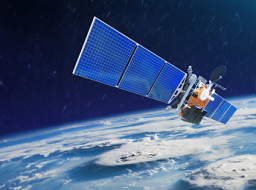
Our North East Space Skills and Technology Centre will be a state of the art £50M facility developed by Northumbria, with investment from the UK Space Agency and the space and satellite division of industry giant Lockheed Martin.
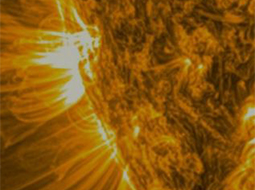
Northumbria University is powering the next generation of space innovation. Learn more about our expert academics, world class research and state of the art facilities.
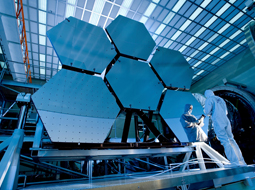

Space brings together research from multiple fields including engineering (electrical, mechanical, information technology, communications, power, propulsion, aerospace), and science (physics, chemistry, biology, materials) to stimulate new ideas, enhance excellence and drive innovation in the exploration and use of space for humankind.

Northumbria’s Solar and Space researchers work to understand the physics of the Sun and all aspects of the solar-terrestrial connection to improve space weather forecasting.

This is the place to find all the latest news releases, feature articles, expert comment, and video and audio clips from Northumbria University

Northumbria University News is packed full of news and features covering everything from research projects and business partnerships to student and staff awards.
Latest News and Features

New platform maps charity support for the Armed Forces community
Pioneering data platform maps where the Armed Forces community receive support from charities

Northumbria co-leads study on fairer support for families
A major study co-led by Northumbria University will test whether attachment assessments lead…

New AHRC research shows how community innovation can power the next phase of devolution.
New research published today by the AHRC Creative Communities programme provides fresh evidence…

Free sessions to help families navigate the SEND system
Northumbria University's award-winning Student Law Office is launching SEND Decoded, a series…

New Doctoral Training Programme will tackle key polar science questions with a reduced carbon footprint
The Net Zero Polar Science (NZPS) Doctoral Training Programme (DTP) has welcomed its first…

New Student Health Hub brings joint health and wellbeing support
A new drop-in service is bringing health and wellbeing support for students at both Newcastle…

Researchers aim to grow optical fibres using biology instead of machinery
A new project led by Northumbria University aims to grow optical fibres using proteins, mimicking…

Training the next generation of space scientists
Northumbria University has hosted a major international workshop, bringing together leading…
More events
Upcoming events

Next Stop Northumbria
Europa Hotel
-
The Past We Inherit. The Future We Build: Better Decisions Happen Together
The Great Hall, Sutherland Building
-
Next Stop Northumbria
Manchester Marriott Hotel Piccadilly
-
