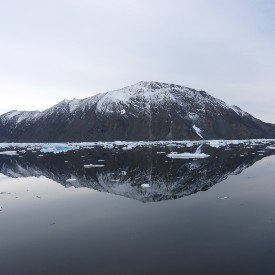
Climate change, melting ice masses, reductions in biodiversity and pollution are major threats to the health of our oceans.
Academics at Northumbria University, Newcastle-upon-Tyne, are finding innovative ways to address ocean health challenges through interdisciplinary research. Interdisciplinary activity is a vital part of our research landscape and something I have been keen to nurture.
It enables rich, collaborative discussions from a range of diverse perspectives to generate high-quality research that provides solutions to real-world environmental problems. As we research oceans from a range of perspectives, employing such an approach benefits our understanding of ocean health and can help develop solutions to improve the ocean environment.
Climate change affecting ice sheets and ocean health
We are proud to have the largest group of glaciology experts in the UK at Northumbria University, working on critical research to understand the future of ice on earth. Our first-class team, led by Professors Andy Shepherd, Hilmar Gudmundsson and Adrian Jenkins, are leading major international studies on the interactions between ice sheets and oceans, examining how ice sheets and glaciers are changing in a warming world.
Their models of how melting ice sheets have responded to changing climates throughout history enable us to predict how they might respond to future change. This impacts not only the health of our oceans but also our coastal communities. Others are developing new tools and solutions to help people living in areas threatened by coastal erosion, thawing permafrost and more. Their findings are helping governments to plan and manage the sea level impacts of climate change globally.
Addressing pollution to promote ocean health
Ocean pollution majorly contributes to the population decline in countless marine animals and ecosystems. However, many of us use chemicals every day without even stopping to consider the impact these products have on aquatic environments.
Our researchers are working to raise awareness of the impact of single-use plastics and washing our laundry on ocean environments. Environmental chemists and microbial ecologists are working to understand where, when and how synthetic chemicals and pharmaceuticals — even those we consume as pain relief medication — enter the ocean environment.
We can then identify the impact they have on environmental processes essential for supporting life on earth. This helps us to develop strategies for mitigating chemical pollution and address environmental justice concerns.
Managing water resources and legal accountability
Water management is another key area for consideration. As well as our ocean coastlines, there are more than 300 rivers and lakes worldwide shared between two or more countries. Understanding pollution and biodiversity is especially important when the actions of one country can significantly impact others downstream.
As we’ve seen in wars such as those in Ukraine or Syria, shared water resources and bridges can be key targets. Through effective management, they can also help to drive cooperation and sustainable development.
There is a big question about who is legally responsible for our water resources. Legal experts such as Professor Ali Rieu-Clarke are contributing to global-level strategic planning and policy for the United Nations Sustainable Development Goals, which have placed transboundary water cooperation at the heart of the global response to future challenges.
Collaborative projects encourage innovation for ocean health
Billions of people remain living without safely managed drinking water, sanitation and hygiene services. Dr Muhammad Wakil Shahzad is exploring how we can use solar energy to turn seawater into clean drinking water using desalination techniques.
These examples highlight just a few of the innovative projects underway at Northumbria. There is no single solution to ensuring the future health of our oceans but combining the expertise of researchers across several academic disciplines can make a real impact.
This interview was conducted by Global Cause magazine published with New Scientist.