
New Student Health Hub brings joint health and wellbeing support
A new drop-in service is bringing health and wellbeing support for students at both Newcastle…

The Bergey’s International Society for Microbial Systematics (BISMiS) conference 2027 will be held in at Northumbria University in Newcastle Upon Tyne, UK, from 29 June - 2 July 2027.
Please fill in the form here to be notified when conference abstract submissions and delegate registrations open.
BISMiS conferences provide unique opportunities to scientists working in the fields of prokaryotic systematics, microbial evolution, ecology and biotechnology for communicating their high-quality research with the global community.
The goal of BISMiS is to promote excellent research in microbial systematics as well as enhance global communication among taxonomists who study Bacteria and Archaea. The society also serves internationally as an advocate for research efforts on microbial systematics and diversity.
The society recognizes that the vast diversity of microbial life is the last remaining major reservoir of unknown biological diversity on Earth. A principal goal of the society is to comprehend this vast but largely unstudied diversity with its untapped genetic, enzymic and industrial potential. A basic aim of the society is to foster efforts to isolate novel microorganisms in pure culture and to describe, name and classify them.
.jpg?modified=20260316141212)
Dates: Tuesday 29 June - Friday 2 July 2027
Location: Northumbria University Business and Law School (CCE1), Newcastle upon Tyne, NE2 1XA, United Kingdom
Venue Access: The main entrance to the building is step-free with automatic doors and there is lift access to all floors. A cloakroom, nursing room, quiet room and prayer space will be provided. More information on building access can be found on our AccessAble pages.
Registration fees: To be confirmed
Key Dates: To be confirmed
Some key timings for the conference to help you plan your visit are as follows:
Tuesday 29 June
Wednesday 30 June
Thursday 1 July
Friday 2 July
Saturday 3 July
Session 1: Early Career Researcher Forum
Chair: TBC
Keynote: Goodfellow-BISMiS Prize Lecture
This opening session provides a platform for PhD students, postdoctoral researchers, and early-career scientists to present their work to the BISMiS community. Talks will be selected from submitted abstracts and will span the full breadth of microbial systematics, from computational approaches and novel species descriptions to ecological and applied studies. Prizes will be awarded for the best presentations.
Session 2: Beyond Species — Measuring Microdiversity and Its Implications for Microbial Ecology
Chair: Professor Ramon Rosselló-Móra, IMEDEA (CSIC-UIB), Spain
Keynote Speaker: Professor Martin Polz, University of Vienna, Austria
Prokaryotic species harbour extensive genomic and phenotypic variation that current taxonomic frameworks are only beginning to capture. This session explores approaches to measuring intraspecies microdiversity — including strain-resolved metagenomics, population genomics, and pangenome characterisation — and examines how variation below the species level shapes ecological adaptation, niche partitioning, and community dynamics.
Session 3: New Approaches for Delineating Prokaryotic Taxa
Chair: Professor Fanus Venter, University of Pretoria, South Africa
How do we draw the boundaries between prokaryotic species and higher taxa? This session explores emerging computational, genomic, and AI-driven methods for delineating prokaryotic taxa, moving beyond traditional thresholds such as ANI and dDDH. Contributions are welcomed on machine learning approaches, pangenome-based classification, and novel metrics that challenge or refine current species concepts.
Session 4: Microbial Dark Matter — Candidate Phyla and Deep-Branching Lineages
Chair: Professor Brian P. Hedlund, University of Nevada Las Vegas, USA
The vast majority of prokaryotic diversity remains uncultivated and poorly classified. This session focuses on the taxonomy and biology of candidate phyla, ultra-small bacteria, and deep-branching archaeal and bacterial lineages known primarily from environmental sequences. Talks will address how we name, classify, and place these organisms on the tree of life, and what their discovery means for our understanding of microbial evolution.
Session 5: Harnessing Plant Microbiomes — Prokaryotic Systematics Driving Sustainable Solutions
Chair: Professor Martha E. Trujillo, University of Salamanca, Spain
This session bridges systematic discovery and agricultural application, exploring how the classification and characterisation of plant-associated prokaryotes informs strategies for crop health, nutrient cycling, and climate resilience. Talks will address the taxonomy and functional genomics of key plant-associated lineages — including endophytic actinobacteria, rhizobia, and rhizosphere communities — and how microbiome modulation can be translated into sustainable agricultural practice.
Session 6: Impact of Prokaryotic Systematics in Biotechnology
Chair: Professor Wen-Jun Li, Sun Yat-sen University, China
The session makes the case that taxonomy is not just a cataloguing exercise but a gateway to innovation. From bioprospecting for novel enzymes and biosynthetic gene clusters to industrial strain selection and antimicrobial discovery, this session showcases how rigorous prokaryotic systematics underpins and accelerates biotechnological applications across industry, health, and the environment.
Session 7: ICNP, SeqCode, and Beyond
Chair: Professor Iain Sutcliffe, Northumbria University, UK
The rules that govern how we name prokaryotic life are fundamental to everything that follows. This session examines the evolving landscape of prokaryotic nomenclature, including the coexistence of the International Code of Nomenclature of Prokaryotes (ICNP) and the recently established SeqCode. Talks will assess real-world uptake, interoperability between the two codes, and the governance challenges of naming organisms in an era of sequence-based discovery.
Speaker bio to follow.
*
Information about keynote speakers will be added here as they confirm.
BISMiS 2027 will provide the opportunity to meet with a wide range of professionals and academics from across the UK and around the world, working in the fields of prokaryotic systematics, microbial evolution, ecology and biotechnology. The BISMiS conference in Guangzhou was attended by over 800 delegates from 32 different countries.
There are many different partnership packages and benefit opportunities available at the conference, and we welcome the opportunity to discuss custom partnership packages that best suit your needs.
Download our Sponsorship Opportunities Brochure

Vartul Sangal (Conference Chair)
Faye Harland (Conference Manager)
Ramon Rosselló-Móra, IMEDEA (CSIC-UIB), Spain
Fanus Venter, University of Pretoria, South Africa
Brian P. Hedlund, University of Nevada Las Vegas, USA
Martha E. Trujillo, University of Salamanca, Spain
Wen-Jun Li, Sun Yat-sen University, China
Iain Sutcliffe, Northumbria University, UK
Wee Fei Aaron Teo, University of Malaya, Malaysia
Wen-Jun Li (President), Sun Yat-Sen University, China
Stephanus Venter (President-Elect), University of Pretoria, South Africa
Wee Fei Aaron Teo (Secretary), University of Malaya, Malaysia
William Barny Whitman (Treasurer), University of Georgia, USA
Martha E. Trujillo (Chair of Bergey’s Manual Trust), Universidad de Salamanca, Spain
Elena Ivanova (Member-at-large), RMIT University, Australia
Iftikhar Ahmed (Member-at-large), National Culture Collection of Pakistan
Lorena Carro (Member-at-large), University of Salamanca, Spain
Kamlesh Jangid (Service Member), Agharkar Research Institute, India
Luis A. Maldonado (BISMiS Representative to ICSP), Universidad Nacional Autónoma de México, Mexico
Newcastle upon Tyne is home to an international airport and is easily accessible by air, rail and road.
Delegates travelling by train to the workshop are eligible for a 20% discount on LNER trains - to be sent the discount code, please get in touch.
For more information about getting here, please click the image below.

Please check back here shortly for a range of hotels at special rates close by to the conference venue.
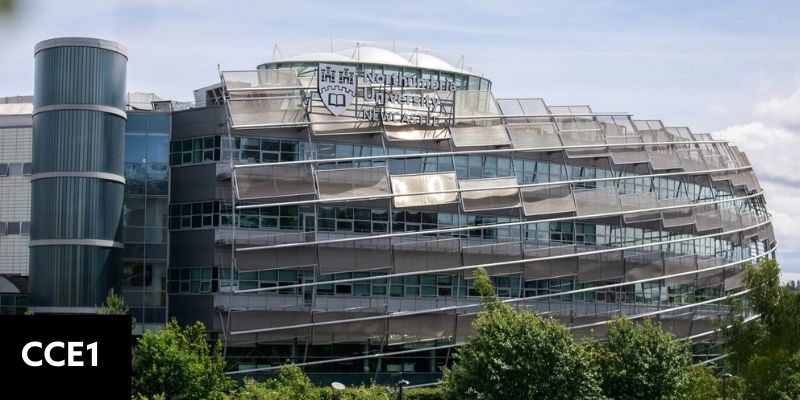
The conference will be held in Northumbria University's Business and Law School, the City Campus East 1 (CCE1) Building.
Accessibility information about the venue can be found here. A cloakroom, nursing room, quiet room and prayer space will be provided.
Click the image below for a virtual tour of the building.
More information about catering throughout the conference will be posted here. All allergies and dietary requirements will be catered for.
For any enquiries about the conference, please contact bismisconf@northumbria.ac.uk

A new drop-in service is bringing health and wellbeing support for students at both Newcastle…

A new project led by Northumbria University aims to grow optical fibres using proteins, mimicking…

Northumbria University has hosted a major international workshop, bringing together leading…
.png?modified=20261006102851)
Researchers at Northumbria University and Imperial College London have launched an international…

Graduate entrepreneurs from Northumbria University are celebrating after winning recognition…

Researchers at Northumbria University's Centre for Responsible AI are working with Face Equality…

Northumbria University and Lockheed Martin Space UK have signed a new Master Research Agreement,…

The longest satellite record ever assembled shows that Greenland and Antarctica have lost 11.3…

Europa Hotel
-
The Great Hall, Sutherland Building
-
Manchester Marriott Hotel Piccadilly
-
Page last reviewed: 17 June 2026
