
Dr. Bert van Loo studied Molecular Sciences at Wageningen University (1994-1999) and obtained his PhD in Biochemistry from the University of Groningen in 2006 (Supervisor: Prof. Dick Janssen). In 2005 he moved to the department of Biochemistry of the University of Cambridge to work as a post-doc in the lab of Prof. Florian Hollfelder. After a short stay at Uppsala university in Sweden in 2013 he moved to the institute for Evolution and Biodiversity at the University of Münster in Germany where he was a post-doctoral project leader within the Molecular Evolution and Bioinformatics group of Prof. Erich Bornberg-Bauer until 2019. In January 2020 he joined the department of applied sciences at Northumbria University as a senior lecturer in Biochemistry.
His main interests are within the wider theme of adaptive enzyme evolution and harnessing knowledge from in vivo adaptation to inform protein engineering strategies. He is studying the evolution of substrate specificity in various phospho- and sulfohydrolases, as well as the evolution of enzymes that degrade environmental pollutants.

Dr. Bert van Loo’s main interests are within the wider theme of adaptive enzyme evolution. He studies both natural and artificial laboratory enzyme evolution, with particular interest in the adaptive evolutionary processes in relation to substrate specificity. He uses several model systems for these studies, most prominently the divergent evolution of phospho- and sulfohydrolases in various protein families as well as the evolution within subfamilies of sulfatases with regard to their specificity toward various sulfated algal polysaccharides such as carrageenan, fucoidan and ulvan. He is also researching the natural and laboratory-enhanced evolution of enzymes and pathways that degrade xenobiotic compounds, in particular man-made environmental pollutants such as halogenated hydrocarbons and plastics. In addition to studying the evolution of various specific enzymes, both in nature and in the laboratory, he aims to harness the knowledge from in vivo adaptation to inform protein engineering strategies.
- Please visit the Pure Research Information Portal for further information
- Studying the evolutionary potential of ancestral aryl sulfatases in the alkaline phosphatase family with droplet microfluidics, Eenink, B., Holstein, J., Heberlein, M., Dilkaute, C., Jose, J., Hollfelder, F., van Loo, B., Bornberg-Bauer, E., Kaminski, T., Lange, A. 16 Mar 2026, In: Analyst
- Vector redesign and in‐droplet cell‐growth improves enrichment and recovery in live Escherichia coli, Eenink, B., Kaminski, T., Bornberg‐Bauer, E., Jose, J., Hollfelder, F., Van Loo, B. 1 Nov 2022, In: Microbial Biotechnology
- Ancestral sequences of a large promiscuous enzyme family correspond to bridges in sequence space in a network representation, Buchholz, P., Van Loo, B., Eenink, B., Bornberg-Bauer, E., Pleiss, J. 3 Nov 2021, In: Journal of the Royal Society Interface
- Balancing Specificity and Promiscuity in Enzyme Evolution: Multidimensional Activity Transitions in the Alkaline Phosphatase Superfamily, Van Loo, B., Bayer, C., Fischer, G., Jonas, S., Valkov, E., Mohamed, M., Vorobieva, A., Dutruel, C., Hyvönen, M., Hollfelder, F. 9 Jan 2019, In: Journal of the American Chemical Society
- High-Throughput, Lysis-Free Screening for Sulfatase Activity Using Escherichia coli Autodisplay in Microdroplets, Van Loo, B., Heberlein, M., Mair, P., Zinchenko, A., Schüürmann, J., Eenink, B., Holstein, J., Dilkaute, C., Jose, J., Hollfelder, F., Bornberg-Bauer, E. 20 Dec 2019, In: ACS Synthetic Biology
- Transition-State Interactions in a Promiscuous Enzyme: Sulfate and Phosphate Monoester Hydrolysis by Pseudomonas aeruginosa Arylsulfatase, Van Loo, B., Berry, R., Boonyuen, U., Mohamed, M., Golicnik, M., Hengge, A., Hollfelder, F. 12 Mar 2019, In: Biochemistry
- Evolutionary repurposing of a sulfatase: A new Michaelis complex leads to efficient transition state charge offset, Miton, C., Jonas, S., Fischer, G., Duarte, F., Mohamed, M., van Loo, B., Kintses, B., Kamerlin, S., Tokuriki, N., Hyvönen, M., Hollfelder, F. 31 Jul 2018, In: Proceedings of the National Academy of Sciences of the United States of America
- Structural and Mechanistic Analysis of the Choline Sulfatase from Sinorhizobium melliloti: A Class I Sulfatase Specific for an Alkyl Sulfate Ester, van Loo, B., Schober, M., Valkov, E., Heberlein, M., Bornberg-Bauer, E., Faber, K., Hyvönen, M., Hollfelder, F. 30 Mar 2018, In: Journal of Molecular Biology
- Enzyme sub-functionalization driven by regulation, van Loo, B., Bornberg-Bauer, E. 14 Jun 2017, In: EMBO Reports
- Specificity Effects of Amino Acid Substitutions in Promiscuous Hydrolases: Context-Dependence of Catalytic Residue Contributions to Local Fitness Landscapes in Nearby Sequence Space, Bayer, C., van Loo, B., Hollfelder, F. 6 Jun 2017, In: ChemBioChem
- Iñaki Pickering-Montoya Bio-Recycling: Development of Biocatalytic Systems for the Enzymatic Degradation of Recalcitrant Polyolefinic Plastics and Conversion to High Value Chemicals Start Date: 01/10/2021 End Date: 17/10/2025
- Iñaki Pickering-Montoya Bio-Recycling: Development of Biocatalytic Systems for the Enzymatic Degradation of Recalcitrant Polyolefinic Plastics & Conversion to High Value Chemicals Start Date: 01/10/2021
- Biochemistry PhD October 13 2006
- Biochemistry MSc March 31 1999
Latest News and Features

Pathbreaking mock trials to test how AI evidence affects justice
Researchers at Northumbria University, Newcastle University, and the University of Glasgow…

North-East pupils tackle real space research through award winning Orbyts programme
A Northumbria University-backed programme giving North-East pupils the chance to do real space…

New dementia risk tool designed for the countries that need it most
An international team led by Northumbria University has developed and validated a simple five-factor…

UK network to accelerate the development of sustainable surface technologies
A new national network led by Newcastle University and Northumbria University, in partnership…

Criminologist wins acclaimed Philip Leverhulme Prize to pioneer a new criminology of the offshore world
A Northumbria University criminologist has been awarded a Philip Leverhulme Prize, one of the…
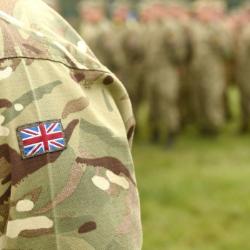
New platform maps charity support for the Armed Forces community
Pioneering data platform maps where the Armed Forces community receive support from charities
More events
Upcoming events

-
Magnetospheric Multiscale Science Working Team Meeting
Sutherland Building

Christmas Market and Tree lighting
Northumbria University
-
What can an engineering education in the North East lead to?
Durrant Hall
-
Snow Problem? Why Arctic Snow Matters in a Warming World
Lecture Theatre 003, Business & Law Building
-
