Criminology and Sociology (Extended Degree) BSc (Hons)
 Option for Placement Year
Option for Study Abroad

Option for Placement Year
Option for Study Abroad
Understanding the society we live in and the minds of criminals within it.
Are you keen to grow your knowledge of criminological and sociological theories and concepts? Do you want to understand what makes these disciplines distinctive and explore social research methods through real world research?
Our Criminology and Sociology degree will develop your intellectual curiosity. You will explore the relationship between crime, justice and society on the one hand, and link individual actions to social structures on the other, all through an examination of contemporary theories, policies and practice. As an active and responsible member of global society, you will use your knowledge to think independently, as well as to challenge the opinions and conduct of others. You will recognise the value of your discipline in shaping society, through critical evidence-based responses to crime and criminal justice problems.
You will have the option to apply for a relevant work placement – for instance, in a prison or police station – and learn from lecturers who are also leading researchers in a variety of cutting-edge research fields in criminology and sociology. You can take part in modules that speak to our other thought-provoking specialisms within criminology (e.g. victimisation, sex work) and sociology (e.g. happiness, race and migration), offering synergised breadth and depth across both disciplines.
On joining this course you will become part of an exciting, dynamic and distinctive university school which has received continued praise for their high quality, research-rich teaching and learning experience.
To keep up to date with the latest from the school, follow us on X at https://twitter.com/CriminologyNU and https://twitter.com/SociologyNU.
See other similar courses you may be interested in, such as BSc (Hons) Sociology, Criminology BSc, Criminology and Forensic Science BSc, Professional Policing BSc, Psychology with Criminology BSc (Hons).
You can also check out all of our other Social Sciences Courses and find that one that suits you.
This extended degree provides an alternative route to higher education and supports those who don’t meet the standard entry requirements for an undergraduate degree. It includes a foundation year where you will develop an understanding of society, social dynamics and modern life whilst also enhancing your skills in research and analysis, and decision-making.
Your foundation year will cover the areas of sociology, politics, and criminology. Through engaging with real world issues, you’ll begin to develop the critical thinking, communication and problem-solving skills that are essential for both further study and employment.
The foundation year of the course delivered at level 3 which develops your ability to study in Higher Education is not accredited. Subsequent levels and years are accredited and deliver the knowledge, competencies, and skills required to meet the specific course accreditation requirements that relate to the approved accredited award title.
UCAS Code
Z006
Level of Study
Undergraduate
Mode of Study
4 years Full Time or 5 years with a placement (sandwich)/study abroad
School
Humanities and Social Sciences
Location
City Campus, Northumbria University
City
Newcastle
Start
September 2027
Fees
Fee Information
Modules
Module Information
Our Department of Social Sciences is a community that equips you to make a positive social change, become a critical thinker, a problem solver, and to challenge what you think, see and hear.
Read all about the course and our teaching.
We are an enthusiastic, committed and knowledgeable staff team, who are here to motivate you and propel you through your degree and beyond.

Dr Nathan Stephens-Griffin
Nathan started as a Lecturer at Northumbria University in September 2018 and is now a assistant Professor in the school of Humanities and Social Sciences.
Read More
Professor Pam Davies
Pam's research covers areas such as gender, crime, harm, victimization and justice.
Read MoreAt the heart of each Northumbria campus, our libraries provide a range of study space and technology to suit every learning style.
Explore some of the research our students and staff are taking part in.
Northumbria graduates are making a very distinctive mark on the world. Here are a selection of some of our Alumni who have been taught within this subject area.
From first year through to final year and beyond graduation, we are here to help.
Visit an Open Day to get an insight into what it's like to study at Northumbria. Speak to staff and students from the course and get a tour of the facilities.
Standard Offer 72 UCAS Tariff Points
From a combination of acceptable Level 3 qualifications which may include: A-level, T Level, BTEC Diplomas/Extended Diplomas, Scottish and Irish Highers, Access to HE Diplomas, or the International Baccalaureate.
Find out how many points your qualifications are worth by using the UCAS Tariff calculator: www.ucas.com/ucas/tariff-calculator
Contextual Admissions 56 UCAS Tariff points
Northumbria University is committed to supporting all individuals to achieve their ambitions and we understand that every applicant’s circumstances can be different, which is why we take a flexible approach and assess your individual circumstances and potential when reviewing your application.
To find out more, review our Northumbria Entry Requirement Essential Information page for further details www.northumbria.ac.uk/entryrequirementsinfo
GCSE Requirements:
Applicants will need Maths, Statistics, or Physics and English Language at minimum grade 4/C, or equivalents.
International Qualifications:
We welcome applicants with a range of qualifications which may not match those shown above.
If you have qualifications from outside the UK, find out what you need by visiting www.northumbria.ac.uk/yourcountry
English Language Requirements:
International applicants should have a minimum overall IELTS (Academic) score of 6.0 with 5.5 in each component (or an approved equivalent*).
*The university accepts a large number of UK and International Qualifications in place of IELTS. You can find details of acceptable tests and the required grades in our English Language section: www.northumbria.ac.uk/englishqualifications
UK Fee in Year 1: £5,760
The UK tuition fee for 26/27 is £9,790 and is set in line with the UG Government's tuition fee cap. The University may increase this fee in subsequent years in line with any changes to the tuition fee cap. Students will be notified of any increase ahead of it taking effect. The remaining fees relate to the International Soccer Academy and accommodation fees. Accommodation fees may increase in subsequent years. Students will be notified of any increase ahead of the re-issuing of tenancy agreements. Tuition fees in the academic year 2027/28* will be £10,050. Fees are set in line with the UK Government's tuition fee cap. The University may increase fees in subsequent years in line with any changes to the tuition fee cap. Increases will be linked to inflation. For example, increases may be linked to RPIX (Retail Price Index excluding mortgage interest payments) Students will be notified of any increase ahead of it taking effect. Student fee loans rise in line with the tuition fees cap. *if your course is longer than one year
* Fees subject to annual increases over the course of the period of study. Students will be liable for payment of any/all tuition fees which are not sponsored by their employer or other third party.
International Fee in Year 1:
This is the tuition fee for your first year of study. You should expect to pay tuition fees for every year of study. The University may increase fees in the second and subsequent years of your course at our discretion in line with any inflationary or other uplift. Students will be notified of any increase ahead of it taking effect.
Tuition fees in the academic year 2027/28* will be £10,050. Fees are set in line with the UK Government's tuition fee cap. The University may increase fees in subsequent years in line with any changes to the tuition fee cap. Increases will be linked to inflation. For example, increases may be linked to RPIX (Retail Price Index excluding mortgage interest payments) Students will be notified of any increase ahead of it taking effect. Student fee loans rise in line with the tuition fees cap.
This is the programme fee for your first year of study. The programme fee includes the international tuition fee, International Soccer Academy and accommodation fees. Accommodation fees may increase in subsequent years. Students will be notified of any increase ahead of the re-issuing of tenancy agreements.
ADDITIONAL COSTS
During your course you are likely to incur travel costs if you decide to do the optional work experience module CR6009 as part of your programme. You may also incur costs for accommodation. Costs are highly variable depending on the location and duration of your chosen placement.
* At Northumbria we are strongly committed to protecting the privacy of personal data. To view the University’s Privacy Notice please click here
Module information is indicative and is reviewed annually therefore may be subject to change. Applicants will be informed if there are any changes.
CR4001 -
Explaining Crime (Core,20 Credits)
In this module you will be introduced definitions of crime, a selection of crime types and to a wide range of explanationatory theories that been developed to explain why people commit crime and how we night effectively prevent and respond to criminality. Weekly lectures and seminars will provide you with the knowledge and skills needed to introduce you to theories and to understand their strengths, limitations and impacts in relation to how we understand crime and the criminal justice system. We will explore a variety of theories associated with rational actor, pre-destined actor and victimised actor explanations for crime. We will also explore explanations for green crime, integrated explanations that combine ideas from different perspectives, and explore explanations that have attempted to explain why different groups in society commit crime. We will explore the differences, commonalities and dynamic nature of these various explanations for crime , explore evidence to understand the explanatory power of the different explanatory theories and explore the policy and practice implications of the different theoretical explanations we cover... The module will also introduce to students to crime victimisation and operation of the criminal justice system.
More informationCR4012 -
Real World Research 1 (Core,20 Credits)
This module will improve your quantitative literacy skills and aid you in conducting social research. It will begin by exploring the key philosophies and approaches associated with quantitative methods. It will then introduce the key steps in the process of conducting research, from developing a project idea, to writing research tools, collecting data, considering ethical issues, creating datasets, processing data via statistical software packages, interpreting and writing up results. The module will focus on practical skills but will also explore the theory behind basic statistical procedures.
More informationCR4016 -
Introduction to the Criminal Justice System (Core,20 Credits)
The Criminal Justice System (CJS) comprises those institutions and agencies that are collectively responsible for managing a state’s response to crime and disorder. This module introduces the key agencies of the CJS in England and Wales. The aim is to understand the historical development of the CJS, what the agencies of the CJS do, and the constraints that they operate under. The focus will be on the history, role and function of the police service, prosecutors, courts, prisons, parole, youth justice, the probation service, and other relevant agencies. For example, students will learn about the early models of policing in Britain and its former colonies and the historical developments that led to the birth of the modern police force, before focusing on the role and function of the police and how the police role is perceived in the media and in popular imagination. Similarly, students will explore the role and emergence of the prison estate in England and Wales, considering how prisons have been designed and managed over time, the impact on prisoners and offenders of policy changes over the last 50 years, and how news about the state of prisons is communicated to the ‘outside’ world.
More informationSC5000 -
Skills for Academic Success in a UK University (Core – for International and EU students only,0 Credits)
You will develop your understanding of academic conventions in UK higher education aligned to your level of study, including expectations around critical analysis, structure, argumentation, evidencing, and referencing. The module focuses on developing communication strategies that will help you express your ideas clearly and coherently in written assignments and spoken activities. You will also reflect on your current academic and language skills and develop strategies for development ahead of your assessments.
More informationSO4003 -
Thinking Sociologically 1 (Core,20 Credits)
This module introduces some of the key figures in nineteenth century social theory and the founding figures in sociological theory. On this module, you will explore the meaning and application of a range of social theory, and the distinctiveness of thinking sociologically. You will examine key thinkers from sociology, and identify their contribution to understanding, and being able to address, some of the main problems and issues that frame sociology, such as those around social change, social identities, social divisions and power relationships.
Our aim is to have a practical approach to theory exploring how we can best use some of the ideas developed by early theorists to understand our own lives and the world in which we live. By the end of the module, you will be able to demonstrate the importance of theory in the understanding and explanation of the nature of the social world, understand the origins and development of key sociological theory, and introduce some of the main classical perspectives.
SO4004 -
Thinking Sociologically 2 (Core,20 Credits)
You will learn about how a range of twentieth century theorists have influenced the way we understand the world around us. You will learn about contemporary critiques of classical sociological theory and become confident in applying these ideas to issues such as social division, changing identity, migration, climate change and the shifting roles of the media, family, education, the body and emotions.
More informationSO4006 -
Social Problems: Myths and Realities (Core,20 Credits)
On this module you will learn to assess and evaluate competing approaches to theorising and analysing the relationship between the state, social problems, policy and citizens. You will evaluate a range of ideologies reflected in the formulation and implementation of social policies. You will also develop your knowledge of the role of the state in identifying, articulating and providing solutions to social problems. An important skill which you will also develop is the critical and reflective way in which you will evaluate the effectiveness of policy.
In the first instance you will learn to examine and assess a number of historical case studies concerning the theory and practice of social policy, for example The Poor Law Amendment Act of 1834, the Beveridge Report and The Suffragettes.
In the second part of the module you will explore post war austerity, the emergence of the welfare state and the contemporary welfare experience in the UK which has been referred to as a new age of austerity.
To start your application, simply select the month you would like to start your course.
Our Applicant Services team will be happy to help. They can be contacted on 0191 406 0901 or by using our Contact Form.
All information is accurate at the time of sharing.
Full time Courses are primarily delivered via on-campus face to face learning but could include elements of online learning.
Most courses run as described on our website and in our marketing materials. Occasionally we may need to make changes, for example due to a change in the law or regulatory requirements, requirements of a Professional, Statutory or Regulatory Body, or our quality assurance processes. Where a change is significant (in line with the Competition and Markets Authority's guidance on "substantial changes"), we will consult with affected students in advance where the change is being decided, and will explain the reason for the change and inform you at the earliest opportunity.
If we make a significant variation to your programme, you are entitled to: request a transfer to an alternative, appropriate programme; withdraw and have your tuition fees adjusted; or raise a complaint through the Student Complaints Procedure.
Optional modules listed on course pages may be subject to change depending on uptake numbers each year. Where a module you selected is withdrawn, the options above apply.
Contact time is subject to increase or decrease in line with possible restrictions imposed by the government or the University in the interest of maintaining the health and safety and wellbeing of students, staff, and visitors if this is deemed necessary in future.
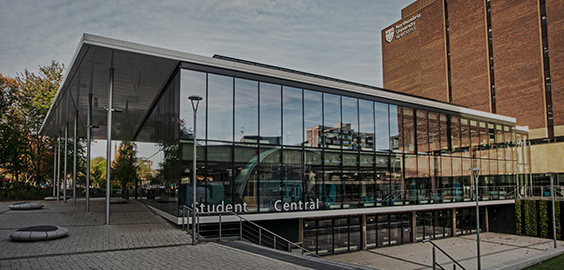
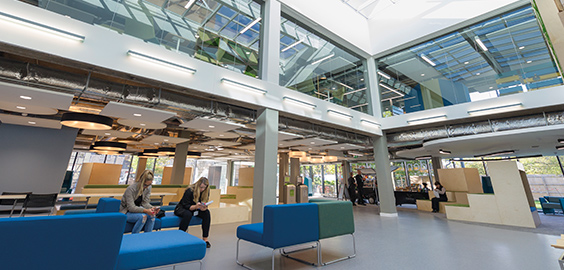
The photography and video on this page are used for illustration. They may have been taken at different times and in different parts of the University, and may show facilities, equipment, staff, students or activities that are not part of this course. They are not a guarantee of the specific facilities or equipment you will use.
The course content, entry requirements and fees sections of this page, together with the Programme Specification, set out what this course includes. Our facilities are updated over time and may change during your studies.
Northumbria University is committed to developing an inclusive, diverse and accessible campus and wider University community and are determined to ensure that opportunities we provide are open to all.
We are proud to work in partnership with AccessAble to provide Detailed Access Guides to our buildings and facilities across our City, Coach Lane and London Campuses. A Detailed Access Guide lets you know what access will be like when you visit somewhere. It looks at the route you will use getting in and what is available inside. All guides have Accessibility Symbols that give you a quick overview of what is available, and photographs to show you what to expect. The guides are produced by trained surveyors who visit our campuses annually to ensure you have trusted and accurate information.
You can use Northumbria’s AccessAble Guides anytime to check the accessibility of a building or facility and to plan your routes and journeys. Search by location, building or accessibility feature to find the information you need.
We are dedicated to helping students who may require additional support during their student journey and offer 1-1 advice and guidance appropriate to individual requirements. If you feel you may need additional support you can find out more about what we offer here where you can also contact us with any questions you may have:
Page last reviewed: 15 October 2026