-
Study
-
Quick Links
- Open Days & Events
- Real-World Learning
- Unlock Your Potential
- Tuition Fees, Funding & Scholarships
- Real World Learning
-
Undergraduate
- Application Guides
- UCAS Exhibitions
- Extended Degrees
- School & College Outreach
- Information for Parents
-
Postgraduate
- Application Guide
- Postgraduate Research Degrees
- Flexible Learning
- Change Direction
- Register your Interest
-
Student Life
- Students' Union
- The Hub - Student Blog
- Accommodation
- Northumbria Sport
- Support for Students
-
Learning Experience
- Real-World Learning
- Research-enriched learning
- Graduate Futures
- The Business Clinic
- Study Abroad
-
-
International
International
Northumbria’s global footprint touches every continent across the world, through our global partnerships across 17 institutions in 10 countries, to our 277,000 strong alumni community and 150 recruitment partners – we prepare our students for the challenges of tomorrow. Discover more about how to join Northumbria’s global family or our partnerships.
View our Global Footprint-
Quick Links
- Course Search
- Undergraduate Study
- Postgraduate Study
- Information for Parents
- London Campus
- Northumbria Pathway
- Cost of Living
- Sign up for Information
-
International Students
- Information for International Students
- Northumbria and your Country
- International Events
- Application Guide
- Entry Requirements and Education Country Agents
- Global Offices and Regional Teams
- English Requirements
- English Language Centre
- International student support
- Cost of Living
-
International Fees and Funding
- International Undergraduate Fees
- International Undergraduate Funding
- International Masters Fees
- International Masters Funding
- International Postgraduate Research Fees
- International Postgraduate Research Funding
- Useful Financial Information
-
International Partners
- Agent and Representatives Network
- Global Partnerships
- Global Community
-
International Mobility
- Study Abroad
- Information for Incoming Exchange Students
-
-
Business
Business
The world is changing faster than ever before. The future is there to be won by organisations who find ways to turn today's possibilities into tomorrows competitive edge. In a connected world, collaboration can be the key to success.
More on our Business Services-
Business Quick Links
- Contact Us
- Business Events
- Research and Consultancy
- Education and Training
- Workforce Development Courses
- Join our mailing list
-
Education and Training
- Higher and Degree Apprenticeships
- Continuing Professional Development
- Apprenticeship Fees & Funding
- Apprenticeship FAQs
- How to Develop an Apprentice
- Apprenticeship Vacancies
- Enquire Now
-
Research and Consultancy
- Space
- Energy
- AI Futures
- CHASE: Centre for Health and Social Equity
- NESST
-
-
Research
Research
Northumbria is a research-rich, business-focused, professional university with a global reputation for academic quality. We conduct ground-breaking research that is responsive to the science & technology, health & well being, economic and social and arts & cultural needs for the communities
Discover more about our Research-
Quick Links
- Research Peaks of Excellence
- Academic Departments
- Research Staff
- Postgraduate Research Studentships
- Research Events
-
Research at Northumbria
- Interdisciplinary Research Themes
- Research Impact
- REF
- Partners and Collaborators
-
Support for Researchers
- Research and Innovation Services Staff
- Researcher Development and Training
- Ethics, Integrity, and Trusted Research
- University Library
- Vice Chancellors Fellows
-
Research Degrees
- Postgraduate Research Overview
- Doctoral Training Partnerships and Centres
- Academic Departments
-
Research Culture
- Research Culture
- Research Culture Action Plan
- Concordats and Commitments
-
-
About Us
-
About Northumbria
- Our Strategy
- Our Staff
- Our Schools
- Place and Partnerships
- Leadership & Governance
- University Services
- Northumbria History
- Contact us
- Online Shop
-
-
Alumni
Alumni
Northumbria University is renowned for the calibre of its business-ready graduates. Our alumni network has over 253,000 graduates based in 178 countries worldwide in a range of sectors, our alumni are making a real impact on the world.
Our Alumni - Work For Us
The Northern English Project, led by Dr. Robert McKenzie and Dr. Phillip Wallage, examines speakers’ perceptions and evaluations of the English speech used within the north of England (and extending to Scotland and Northern Ireland) and, relatedly, investigates patterns of linguistic variation and change within northern English, as a supra-local variety. There are a number of funded PhD students at Northumbria University attached to the project.
The Northern Englishes Project is particularly concerned with the following questions:
i) To what extent is it possible to talk about ‘northern English’ or ‘northern Englishes’ as distinct forms of speech?
- Do the language users themselves perceive ‘Northern English’ to be a supra-local variety?
- If this is the case, what (combination of) linguistic features are indexical of Northern English speech?
- Is the concept of northern English salient for different speech communities within the UK?
ii) In what ways do listeners’ identify speakers of Northern English?
- What are the perceptual geographic boundaries of Northern English speech?
- To what extent, if it all, are categorisations of northern English speech based upon the frequency of use of particular linguistic features?
- How do non-linguistic factors (for example age, gender and regional provenance) influence perceptions of northern English varieties?
How are (speakers of) northern English evaluated?
- What are ingroup and outgroup attitudes towards (speakers of) Northern English?
- To what extent do attitudes towards northern English speech rest upon:
i) enregistered linguistic features and ii) regional stereotypes?
Is the perception of northern English changing over time?
- Is there any evidence of change in progress in i) the identification and/or ii) the evaluation of northern English speech?
- Are there any changes in the identification or evaluation of forms of northern English?
- To what extent do changes in perceptions reflect the increasing supralocalisation of specific linguistic features spoken in the north of England?
Latest News and Features

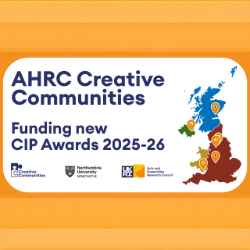
Mission Research: UKRI Community Innovation Practitioner Awards Scaled to Empower Place-Based Innovation Across All 4 Nations
The Creative Communities programme, funded by the UKRI Arts and Humanities Research Council…

Northumbria researchers announced as winners of Future Leaders Fellowships
Two talented researchers from Northumbria University have been awarded a share of £120 million…

Northumbria expands results day support for students
Northumbria University is expanding and enhancing the support it provides to students receiving…
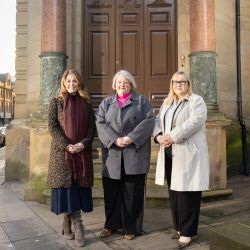
Mayor backs new Centre for Writing to become North East creative powerhouse
Plans to open a new national centre for writing will take a big step forward next week as North…

North East universities to host international Medieval and Renaissance music conference
An international conference celebrating the music of the medieval and Renaissance periods will…
Northumbria wins recognition for expanding access to higher education
Northumbria University has been named Higher Education Institution of the Year at a prestigious…
Boost for art and music conservation with new X-ray machine
Northumbria University has unveiled a new state-of-the-art X-ray radiography instrument – an…
Annual showcase REVEALs next generation of creative and cultural talent
A student showcase which is one of the highlights of the North East’s cultural calendar is…