-
Study
-
Quick Links
- Open Days & Events
- Real-World Learning
- Unlock Your Potential
- Tuition Fees, Funding & Scholarships
- Real World Learning
-
Undergraduate
- Application Guides
- UCAS Exhibitions
- Extended Degrees
- School & College Outreach
- Information for Parents
-
Postgraduate
- Application Guide
- Postgraduate Research Degrees
- Flexible Learning
- Change Direction
- Register your Interest
-
Student Life
- Students' Union
- The Hub - Student Blog
- Accommodation
- Northumbria Sport
- Support for Students
-
Learning Experience
- Real-World Learning
- Research-enriched learning
- Graduate Futures
- The Business Clinic
- Study Abroad
-
-
International
International
Northumbria’s global footprint touches every continent across the world, through our global partnerships across 17 institutions in 10 countries, to our 277,000 strong alumni community and 150 recruitment partners – we prepare our students for the challenges of tomorrow. Discover more about how to join Northumbria’s global family or our partnerships.
View our Global Footprint-
Quick Links
- Course Search
- Undergraduate Study
- Postgraduate Study
- Information for Parents
- London Campus
- Northumbria Pathway
- Cost of Living
- Sign up for Information
-
International Students
- Information for International Students
- Northumbria and your Country
- International Events
- Application Guide
- Entry Requirements and Education Country Agents
- Global Offices and Regional Teams
- English Requirements
- English Language Centre
- International student support
- Cost of Living
-
International Fees and Funding
- International Undergraduate Fees
- International Undergraduate Funding
- International Masters Fees
- International Masters Funding
- International Postgraduate Research Fees
- International Postgraduate Research Funding
- Useful Financial Information
-
International Partners
- Agent and Representatives Network
- Global Partnerships
- Global Community
-
International Mobility
- Study Abroad
- Information for Incoming Exchange Students
-
-
Business
Business
The world is changing faster than ever before. The future is there to be won by organisations who find ways to turn today's possibilities into tomorrows competitive edge. In a connected world, collaboration can be the key to success.
More on our Business Services-
Business Quick Links
- Contact Us
- Business Events
- Research and Consultancy
- Education and Training
- Workforce Development Courses
- Join our mailing list
-
Education and Training
- Higher and Degree Apprenticeships
- Continuing Professional Development
- Apprenticeship Fees & Funding
- Apprenticeship FAQs
- How to Develop an Apprentice
- Apprenticeship Vacancies
- Enquire Now
-
Research and Consultancy
- Space
- Energy
- AI Futures
- CHASE: Centre for Health and Social Equity
- NESST
-
-
Research
Research
Northumbria is a research-rich, business-focused, professional university with a global reputation for academic quality. We conduct ground-breaking research that is responsive to the science & technology, health & well being, economic and social and arts & cultural needs for the communities
Discover more about our Research-
Quick Links
- Research Peaks of Excellence
- Academic Departments
- Research Staff
- Postgraduate Research Studentships
- Research Events
-
Research at Northumbria
- Interdisciplinary Research Themes
- Research Impact
- REF
- Partners and Collaborators
-
Support for Researchers
- Research and Innovation Services Staff
- Researcher Development and Training
- Ethics, Integrity, and Trusted Research
- University Library
- Vice Chancellors Fellows
-
Research Degrees
- Postgraduate Research Overview
- Doctoral Training Partnerships and Centres
- Academic Departments
-
Research Culture
- Research Culture
- Research Culture Action Plan
- Concordats and Commitments
-
-
About Us
-
About Northumbria
- Our Strategy
- Our Staff
- Our Schools
- Place and Partnerships
- Leadership & Governance
- University Services
- Northumbria History
- Contact us
- Online Shop
-
-
Alumni
Alumni
Northumbria University is renowned for the calibre of its business-ready graduates. Our alumni network has over 253,000 graduates based in 178 countries worldwide in a range of sectors, our alumni are making a real impact on the world.
Our Alumni - Work For Us
The Science and Justice Research Interest Group, led by Prof McCartney and Dr Amankwaa, adopts a broad interpretation of ‘science’ including technology, as well as ‘justice’. The SJRig brings together academics from across UNN to interrogate how science can contribute to a ‘just’ society through our seminar series and workshops. The Science and Justice RIG works closely with: the Centre for Evidence and Criminal Justice Studies; the Centre for Crime and Policing, and the Forensic Science Research Group, bringing together experience in engaging with key stakeholders and wider publics about science and technology, undertaking socio-ethical analysis and investigating socio-legal matters.
Our Research
Members of the SJRig work across research projects from law, sociology, forensic science and cognate disciplines. They are involved in training national policing organisations, including forensic personnel, in legal/social/ethical aspects of their work, and advising government policy on the regulation of forensic sciences and biometric technologies.
The RIG’s research has led to requests for advice to politicians, policymakers and lawmakers through invited appearances before the UK and Scottish Parliaments and other legislative and public interest bodies both domestically and internationally. RIG members have recently given evidence to inquiries on topics such as: forensic science; DNA databasing; polygraph testing; forensic regulation; biometrics; and police inspection regimes and complaints processes.
Contact Name: Professor Dr. Carole McCartney
Current Events
Visit our seminar series webpage for our upcoming seminars in the 2021/22 academic year.
Past Events
2020/21 Virtual Seminar Series
Click link to watch on demand
- Prof Carole McCartney. The Forensic Science Paradox. Wednesday November 25th, 2020.
- Dr Amelia Shooter, University of Winchester. The unwavering strength of procedural regularity in US admissibility challenges to forensic science evidence. Thursday December 3rd, 2020.
- Damian Allain, (Head of Casework at Inside Justice), and Professor Carole McCartney, ‘Don’t know what you’ve got (til it’s gone): The problems with retaining evidence’.
- Ebony Lyall-Nicholas, MSc. Assistant Director - Forensic Laboratory, Belize National Forensic Science Service. The Role and Impact of Forensic Science in Belize. Friday January 29th, 2021.
- Jess Ritchie, University of Leicester. Connecting law and practice for sexual violence in Kenya: Enhancing DNA sample collection, preservation and chain of custody. Thursday February 18th, 2021.
- Dr. Matteo Gallidabino, The future of chemical profiling: revolutionising forensic practice through next-gen approaches and machine learning, Wednesday 24th March, 2021.
2018/19 Events and Activities
Thursday 22nd November 2018, 5.30pm – 7.30pm (Registration from 5pm)
Streamlined Forensic Reporting: Expert Panel and Discussion
City Campus East 1, Business & Law Building, Room 403
Expert Panel:
- Robert Smith QC - New Park Court Chambers
- Luan Lunt - Science Lead (Case Assessment & Interpretation), Senior Reporter and Team Leader at Eurofins
- Karen Richmond - Postdoctoral Research Assistant with the Leverhulme Research Centre in Forensic Science
- Dr. L Jane Bloor and David Schudel, Keith Borer Consultants
Thursday 28th June 2018 – All day
Symposium: ‘Medicine, Science and Justice.’ School of Law, Northumbria University, Newcastle upon Tyne.
2018/19 Seminar Series
Theme: ‘Forensic Science: Remaining Impartial in a Partial World’
This series of seminars will question the role of forensic science in society, asking how it retains its scientific objectivity and credibility, when utilised in partial environments. The working environment of forensic science is inherently problematic, with vested interests and external pressures that scientists must resist if to remain impartial. How to ensure that forensic science remains robust and objective, and how these pressures can be mitigated, will be a focal point of these introductory seminars. They will look closely at the role of forensic scientists, of forensic data, and the use of scientific evidence in the criminal justice system. At a summer conference, the role of forensic science in broader social contexts will be considered, looking at death investigations and the State, and forensic science in post-conflict situations, with guest speakers from forensic pathology and forensic anthropology.
Talks and Lectures
Rick Graham: DNA Experts in Court
Emmanuel Amoako: Forensic Science Regulation in the UK
Carole McCartney: The Forensic Science Paradox
Aaron Amankwaa (2016 – 2019)
Project Title: Forensic DNA Databasing: Retention regimes and efficacy
Research Context:
Three legislative regimes have governed the retention of DNA data on the United Kingdom National DNA Database (NDNAD). These are broadly described as restrictive (1995 – 2001), expansive (2001 – 2013) and semi-restrictive regimes (2013 – present). The purpose of this research is to assess the efficacy of the different regimes to develop DNA retention standards for the protection of public security and the individual’s right to privacy, and advance retention reforms to maximise the utility of forensic DNA databases. The methodology will involve a statistical analysis of NDNAD match rate data to determine the impact of the different retention regimes on the performance of the database. The study will also survey the views of staff from 118 stakeholder organizations/agencies directly involved in the collection and processing of DNA samples, and use of the NDNAD; oversight and operation of the NDNAD; and those with a special interest in the operation and use of the NDNAD. A self-administered semi-structured questionnaire will be used to assess the perception of stakeholders on the efficacy of the different retention regimes against specific effectiveness criteria identified from the literature. The original contributions of this research include advancement of the literature on the efficacy of retention regimes for the NDNAD, particularly on the Protection of Freedoms Act 2012 regime; proposals for development of a standard retention regime for the NDNAD; provision of retention reforms to maximise the utility of forensic DNA databases; and resource for developing human right standards and public security safeguards for forensic biometric databases worldwide.
Twitter: https://twitter.com/aaron_amankwaa
Emmanuel Amoako (2017 – 2020)
Project Title: The regulation of forensic science in the UK
Research Context:
The oversight responsibilities of the Forensic Science Regulator, since its creation in 2008, to ensure high-quality standard in the provision of forensic science in the UK, has been without a statutory backing. This research will examine the current regulatory regime of forensic science in the UK. It aims to assess the role of the Forensic Science Regulator in regulating forensic science providers in the UK and the need for a statutory power given to the Regulator to ensure compliance with the Codes of practice and conduct. The research will involve a survey design where questionnaires will be administered to stakeholders of forensic science in the UK e.g. forensic science service providers, police forces, the judicial system, academics and other relevant stakeholders to consolidate knowledge on the administration of the statutory mandate to the Regulator and her codes of conduct and practice.
Twitter: https://twitter.com/dr_Naryeh
The UK Forensic Science Regulator: Fit for Purpose? Nsiah Amoako, E. & McCartney, C., 25 Feb 2021, In: WIREs Forensic Science., e1415.
The effectiveness of the current use of forensic DNA in criminal investigations in England and Wales. Amankwaa, A. & McCartney, C., 24 Feb 2021, In: WIREs Forensic Science., e1414.
Not ‘very English’: On the Use of the Polygraph by the Penal System in England and Wales. Kotsoglou, K. & Oswald, M., 2 Dec 2020, In: The Journal of Criminal Law.
McCartney, C & L. Shorter. ‘Police Retention and Storage of Evidence in England and Wales’ (2019) International Journal of Police Science and Management 22(2) 123-136.
Planetary Protection in the New Space Era: Science and Governance. Cheney, T., Newman, C., Olsson-francis, K., Steele, S., Pearson, V. & Lee, S., 13 Nov 2020, In: Frontiers in Astronomy and Space Sciences. 7, 589817.
A study on contactless airborne transfer of textile fibres between different garments in small compact semi-enclosed spaces. Sheridan, K., Palmer, R., Saltupyte, E. & Gallidabino, M. D., 1 Oct 2020, In: Forensic Science International. 315, 110432.
Explaining and trusting expert evidence: What is a ‘sufficiently reliable scientific basis’? Ward, T., 1 Jul 2020, In: International Journal of Evidence and Proof. 24, 3, p. 233-254
Demonstrating reliability through transparency: a scientific validity framework to assist scientists and lawyers in criminal proceedings. Carr, S., Piasecki, E. & Gallop, A., 1 Mar 2020, Forensic Science International, 308
Latest News and Features
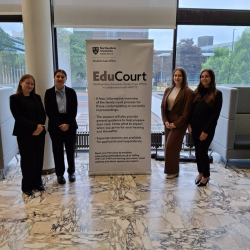
Student Law Office partnership with HMCTS provides invaluable real-world training while supporting individuals through the family courts
Northumbria University law graduates highlight the transformative impact of EduCourt, an innovative…

Northumbria Law School Professor Advises UK Government on India-UK Trade Agreement
Professor Gita Gill of Northumbria Law School has been invited to provide expert advice to…
Northumbria University hosts landmark UK AI Research Symposium
Northumbria University has been selected to host the inaugural UK AI Research Symposium (UKAIRS)…
Northumbria expands results day support for students
Northumbria University is expanding and enhancing the support it provides to students receiving…
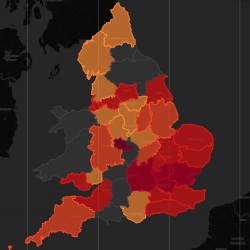
Northumbria University leads major study to tackle NHS fraud
Northumbria University is spearheading vital research to enhance counter-fraud strategies within…
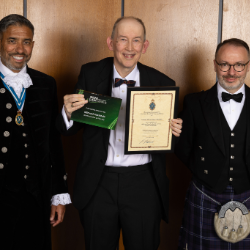
Northumbria wins recognition for expanding access to higher education
Northumbria University has been named Higher Education Institution of the Year at a prestigious…
Upcoming events
Supporting Survivors of Sexual Violence and Abuse Conference 2026
CCE1 - City Campus East 1
-
Broken Bonds: New Perspectives on Marital Breakdown
The Great Hall
-