-
Northumbria University

A launch event featuring a series of themed half-day sessions between Tuesday 4th July 2023, 13:15 (lunch/registration from 12:00) until Friday 7th July 2023, 14:00. Delegates are welcome to join part or all of the Symposium.
The BioFutures Symposium 2023 is hosted by the BioFutures IDRT, one of seven Northumbria University Interdisciplinary Research Themes (IDRTs).
BioFutures IDRT's ambition is to perform world leading research in design-led innovation through biology-centred technology and engineering. By combining design thinking with biotechnology, we seek to create sustainable and socially responsible products and services that can benefit society and the environment. Biotechnology is entering a new stage in its development, leaving the laboratory, and entering the real world. This creates new challenges and innovation opportunities to develop challenge-led solutions through design thinking.Connect and collaborate
Through the BioFutures Symposium 2023, we would like to connect educators, researchers, design practitioners, industrialists and students from biology, engineering, environmental sciences, architecture, fashion, innovation design, computer sciences and social sciences, to showcase and discuss the potential for interdisciplinary collaboration. Contribution topics
The symposium will have sections covering the following areas: wearable biosensors, biological fabrication of smart materials / novel biomaterials, waste valorisation, biological interface materials, AI-designed life, and design education for BioFuture, concluding with industry perspectives on BioFutures.
Wearable devices such as smart watches have become popular for various applications such as heart rate monitoring, setting reminders to take pills, monitoring blood pressure continuously, and setting an emergency access point. These devices can be considered as well-being wearables. However, the pace of development and market penetration for the healthcare wearable devices capable of diagnosis and monitoring significantly lags behind the success of the well-being wearables.
New innovation designs, technological leap and novel device configurations are needed to deliver the wearables to transform healthcare management. Considering the facts of the changing demographics in an ageing society and the overarching stress in healthcare services, the impact of the next generation of healthcare wearables to the society will be significant.
In addition, these devices will be pivotal to provide quantitative healthcare assessment in challenging environments where conventional healthcare services cannot be offered. In this session, we seek contributions discussing new approaches which can lead to new healthcare management paradigms. This includes new detection technologies, new methods to better integrate wearables in daily life, data processing and fusion capabilities.
"Can we grow everything?" is a thought-provoking question that highlights the potential for using biological manufacturing techniques to create a wide range of products. With recent advancements in biotechnology and synthetic biology, it is becoming increasingly possible to grow materials, such as textiles, plastics, and even construction materials, using biological processes.
Using biology as a manufacturing platform has several potential advantages, including reduced environmental impact, increased sustainability, and the ability to create complex materials and structures that are difficult to produce using traditional manufacturing techniques. For example, biologically produced materials could be grown using renewable resources, such as plant-based feedstocks, and could potentially be biodegradable or recyclable.
While there are still significant challenges to overcome, such as scaling up production and ensuring the safety and quality of biologically manufactured products, the potential benefits are promising. The future of manufacturing using biology could be transformative, leading to more sustainable and environmentally friendly production processes and a wide range of innovative new products. In this session, we seek the contribution from biologists, engineers, architects and designers on the topics of Engineered Living Materials, biodesign and fabrication for Future Materials, Sustainable construction materials, sustainable fashion and textile, bio-digital fabrication and circular economy.
Waste biovalorisation refers to the use of biological processes to convert waste materials into value-added products such as biofuels, biochemicals, and bioplastics. Biovalorisation will contribute to clean growth by reducing the amount of waste that ends up in landfills or the environment, thereby reducing greenhouse gas emissions and other negative environmental impacts, conserving resources, and providing renewable alternatives to fossil fuels and other non-renewable materials.
This is critical for clean growth as it allows us to use waste as a resource to reduce environmental impacts and drive sustainable economic growth. In this session we seek the exploration of how the engineering of biology and bioprocess development can be used to deliver less carbon-intensive and more environmentally sustainable processes that contribute to ambitious net zero targets.
Manufactured materials and surfaces are required to work alongside and interact with biological system to deliver a wide range of important functions across healthcare, medicine, electronics, materials, coatings and consumer goods.
In this session we will explore the question of how we design functional materials, polymers and surfaces to interface and interact with biological systems, to deliver a targeted effect or result. The role of the materials can be to enhance, stabilise or complement biological systems, or equally they can be designed to repel, change or destroy biological materials with which they interact. The scope of this sessions can include bioinspired structured surfaces, bio-compatible or bio-repellent surfaces, bio-composites, antimicrobial surfaces, stabilisation of biological systems (including vaccines), advanced drug delivery systems and more.
We invite contributions in the following areas, from across biology, chemistry, materials, engineering and physics. The topics include: Bio-compatible materials interfacing with biological materials; Surface and material design; Structured biomimetic surfaces; Bio-inspired, mimetic or integrated coatings and surfaces; Surface design for biological interaction; Advanced multifunctional coatings and materials; Bio-composites; Biocatalytic materials and surfaces; Advanced drug delivery systems from polymers and Polymer stabilisation of biological emulsions or solution (inc. RNA vaccines).
Advances in protein language models have allowed AI to implicitly “learn” properties that allow sequences to be folded alongside other embedded learning techniques for function prediction from primary sequences. We are now at the stage where AI offers varied routes to predicting biological outcomes from DNA sequences. However, AI has not yet been extensively used to design novel functions, despite the wealth of functionally annotated protein products at our fingertips.
Generative protein language models for biodesign represent a promising future with artificial proteins, pathways, or even whole organisms, with traits designed and optimised purely by AI as a realistic near-future goal. In this session, we seek to explore current technological limits and challenges, investigate new avenues and methodologies, and discuss broader issues arising from AI-designed life.
Bio Design is a new field of education which enable designers play a critical role in the future of biotechnology development. Bio Design education combines principles of biology and design to create innovative products and systems that are inspired by, or even directly derived from, living organisms.Bio Design education focuses on teaching students how to apply biomaterials, engineering biology techniques to create sustainable and ethical solutions to real-world problems.
This field involves a multidisciplinary approach that combines design thinking, biology, and engineering to create products and systems that can be used in various industries such as healthcare, energy, and manufacturing. Through Bio Design education, students learn how to work with biological materials and living systems, and how to consider the potential ethical and environmental impacts of their designs. In this session, we seek your contribution to share ideas on new curriculum, pedagogies and real-life experiences of such programme, and the visions for the future.
From an industrial perspective, Biofutures offer significant potential. The industrial sector sees Biofutures as a promising avenue through which to address sustainability challenges and reduce dependence on fossil fuels. By harnessing biological resources and processes, industries aim to transition towards a more environmentally friendly and sustainable model of production. Biofutures can contribute to mitigating climate change, reducing greenhouse gas emissions, and promoting a circular economy. During this session, we will explore the perspectives of businesses on future development in the bio-based technologies.
The Symposium will feature a poster exhibition. You are invited to contribute a poster to the Symposium aligned to any of the above topics. This is an ideal opportunity to showcase your work and gain feedback from a multidisciplinary audience.
The Symposium will be opened and closed by our BioFutures IDRT leads:
 |
Associate Professor | BioFutures IDRT lead Department of Applied Sciences, Northumbria University, UK. |
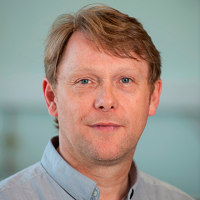 |
Professor | BioFutures IDRT lead Department of Applied Sciences, Northumbria University, UK. |
Each Symposium Topic has its own half-day session, consisting of presentations from Keynote and Invited Speakers, oral contributions from delegates, time for questions, networking, refreshment breaks and poster sessions.
Tuesday 4th July 2023, 13:30-16:30
Chair: Professor Richard Fu
 |
Professor and Chair of Textile Science and Engineering Department of Materials, University of Manchester, UK. |
 |
Associate Professor Department of NanoEngineering, University of California San Diego, USA. |
Wednesday 5th July 2023, 09:00-12:00
Chair: Dr Meng Zheng
 |
Adjunct Professor of Molecular Biology, Cell Biology and Biochemistry Brown University, USA. |
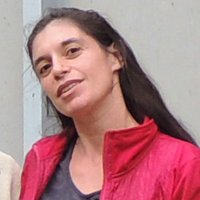 |
Adjunct Professor of Plant Pathology and Microbiology Faculty of Agricultural, Food & Environment, The Hebrew University of Jerusalem, Israel. |
Wednesday 5th July 2023, 13:30-16:30
Chair: Professor Gary Black
 |
Senior Lecturer in Biotechnology Centre for Engineering Biology, The University of Edinburgh, UK. |
 |
Professor of Chemical Engineering, Department of Chemical Sciences, Huddersfield University, UK. |
Thursday 6th July 2023, 09:00-12:00
Chairs: Dr Matthew Unthank and Dr Yunhong Jiang
 |
Professor in Antimicrobial Biomaterials Department of Mechanical, Materials & Aerospace Engineering, University of Liverpool, UK. |
 |
Professor of Bioengineering Department of Engineering, Cambridge University, UK. |
Thursday 6th July 2023, 13:30-16:30
Chair: Dr Mathew Bashton
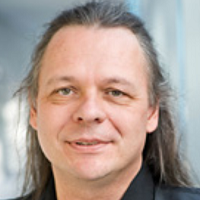 |
Professor of Bioinformatics,TUM School of Computation, Information and Technology (CIT), Technical University of Munich (TUM), Germany; Rostlab. |
 |
Stanford Science Fellow, Biochemistry Stanford Medicine, Stanford University, USA |
 |
PhD candidate Faculty of Industrial Design Engineering, Delft University of Technology, Netherlands. |
Mónica Moniz, Publisher & Programme Manager, Cambridge University Press & Assessment, will attend the poster/networking session on Thursday 6th July.
Friday 7th July 2023, 09:00-11:25
Chair: Professor Martyn Dade-Robertson
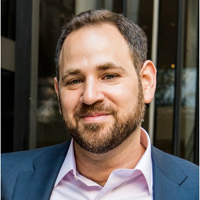 |
Executive Director Biodesign Challenge, USA. |
 |
Professor Giovanna Danies Turano Associate Professor Department of Design, Universidad de los Andes, Bogotá, Colombia. |
Friday 7th July 2023, 11:25-12:10
Chairs: Professor Gary Black & Dr Meng Zheng
 |
Dr Linsey Fuller Group Scientist Newcastle Innovation Centre, Procter & Gamble |
 |
Aurélie Fontan Fashion Designer |
 |
Ashley Granter Product Designer |

The BioFutures Symposium is free to attend
Dates/times: The event starts on Tuesday 4th July 2023 at 13:15 (lunch/registration from 12:00), ending on Friday 7th July 2023 at 14:00. You are welcome to attend part or all of the Symposium.
Venue: Business and Law Building, Northumbria University, Falconar Street, Newcastle-upon-Tyne, NE2 1UY. For venue information and location, you may wish to refer to our City Campus Map (building number 5) - AccessAble Guide - Google map location - What3Words location.
The Symposium is free to attend. As there is a maximum limit on attendees, please register below as soon as possible to ensure your place.

A new national network led by Newcastle University and Northumbria University, in partnership…

A Northumbria University criminologist has been awarded a Philip Leverhulme Prize, one of the…

Pioneering data platform maps where the Armed Forces community receive support from charities

A major study co-led by Northumbria University will test whether attachment assessments lead…

New research published today by the AHRC Creative Communities programme provides fresh evidence…

Northumbria University's award-winning Student Law Office is launching SEND Decoded, a series…

The Net Zero Polar Science (NZPS) Doctoral Training Programme (DTP) has welcomed its first…

A new drop-in service is bringing health and wellbeing support for students at both Newcastle…

Manchester Marriott Hotel Piccadilly
-

Sutherland Building

Northumbria University
-
