-
Study
-
Quick Links
- Open Days & Events
- Real-World Learning
- Unlock Your Potential
- Tuition Fees, Funding & Scholarships
- Real World Learning
-
Undergraduate
- Application Guides
- UCAS Exhibitions
- Extended Degrees
- School & College Outreach
- Information for Parents
-
Postgraduate
- Application Guide
- Postgraduate Research Degrees
- Flexible Learning
- Change Direction
- Register your Interest
-
Student Life
- Students' Union
- The Hub - Student Blog
- Accommodation
- Northumbria Sport
- Support for Students
-
Learning Experience
- Real-World Learning
- Research-enriched learning
- Graduate Futures
- The Business Clinic
- Study Abroad
-
-
International
International
Northumbria’s global footprint touches every continent across the world, through our global partnerships across 17 institutions in 10 countries, to our 277,000 strong alumni community and 150 recruitment partners – we prepare our students for the challenges of tomorrow. Discover more about how to join Northumbria’s global family or our partnerships.
View our Global Footprint-
Quick Links
- Course Search
- Undergraduate Study
- Postgraduate Study
- Information for Parents
- London Campus
- Northumbria Pathway
- Cost of Living
- Sign up for Information
-
International Students
- Information for International Students
- Northumbria and your Country
- International Events
- Application Guide
- Entry Requirements and Education Country Agents
- Global Offices and Regional Teams
- English Requirements
- English Language Centre
- International student support
- Cost of Living
-
International Fees and Funding
- International Undergraduate Fees
- International Undergraduate Funding
- International Masters Fees
- International Masters Funding
- International Postgraduate Research Fees
- International Postgraduate Research Funding
- Useful Financial Information
-
International Partners
- Agent and Representatives Network
- Global Partnerships
- Global Community
-
International Mobility
- Study Abroad
- Information for Incoming Exchange Students
-
-
Business
Business
The world is changing faster than ever before. The future is there to be won by organisations who find ways to turn today's possibilities into tomorrows competitive edge. In a connected world, collaboration can be the key to success.
More on our Business Services-
Business Quick Links
- Contact Us
- Business Events
- Research and Consultancy
- Education and Training
- Workforce Development Courses
- Join our mailing list
-
Education and Training
- Higher and Degree Apprenticeships
- Continuing Professional Development
- Apprenticeship Fees & Funding
- Apprenticeship FAQs
- How to Develop an Apprentice
- Apprenticeship Vacancies
- Enquire Now
-
Research and Consultancy
- Space
- Energy
- AI Futures
- CHASE: Centre for Health and Social Equity
- NESST
-
-
Research
Research
Northumbria is a research-rich, business-focused, professional university with a global reputation for academic quality. We conduct ground-breaking research that is responsive to the science & technology, health & well being, economic and social and arts & cultural needs for the communities
Discover more about our Research-
Quick Links
- Research Peaks of Excellence
- Academic Departments
- Research Staff
- Postgraduate Research Studentships
- Research Events
-
Research at Northumbria
- Interdisciplinary Research Themes
- Research Impact
- REF
- Partners and Collaborators
-
Support for Researchers
- Research and Innovation Services Staff
- Researcher Development and Training
- Ethics, Integrity, and Trusted Research
- University Library
- Vice Chancellors Fellows
-
Research Degrees
- Postgraduate Research Overview
- Doctoral Training Partnerships and Centres
- Academic Departments
-
Research Culture
- Research Culture
- Research Culture Action Plan
- Concordats and Commitments
-
-
About Us
-
About Northumbria
- Our Strategy
- Our Staff
- Our Schools
- Place and Partnerships
- Leadership & Governance
- University Services
- Northumbria History
- Contact us
- Online Shop
-
-
Alumni
Alumni
Northumbria University is renowned for the calibre of its business-ready graduates. Our alumni network has over 253,000 graduates based in 178 countries worldwide in a range of sectors, our alumni are making a real impact on the world.
Our Alumni - Work For Us
- In the first study of its kind, researchers from Northumbria University examined the current state of the Antarctic ice sheet, which reveals no evidence that a tipping point towards large-scale, irreversible collapse has been crossed – yet.
- However, researchers found even with no additional global warming, an irreversible collapse of some regions of the West Antarctic ice sheet is possible.
- While ice loss in Antarctica is expected to continue, authors say these studies give slight hope it might be possible to avoid or delay the tipping point, but with urgent action.
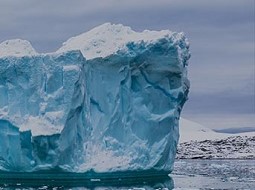
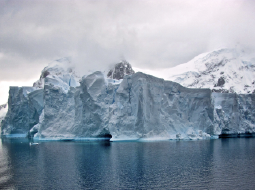
There is a limited window of time before large-scale, irreversible ice loss in the Antarctic starts, according to new research from Northumbria University.
For the first time, two collaborative papers published today in The Cryosphere journal, examined whether the Antarctic ice sheet has already reached a tipping point towards permanent unstoppable retreat.
The ongoing ice loss in Antarctica has raised concerns that the West Antarctic ice sheet might already be destabilised and ‘past the point of no return’.
However, researchers have now systematically analysed this question and found there is no evidence that it has already reached its tipping point.
The modelling study – carried out by Northumbria University and several research institutions across Europe – used three different computer models to run a series of simulations to conduct a thorough inspection looking for signs of irreversible retreat of the Antarctic ice sheet in its present form.
Authors of the study say whilst ice loss in Antarctica will continue in the future, these results give slight hope that it might still be possible to avoid or delay crossing the tipping point, if urgent action is taken.
Dr Emily Hill, Research Fellow at Northumbria University and report co-author, said: “The implications are profound. We used three different numerical models which all showed that we have not yet crossed a tipping point that leads to irreversible ice loss in Antarctica.
“Using several models makes our findings even more convincing, and it is reassuring to know that we haven’t yet passed the point of no return.”
However, the researchers also ran hypothetical simulations to investigate how the ice sheet might evolve if current climate conditions stay as they are. They found that even with no additional global warming, an irreversible collapse of some marine regions of West Antarctica’s ice sheet is possible in the future.
One of their models shows the earliest that this could happen is within 300-500 years under current conditions, warning that accelerating climate change is likely to shorten this timescale further.
Antarctica’s ice masses store enough water to raise sea levels by several metres around the globe and remain one of the greatest uncertainties in future projections of the effects of climate change.
Dr Ronja Reese, Vice-Chancellor’s Fellow at Northumbria University and report co-author, said: “Accelerated ice loss at the margins of the ice sheet could signal a collapse of larger marine regions. Our experiments show that an irreversible collapse in some marine regions in West Antarctica is possible for the current climate conditions.
“Importantly, this collapse is not happening yet, as our first study shows, and it evolves over thousands of years. But we would expect that further climate warming in the future will speed this up substantially.”
The research forms part of a major £4 million EU-funded study on Tipping Points in Antarctic Climate Components (TiPACCs) bringing together experts from the UK, Norway, Germany and France to investigate the likelihood of abrupt changes in the movement of ice in the Antarctic region.
Petra Langebroek, Research Director at the Norwegian Research Centre (NORCE), and Scientific Coordinator of the European TiPACCs Project, said: “I am very proud to see this work published. This tight collaboration across different European institutes has resulted in major progress in our understanding of Antarctic ice sheet stability and tipping points.
“This is somewhat good news. We have not yet crossed these tipping point in Antarctica, which – in theory – means that the ongoing ice loss can be reduced or even stopped. Unfortunately, our research also shows that with ongoing climate change, we are headed to crossing tipping points in West Antarctica.”
Northumbria University is home to one of the world’s leading groups in the studies of the interactions between ice sheets and oceans. The team of researchers are working to explore the future of ice sheets and glaciers worldwide in a warming world. This involves understanding the causes of ongoing changes in Antarctica, Greenland and alpine areas, as well as assessing future changes and resulting impacts on human environments globally.
The two collaborative papers on the stability of present-day Antarctic grounding lines are now available to view. The first paper is titled No indication of marine ice sheet instability in the current geometry. The second is titled Onset of irreversible retreat of Amundsen Sea glaciers under current climate on centennial timescales cannot be excluded.
The studies were conducted with partners including l'Institut des Géosciences de l'Environnement (IGE) at the Univ. Grenoble Alpes, Potsdam Institute for Climate Impact Research (PIK) and Norwegian Research Centre (NORCE)
Watch this video to learn more about the TiPACCSs study into tipping points in Antarctica.
Northumbria's academics are studying the future of ice sheets and glaciers worldwide in a warming world. This involves understanding the causes of ongoing changes in Antarctica, Greenland and alpine areas, as well as assessing future changes and resulting impacts on human environments globally.
The guiding vision of Extreme Environments is to understand and harness the physical and biological environments that operate under extreme conditions and stresses, and to develop research that will have tangible impacts on an environmental, technological, economic and societal basis at regional, national and global levels.
Geography At Northumbria University Encompasses All Of Our Work In Physical And Human Geography, Environmental Science And Management, Health & Safety, And Disaster Management.
Latest News and Features
Northumbria Professor recognised for pioneering work on domestic abuse and gender-based violence
A leading legal academic from Northumbria University has been awarded the prestigious title…
International prize for pioneering Down syndrome dementia research
A Northumbria University researcher has won a prestigious international competition to develop…
Researchers awarded NIHR funding to support real world evaluations to improve public health interventions
Researchers from the University of Glasgow and Northumbria University have been awarded £2.5…
From care leaver to government AI leader: Northumbria graduate's extraordinary journey
A Northumbria University graduate who grew up in the care system in County Durham has been…
Northumbria Academics Appointed to National Leadership Positions
Three academics from Northumbria University have been appointed to president positions across…
Northumbria students gain policymaking experience through Civil Service challenge
Students from Northumbria University have gained valuable insight into government policymaking…
Northumbria University to co-host fifth Newcastle Climate Change Forum
Northumbria University, in collaboration with Newcastle University and Newcastle City Council…
New funding to catalyse devolved cultural policy making
The AHRC Creative Communities programme based at Northumbria University has today announced…
Upcoming events
On Weaving
Gallery North
Public Lecture: The Engineering of Human Joint Replacement - Visiting Professor Thomas Joyce
CCE1 003
-
EY Degree Apprenticeship Information Event
Northumbria University
-
Next Stop Northumbria
The Queens Hotel
-