Childhood and Early Years Studies (Extended Degree) BSc (Hons)
 Option for Placement Year
Option for Study Abroad
Placement

Option for Placement Year
Option for Study Abroad
Placement
Northumbria University's Childhood and Early Years degree is designed to help you make a difference in the lives of children. You'll gain knowledge, insight and understanding of a range of issues relating to childhood, children, young people and society.
Covering topics including child development, education, war, poverty, health, disability, the law, you'll analyse the contemporary experience of children, looking at the latest research, historical documents, children's literature and film, and a range of other sources.
This understanding will open up a range of employment opportunities and provide a foundation to go on and study further training courses including teaching, social work, children's nursing and other related professions.
You will reflect upon current developments in childhood provision, policy and practice both nationally and internationally, and you'll be learning from staff who are contributing to the most important debates in the field.
A Research Powerhouse: Social Policy is ranked 3rd in the UK for research power in the UK out of 76 submissions (REF, 2021).
Highly Rated by Students: Over 91% of Childhood and Youth Studies students surveyed in the 2026 National Student Survey positively rated the learning opportunities on their course.
Other courses you may be interested in: Primary Education BA (Hons)
This extended degree provides an alternative route to higher education and supports those who don’t meet the standard entry requirements for an undergraduate degree. It includes a foundation year where you will explore a wide range of topics relating to health, education and social care.
In the foundation year, you will establish a solid foundation in key debates, theory, and practice, while developing research skills relevant to health, education, and social care. You will deepen your understanding of the broader factors influencing health, education, and social care, and will learn the necessary skills to advance to the degree level.
The foundation year of the course delivered at level 3 which develops your ability to study in Higher Education is not accredited. Subsequent levels and years are accredited and deliver the knowledge, competencies, and skills required to meet the specific course accreditation requirements that relate to the approved accredited award title
UCAS Code
Z072
Level of Study
Undergraduate
Mode of Study
4 years Full Time
School
Communities and Education
Location
Coach Lane Campus, Northumbria University
City
Newcastle
Start
September 2027
Fees
Fee Information
Supporting communities, changing futures.
We are an enthusiastic, committed, knowledgeable and likeable staff team, who are here to motivate you and propel you through your degree and beyond.
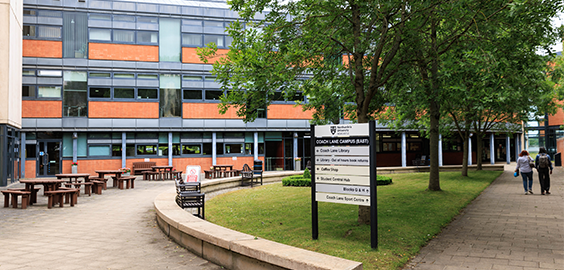
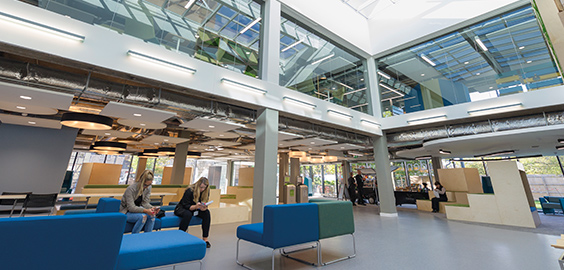
Just a few miles from the city centre lies Coach Lane Campus; a modern, multi-million pound complex. Here you'll find lecture theatres, teaching rooms and study spaces to support students in every aspect of learning.
At the heart of each Northumbria campus, our libraries provide a range of study spaces and technology to suit every learning style.
You can boost your CV and develop your experience whilst studying at Northumbria.
From first year through to final year and beyond graduation, we are here to help.
Visit an open day to get an insight into what it's like to study Childhood and Early Year Studies. Speak to staff and students from the course and get a tour of the facilities.
56 to 72 Tariff Points
From a combination of acceptable Level 3 qualifications which may include: A-level, T Level, BTEC Diplomas/Extended Diplomas, Scottish and Irish Highers, Access to HE Diplomas, or the International Baccalaureate.
Find out how many points your qualifications are worth by using the UCAS Tariff calculator: www.ucas.com/ucas/tariff-calculator
Northumbria University is committed to supporting all individuals to achieve their ambitions and we understand that every applicant’s circumstances can be different, which is why we take a flexible approach when making offers for this course. We have a range of schemes and alternative offers to make sure as many individuals as possible are given an opportunity to study at our university regardless of personal circumstances or background. Typically, offers range from 56 to 72 UCAS tariff points, but we’ll assess your individual circumstances and potential when reviewing your application
To find out more, review our Northumbria Entry Requirement Essential Information page for further details www.northumbria.ac.uk/entryrequirementsinfo
Subject Requirements:
There are no specific subject requirements for this course.
GCSE Requirements:
Applicants will need Maths and English Language at minimum grade 4/C, or an equivalent.
Additional Requirements:
Please note: Progression from Year 0 to Year 1 of this programme is subject to a suitable DBS Enhanced Certificate. You will be contacted directly during the first year of the Extended Degree programme (Year 0) to complete this process.
To find out more, review our Northumbria Entry Requirement Essential Information page for further details www.northumbria.ac.uk/entryrequirementsinfo
International Qualifications:
We welcome applicants with a range of qualifications which may not match those shown above.
If you have qualifications from outside the UK, find out what you need by visiting www.northumbria.ac.uk/yourcountry
English Language Requirements:
International applicants should have a minimum overall IELTS (Academic) score of 6.0 with 5.5 in each component (or an approved equivalent*).
*The university accepts a large number of UK and International Qualifications in place of IELTS. You can find details of acceptable tests and the required grades in our English Language section: www.northumbria.ac.uk/englishqualifications
For further admissions guidance and requirements, please visit www.northumbria.ac.uk/admissionsguidance Please review this information before submitting your application.
UK Fee in Year 1: £5,760
The UK tuition fee for 26/27 is £9,790 and is set in line with the UG Government's tuition fee cap. The University may increase this fee in subsequent years in line with any changes to the tuition fee cap. Students will be notified of any increase ahead of it taking effect. The remaining fees relate to the International Soccer Academy and accommodation fees. Accommodation fees may increase in subsequent years. Students will be notified of any increase ahead of the re-issuing of tenancy agreements. Tuition fees in the academic year 2027/28* will be £10,050. Fees are set in line with the UK Government's tuition fee cap. The University may increase fees in subsequent years in line with any changes to the tuition fee cap. Increases will be linked to inflation. For example, increases may be linked to RPIX (Retail Price Index excluding mortgage interest payments) Students will be notified of any increase ahead of it taking effect. Student fee loans rise in line with the tuition fees cap. *if your course is longer than one year
* Fees subject to annual increases over the course of the period of study. Students will be liable for payment of any/all tuition fees which are not sponsored by their employer or other third party.
International Fee in Year 1:
This is the tuition fee for your first year of study. You should expect to pay tuition fees for every year of study. The University may increase fees in the second and subsequent years of your course at our discretion in line with any inflationary or other uplift. Students will be notified of any increase ahead of it taking effect.
Tuition fees in the academic year 2027/28* will be £10,050. Fees are set in line with the UK Government's tuition fee cap. The University may increase fees in subsequent years in line with any changes to the tuition fee cap. Increases will be linked to inflation. For example, increases may be linked to RPIX (Retail Price Index excluding mortgage interest payments) Students will be notified of any increase ahead of it taking effect. Student fee loans rise in line with the tuition fees cap.
This is the programme fee for your first year of study. The programme fee includes the international tuition fee, International Soccer Academy and accommodation fees. Accommodation fees may increase in subsequent years. Students will be notified of any increase ahead of the re-issuing of tenancy agreements.
ADDITIONAL COSTS
There are no Additional Costs
* At Northumbria we are strongly committed to protecting the privacy of personal data. To view the University’s Privacy Notice please click here
else
To start your application, simply select the month you would like to start your course.
Our Applicant Services team will be happy to help. They can be contacted on 0191 406 0901 or by using our Contact Form.
All information is accurate at the time of sharing.
Full time Courses are primarily delivered via on-campus face to face learning but could include elements of online learning.
Most courses run as described on our website and in our marketing materials. Occasionally we may need to make changes, for example due to a change in the law or regulatory requirements, requirements of a Professional, Statutory or Regulatory Body, or our quality assurance processes. Where a change is significant (in line with the Competition and Markets Authority's guidance on "substantial changes"), we will consult with affected students in advance where the change is being decided, and will explain the reason for the change and inform you at the earliest opportunity.
If we make a significant variation to your programme, you are entitled to: request a transfer to an alternative, appropriate programme; withdraw and have your tuition fees adjusted; or raise a complaint through the Student Complaints Procedure.
Optional modules listed on course pages may be subject to change depending on uptake numbers each year. Where a module you selected is withdrawn, the options above apply.
Contact time is subject to increase or decrease in line with possible restrictions imposed by the government or the University in the interest of maintaining the health and safety and wellbeing of students, staff, and visitors if this is deemed necessary in future.
The photography and video on this page are used for illustration. They may have been taken at different times and in different parts of the University, and may show facilities, equipment, staff, students or activities that are not part of this course. They are not a guarantee of the specific facilities or equipment you will use.
The course content, entry requirements and fees sections of this page, together with the Programme Specification, set out what this course includes. Our facilities are updated over time and may change during your studies.
Northumbria University is committed to developing an inclusive, diverse and accessible campus and wider University community and are determined to ensure that opportunities we provide are open to all.
We are proud to work in partnership with AccessAble to provide Detailed Access Guides to our buildings and facilities across our City, Coach Lane and London Campuses. A Detailed Access Guide lets you know what access will be like when you visit somewhere. It looks at the route you will use getting in and what is available inside. All guides have Accessibility Symbols that give you a quick overview of what is available, and photographs to show you what to expect. The guides are produced by trained surveyors who visit our campuses annually to ensure you have trusted and accurate information.
You can use Northumbria’s AccessAble Guides anytime to check the accessibility of a building or facility and to plan your routes and journeys. Search by location, building or accessibility feature to find the information you need.
We are dedicated to helping students who may require additional support during their student journey and offer 1-1 advice and guidance appropriate to individual requirements. If you feel you may need additional support you can find out more about what we offer here where you can also contact us with any questions you may have:
Page last updated 14/09/26