Environmental Science BSc (Hons)
 Option for Placement Year
Option for Study Abroad

Option for Placement Year
Option for Study Abroad
Are you passionate about tackling climate change, conserving biodiversity, or developing green business strategies? An Environmental Science degree at Northumbria could be for you.

This course combines scientific knowledge with the skills to communicate and advocate for change. You’ll learn from international experts and gain hands-on experience to solve real-world problems. Accredited by the Chartered Institute of Ecology and Environmental Management (CIEEM), our degree can open doors to careers with the Environment Agency, Wildlife Trusts, consultancies, and more. You’ll experience a mix of teaching methods, including lectures, fieldwork, lab work, and seminars, with a strong emphasis on experiential learning.
You can also take a sandwich year for work experience or study abroad, boosting your future career prospects.
Kuba Grygiel talks about why he choose Northumbria University to study Environmental Science.
Luke tells you about what he enjoys most about the Environmental Science course and why he choose Northumbria to study it.
Standard Offer 112 UCAS Tariff Points
From a combination of acceptable Level 3 qualifications which may include: A-level, T Level, BTEC Diplomas/Extended Diplomas, Scottish and Irish Highers, Access to HE Diplomas, or the International Baccalaureate.
Find out how many points your qualifications are worth by using the UCAS Tariff calculator: www.ucas.com/ucas/tariff-calculator
Contextual Admissions 96 UCAS Tariff points
Northumbria University is committed to supporting all individuals to achieve their ambitions and we understand that every applicant’s circumstances can be different, which is why we take a flexible approach and assess your individual circumstances and potential when reviewing your application.
To find out more, review our Northumbria Entry Requirement Essential Information page for further details www.northumbria.ac.uk/entryrequirementsinfo
GCSE Requirements:
Applicants will need Maths, Statistics, or Physics and English Language at minimum grade 4/C, or equivalents.
International Qualifications:
We welcome applicants with a range of qualifications which may not match those shown above.
If you have qualifications from outside the UK, find out what you need by visiting www.northumbria.ac.uk/yourcountry
English Language Requirements:
International applicants should have a minimum overall IELTS (Academic) score of 6.0 with 5.5 in each component (or an approved equivalent*).
*The university accepts a large number of UK and International Qualifications in place of IELTS. You can find details of acceptable tests and the required grades in our English Language section: www.northumbria.ac.uk/englishqualifications
UK Fee in Year 1: £10,050
The UK tuition fee for 27/28 is £10,050 and is set in line with the UK Government's tuition fee cap. The University may increase this fee in subsequent years in line with any changes to the tuition fee cap. Students will be notified of any increase ahead of it taking effect. The remaining fees for 27/28 are to be confirmed and relate to the International Soccer Academy and accommodation fees. Accommodation fees may increase in subsequent years. Students will be notified of any increase ahead of the re-issuing of tenancy agreements. The University may increase tuition fees in the second and subsequent years of your course at our discretion in line with any inflationary or other uplift, as decided by the UK Government, up to the maximum amount for fees permitted by UK law or regulation for that academic year. To give students an indication of the likely scale of any future increase, the UK government has suggested that increases may be linked to RPIX (Retail Price Index excluding mortgage interest payments). If the University intends to exercise this right to increase tuition fees, notification will be communicated with all students affected by the end of June in the academic year before the one in which we intend to exercise that right. Student fee loans have risen in line with the level of uplift decided by the UK Government. Extended Degrees: Students will pay the applicable Foundation Year fee in Year 0. Tuition fees will follow the Year 1 (Level 4) cap in the first year of Undergraduate study, with tuition fees in subsequent years increasing as per the above information. * Fees subject to annual increases over the course of the period of study. Students will be liable for payment of any/all tuition fees which are not sponsored by their employer or other third party.
International Fee in Year 1:
This is the tuition fee for your first year of study. You should expect to pay tuition fees for every year of study. The University may increase fees in the second and subsequent years of your course at our discretion in line with any inflationary or other uplift. Students will be notified of any increase ahead of it taking effect.
Tuition fees in the academic year 2027/28* will be £10,050. Fees are set in line with the UK Government's tuition fee cap. The University may increase fees in subsequent years in line with any changes to the tuition fee cap. Increases will be linked to inflation. For example, increases may be linked to RPIX (Retail Price Index excluding mortgage interest payments) Students will be notified of any increase ahead of it taking effect. Student fee loans rise in line with the tuition fees cap.
This is the programme fee for your first year of study. The programme fee includes the international tuition fee, International Soccer Academy and accommodation fees. Accommodation fees may increase in subsequent years. Students will be notified of any increase ahead of the re-issuing of tenancy agreements.
ADDITIONAL COSTS
"• Specialist equipment/materials – (walking boots and waterproofs), approximate cost up to £200 • Print costs – can exceed the £10 allocation made to all students • Optional field trip – flights to Tenerife - approximate cost up to £300 • Final Projects – (dissertation), approximate cost can be up to £300"
else
To start your application, simply select the month you would like to start your course.
Teaching quality: Over 94% of Environmental Sciences students surveyed in the 2026 National Student Survey positively rated the teaching on their course.
Learning opportunities: Environmental Sciences at Northumbria is ranked 3rd out of 36 UK providers for Learning Opportunities (NSS, 2026).
Academic support: Over 96% of Environmental Sciences students surveyed in the 2026 National Student Survey positively rated the academic support on their course.
Experiential Learning: At Northumbria, every undergraduate course guarantees real-world experience.
This course is the perfect launchpad for a career in environmental and ecological fields. With environmental issues a key topic across the world, there is a demand for this knowledge and experience.
Not only can you graduate from this accredited degree with a wealth of knowledge and practical experience, but with solid research skills. You may also have opportunities to gain real-world experience through fieldwork, live projects, and work placements.
This course is designed to help you hit the ground running in careers such as environmental management, waste management, pollution control, urban regeneration, biodiversity conservation, overseas development or environmental education.
You’ll learn from research-active staff who are passionate about solving environmental issues. Our teaching team includes experts with experience in industry, consultancy, and prominent organisations, specialising in areas like pollution control, ecology, conservation, climate adaptation, and disaster resilience with projects and engagement taking place in more than 30 countries, from the poles to the tropics.
The Environmental Science degree at Northumbria aims to fully develop your research skills, by immersing you in a research-rich environment.
Throughout your degree journey, you’ll be encouraged to engage with current research, building your confidence and expertise. You will be able to develop your specialist interests, what motivates you, culminating in a final year dissertation where you can devise, explore, analyse and present your findings on a topic of your choice.
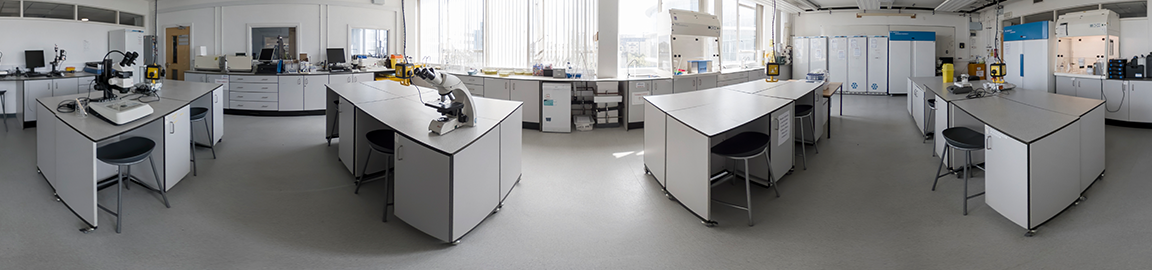
On this course, you’ll have the opportunity to learn in modern facilities with access to industry-standard equipment for practical experiments in our research labs. Our field equipment includes portable monitoring tools for soil, water, and air pollution, while specialist IT software like GIS and ecological statistical packages help you analyse findings.
The campus also offers social spaces for the student community such as The Geography Hub – an exclusive, casual space for students with the Geography and Environmental Science department.
Accuracy of information
All information is accurate at the time of sharing.
How your course is delivered
Full time Courses are primarily delivered via on-campus face to face learning but could include elements of online learning.
Changes to your course
Most courses run as described on our website and in our marketing materials. Occasionally we may need to make changes, for example due to a change in the law or regulatory requirements, requirements of a Professional, Statutory or Regulatory Body, or our quality assurance processes. Where a change is significant (in line with the Competition and Markets Authority's guidance on "substantial changes"), we will consult with affected students in advance where the change is being decided, and will explain the reason for the change and inform you at the earliest opportunity.
If we make a significant variation to your programme, you are entitled to: request a transfer to an alternative, appropriate programme; withdraw and have your tuition fees adjusted; or raise a complaint through the Student Complaints Procedure.
Optional modules listed on course pages may be subject to change depending on uptake numbers each year. Where a module you selected is withdrawn, the options above apply.
Contact time
Contact time is subject to increase or decrease in line with possible restrictions imposed by the government or the University in the interest of maintaining the health and safety and wellbeing of students, staff, and visitors if this is deemed necessary in future.
Images and video
The photography and video on this page are used for illustration. They may have been taken at different times and in different parts of the University, and may show facilities, equipment, staff, students or activities that are not part of this course. They are not a guarantee of the specific facilities or equipment you will use.
The course content, entry requirements and fees sections of this page, together with the Programme Specification, set out what this course includes. Our facilities are updated over time and may change during your studies.
Useful Links
Find out about our distinctive approach at
www.northumbria.ac.uk/exp
Admissions Terms and Conditions
northumbria.ac.uk/terms
Fees and Funding
northumbria.ac.uk/fees
Admissions Policy
northumbria.ac.uk/adpolicy
Admissions Complaints Policy
northumbria.ac.uk/complaints
Page last reviewed: 15 October 2026