Forensic Science (Extended Degree) BSc (Hons)
 Option for Placement Year
Option for Study Abroad

Option for Placement Year
Option for Study Abroad
Combing theory with evidence.
Are you fascinated by forensic science and its application in criminal investigation? Are you looking for a career that makes a difference? Developing fundamental knowledge and skilled laboratory techniques, you will graduate from this course with the ability to tackle complex scientific problems with confidence, skill and maturity.
Forensic science is the application of science, typically, although not limited to, biology and chemistry, in criminal investigation. Forensic science in practice applies to crime scene investigation for collection, preservation of evidence to laboratory examination (analysis) and evaluation, interpretation and presentation of the findings in written (statements) or oral testimony (court).
If you opt to study a Forensic Science university degree at Northumbria you will develop the essential and fundamental skills required to enter the professional world of forensic science. Tasks, including DNA analysis and trace evidence examination, will be matched with teaching from experienced forensic practitioners, developing your scientific knowledge.
This degree is designed to support and inspire you to high achievement and professionalism in your future career. Building on fundamental knowledge and laboratory skills, you will develop into an independent graduate who can tackle complex problems with confidence, skill and maturity.
 Chartered Society of Forensic Sciences accreditation means the course is always up-to-date and relevant.
Forensic Science at Northumbria is ranked 4th in the UK by the Complete University Guide 2026.
Over 91% of students studying Forensic Science at Northumbria believed their course positively challenged them to achieve their best work (NSS, 2025).
See other similar courses you may be interested in: BSc (Hons) Criminology and Forensic Science, Biochemistry BSc.
Combing theory with evidence.
Are you fascinated by forensic science and its application in criminal investigation? Are you looking for a career that makes a difference? Developing fundamental knowledge and skilled laboratory techniques, you will graduate from this course with the ability to tackle complex scientific problems with confidence, skill and maturity.
Forensic science is the application of science, typically, although not limited to, biology and chemistry, in criminal investigation. Forensic science in practice applies to crime scene investigation for collection, preservation of evidence to laboratory examination (analysis) and evaluation, interpretation and presentation of the findings in written (statements) or oral testimony (court).
If you opt to study a Forensic Science university degree at Northumbria you will develop the essential and fundamental skills required to enter the professional world of forensic science. Tasks, including DNA analysis and trace evidence examination, will be matched with teaching from experienced forensic practitioners, developing your scientific knowledge.
This degree is designed to support and inspire you to high achievement and professionalism in your future career. Building on fundamental knowledge and laboratory skills, you will develop into an independent graduate who can tackle complex problems with confidence, skill and maturity.
 Chartered Society of Forensic Sciences accreditation means the course is always up-to-date and relevant.
Forensic Science at Northumbria is ranked 4th in the UK by the Complete University Guide 2026.
Over 91% of students studying Forensic Science at Northumbria believed their course positively challenged them to achieve their best work (NSS, 2025).
See other similar courses you may be interested in: BSc (Hons) Criminology and Forensic Science, Biochemistry BSc.
This extended degree provides an alternative route to higher education and supports those who don’t meet the standard entry requirements for an undergraduate degree. It includes a foundation year which has been designed to provide fundamental scientific knowledge and skills in a range of science fields.
Your foundation year will give you a practical introduction to biology, chemistry, food science and forensic science, establishing your laboratory skills, basic numeracy skills, data handling, ICT and study skills. You’ll be taught in large, modern, well-equipped labs with audio-visual facilities to enhance our ability to demonstrate techniques or interesting observations.
The foundation year of the course delivered at level 3 which develops your ability to study in Higher Education is not accredited. Subsequent levels and years are accredited and deliver the knowledge, competencies, and skills required to meet the specific course accreditation requirements that relate to the approved accredited award title.
UCAS Code
Z055
Level of Study
Undergraduate
Mode of Study
4 years Full Time or 5 years with a placement (sandwich)/study abroad
School
Geography and Natural Sciences
Location
City Campus, Northumbria University
City
Newcastle
Start
September 2027
Fees
Fee Information
Modules
Module Information
Uniting disciplines for global good.
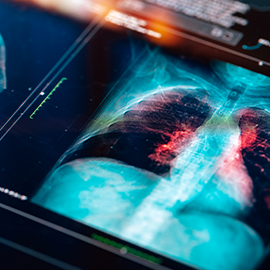
Spin-out raises £1.4m for lung test to aid early diagnosis of asthma.
Read the news article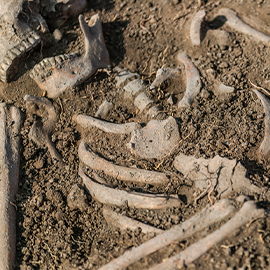
Forensic expert uncovers earliest known example of human burials.
Read the news story.
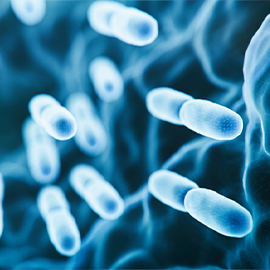
Swapping meat for Quorn may protect against bowel cancer.
Read the news story
Our students learn from the best inspirational academic staff with a genuine passion for their subject. Our courses are at the forefront of current knowledge and practice and are shaped by world-leading and internationally excellent research.
The Department of Applied Sciences has modern laboratory and computing resources for learning, teaching, research, innovation and business engagement.
At the heart of each Northumbria campus, our libraries provide a range of study spaces and technology to suit every learning style.
You can boost your CV and develop your experience whilst studying at Northumbria.
From first year through to final year and beyond graduation, we are here to help.
Visit an Open Day to get insight into what it's like to study Forensic Science. Speak to staff and students from the course and get a tour of the facilities.
56 to 72 Tariff Points
From a combination of acceptable Level 3 qualifications which may include: A-level, T Level, BTEC Diplomas/Extended Diplomas, Scottish and Irish Highers, Access to HE Diplomas, or the International Baccalaureate.
Find out how many points your qualifications are worth by using the UCAS Tariff calculator: www.ucas.com/ucas/tariff-calculator
Northumbria University is committed to supporting all individuals to achieve their ambitions and we understand that every applicant’s circumstances can be different, which is why we take a flexible approach when making offers for this course. We have a range of schemes and alternative offers to make sure as many individuals as possible are given an opportunity to study at our university regardless of personal circumstances or background. Typically, offers range from 56 to 72 UCAS tariff points, but we’ll assess your individual circumstances and potential when reviewing your application
To find out more, review our Northumbria Entry Requirement Essential Information page for further details www.northumbria.ac.uk/entryrequirementsinfo
Subject Requirements:
There are no specific subject requirements for this course.
GCSE Requirements:
Applicants will need Maths and English Language at minimum grade 4/C, or an equivalent.
Additional Requirements:
There are no additional requirements for this course.
International Qualifications:
We welcome applicants with a range of qualifications which may not match those shown above.
If you have qualifications from outside the UK, find out what you need by visiting www.northumbria.ac.uk/yourcountry
English Language Requirements:
International applicants should have a minimum overall IELTS (Academic) score of 6.0 with 5.5 in each component (or an approved equivalent*).
*The university accepts a large number of UK and International Qualifications in place of IELTS. You can find details of acceptable tests and the required grades in our English Language section: www.northumbria.ac.uk/englishqualifications
UK Fee in Year 1: £9,790
The UK tuition fee for 26/27 is £9,790 and is set in line with the UG Government's tuition fee cap. The University may increase this fee in subsequent years in line with any changes to the tuition fee cap. Students will be notified of any increase ahead of it taking effect. The remaining fees relate to the International Soccer Academy and accommodation fees. Accommodation fees may increase in subsequent years. Students will be notified of any increase ahead of the re-issuing of tenancy agreements. Tuition fees in the academic year 2027/28* will be £10,050. Fees are set in line with the UK Government's tuition fee cap. The University may increase fees in subsequent years in line with any changes to the tuition fee cap. Increases will be linked to inflation. For example, increases may be linked to RPIX (Retail Price Index excluding mortgage interest payments) Students will be notified of any increase ahead of it taking effect. Student fee loans rise in line with the tuition fees cap. *if your course is longer than one year
* Fees subject to annual increases over the course of the period of study. Students will be liable for payment of any/all tuition fees which are not sponsored by their employer or other third party.
International Fee in Year 1:
This is the tuition fee for your first year of study. You should expect to pay tuition fees for every year of study. The University may increase fees in the second and subsequent years of your course at our discretion in line with any inflationary or other uplift. Students will be notified of any increase ahead of it taking effect.
Tuition fees in the academic year 2027/28* will be £10,050. Fees are set in line with the UK Government's tuition fee cap. The University may increase fees in subsequent years in line with any changes to the tuition fee cap. Increases will be linked to inflation. For example, increases may be linked to RPIX (Retail Price Index excluding mortgage interest payments) Students will be notified of any increase ahead of it taking effect. Student fee loans rise in line with the tuition fees cap.
This is the programme fee for your first year of study. The programme fee includes the international tuition fee, International Soccer Academy and accommodation fees. Accommodation fees may increase in subsequent years. Students will be notified of any increase ahead of the re-issuing of tenancy agreements.
ADDITIONAL COSTS
There are no Additional Costs
* At Northumbria we are strongly committed to protecting the privacy of personal data. To view the University’s Privacy Notice please click here
Module information is indicative and is reviewed annually therefore may be subject to change. Applicants will be informed if there are any changes.
AP0306 -
Scientific and Numeracy Skills (Core,20 Credits)
You will get the opportunity to improve and practice key numeracy skills that will enable you to complete the tasks for the other modules you are studying during the foundation year. These will include calculations associated with experimental work in chemistry, biology, biochemistry, biomedical science, food science, nutrition, forensic science and sport science, such as making solutions of different concentrations using solid chemicals, preparing dilutions using stock solutions, serial dilutions, making buffers, calculating rates of reaction, equilibrium constants, enthalpies, interpreting outcomes of antibiotic sensitivity testing, processing histological, physiological and biometrics measurements, calculating biodiversity indices, etc.
You will also review your IT skills to ensure you can easily access the eLP, library and other on-line resources, including guidance on correct referencing of scientific literature. You will use Microsoft Excel to process data similar to those that you will acquire experimentally in other modules, do simple statistics and produce graphical representations and tables of your data.
You will learn about the style of scientific writing used in peer-reviewed publications and how to present scientific data in different formats, eg. scientific report using the IMRAD style, short summary, poster, oral presentation, mini-literature review, essay. You will also learn how to find relevant and reliable sources of information and you will practice extracting relevant details from such sources and presenting them in your own words.
AP0307 -
Practical Skills in Science (Core,20 Credits)
You will learn and acquire key practical skills that are needed for subsequent study in your progression degree. You will learn techniques associated with the specialisms of Food Science and Nutrition, Biomedical Science, Chemistry, Forensic Science and Biology. You will learn how to use Excel spread-sheets to process experimentally acquired data and produce graphical representations of your results and you will learn how to present laboratory reports using the IMRAD style.
More informationAP0309 -
Research and Science Communication Project (Core,20 Credits)
This module will teach you how to expand your scientific research, science communication and team work skills through the collaborative research and presentation of a scientific research project. Lectures and seminars will be delivered teaching you how to research a scientific subject, how to work as team in doing this and how to condense large amounts of information into a concise message. All of these are essential core skills for a career in science.
More informationAP0310 -
Introduction to Biology (Core,20 Credits)
As Biology is the “Study of Life”, in this module we will explore different aspects of the living world around us. In the first teaching block, we will delve into evolution – how did all the different life forms we see around us come into being? How does evolution work? In order to study life, we need to have a good overview of what different life forms there are. This brings us into the realm of Biodiversity and Classification. We will give an overview of the different Kingdoms that dwell on Earth, and with whom we share this planet and are connected in multiple ways.
We then look inwards, and unravel the secrets of our genomes. Our genetic information is stored in our DNA – but how are genes organised, and how do they work? Can the study of genetics help us to understand the world in- and around us, can it help us to “improve” the world by genetic manipulation?
In the last teaching block, we focus on human beings, and explore aspects of our physiology and neurobiology. How does the human body function, how does our nervous system work?
Though the teaching is organised in three blocks (Evolution and Diversity, Genetics, Human Biology), this division is somewhat arbitrary as there are multiple links connecting these areas of study. “In the living nature, nothing happens that isn’t somehow connected to nature as a whole” (Goethe, 1749-1832) In this module, we will regularly explore these connections.
AP0312 -
Introduction to Chemistry (Core,20 Credits)
In this module you will develop an understanding of the fundamental principles underpinning the subject of chemistry. Through discussion of theory and engaging in practical experimentation you will improve your knowledge of the five core areas of chemistry:
1. Organic chemistry: where you will study atomic structure, bonding and reactivity of organic compounds.
2. Analytical chemistry: where you will study reactions to detect specific functional groups, alongside instrumental techniques such as mass spectrometry.
3. Molecular modeling: where you will study how to represent chemical structures using a computer, in addition to developing a better understanding of molecular geometry and isomerism
4. Inorganic chemistry: where you will study the structure and properties of metals and their complexes.
5. Physical chemistry: where you will study factors affecting the rate and progress of chemical reactions.
You will also spend time developing chemistry-focussed laboratory skills including considering the implications of risk management and safety, which is a critical skill for all practising chemists.
AP0316 -
Digital Literacy (Core,20 Credits)
This course teaches students to navigating the university digital systems, as well as the use of key Microsoft productivity tools. Learners will gain proficiency in using their university-provided email for professional and academic communication, and they will master OneDrive for secure cloud storage and file sharing. The module also provides training on leveraging Microsoft Teams for real-time collaboration with peers and faculty on group projects. Crucially, the course empowers students to harness the full potential of the Northumbria University Library's digital resources, teaching them advanced search methodologies for scholarly databases, e-books, and online journals. By the conclusion of this module, participants will be confident and capable users of the university’s IT infrastructure, streamlining their academic workflows and fostering stronger collaboration for a truly successful university journey.
More informationAP0400 -
Practical Skills in Forensic Science (Core,20 Credits)
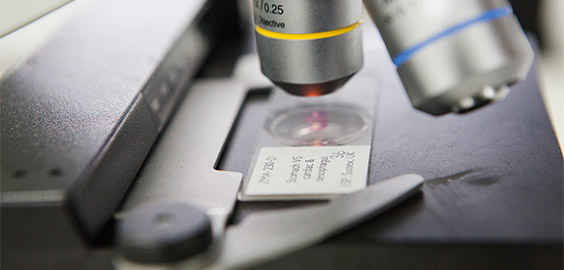
On this module you will cover the basic scientific knowledge and practical skills required of a scientist. Topics will include microscopy, required mathematical calcllations, basic laboratory skills such as use of Gilson pipettes, practices of documenting forensic examinations, scientific report writing and referencing and presentation skills.
More informationAP0401 -
Process and Practices in Forensic Science (Core,20 Credits)
This module will provide you with an understanding of the key principles, practice and processes of forensic science. You will gain an understanding of the role of a forensic scientist and appreciate the types of evidence that they examine as well as other key stakeholders. You will understand the importance of the continuity and integrity of exhibits from scene to court, understand the deposition and transfer and persistence of materials and you will develop your practical skills with search and recovery techniques. You will also develop observational and note taking skills aligned to a forensic examination. Unseen examination and a practical assessment will assess your knowledge, understanding and skills associated with the key principles of forensic science.
More informationAP0402 -
Fundamentals of Analytical Chemistry (Core,20 Credits)
This module will cover the following:
• An introduction to the fundamental principles of analytical chemistry.
• Consolidation of the knowledge of empirical formulae and balancing of chemical equations.
• An introduction to the theory and practice of titrimetry, gravimetry, flame photometry and spectrophotometry for analysis.
• Theory and hands on experience of chromatographic techniques for separation and analysis of mixtures.
AP0403 -
Principles of Chemical Structure (Core,20 Credits)
On this module you will learn about the theoretical building blocks of structural chemistry and the tools and rules that enable us to predict structure and reactivity in chemical compounds. This is the keystone for much for the language and understanding of chemistry required at a higher level where structural chemistry informs the properties and behaviours of more complex chemical systems such as drugs and medicine, materials and plastics, and many more. The learning journey for this module starts at the atomic level and moves through to the molecular level taking in the following broad topics and their related competencies.
• Atomic and electronic structure, isotopes, electron configurations, the periodic table and the importance of valence electrons
• Bonding theories, covalent and ionic bonding, ionic and covalent structures
• Lewis and VSEPR approaches to structure prediction for main group compounds
• Acid and base chemistry
• Coordination chemistry of the metals, structures and geometries, isomerism, basic reactions
• Organic structures, isomerism and nomenclature
• Organic stereochemistry, geometric and optical isomerism, Cahn-Ingold-Prelog rules and definitions, chirality and the language of stereochemistry.
• Electron movement and structural consequences, resonance and tautomerism
• Basics of structural transformation in organic systems, intro to organic mechanism and curly arrows, electrophiles, nucleophiles and common reaction types and functional groups transformations
• Introduction to organic synthesis, oxidation and reduction, common reagents and pathways.
AP0404 -
Cell Biology and Genetics (Core,20 Credits)
You will learn about the diversity of life and the unifying cell theory including, DNA as the universal information store and the central dogma of molecular biology as the unifying mechanism in all life. You will learn the structure and function of cells and the organelles they contain along with their life cycle, division, self-replication and eventual death.
You will learn the basic principles of heredity, including molecular, classical , human and microbial genetics. You will learn the structure, function, regulation of genes and genomes. You will also learn the fundamentals of applied genetics including an introduction to clinical genetics and the identification of genetic mutations and polymorphisms and their influence on disease processes.
Underpinning these theoretical concepts and principles covered in the lecture course you will be trained in basic techniques of handling DNA in the laboratory.
AP0405 -
Scientific Support (Core,20 Credits)
You will explore the roles of the scientific support personnel and specialist practitioners involved in contemporary forensic investigations, as well as the scientific and technical processes that they may employ. You will build on your existing knowledge of the importance of undertaking a thorough and conscientious examination of a crime scene and the importance of appropriate detailed recording and the subsequent handling of exhibits in the laboratory within the context of the specialist scientific discipline studied. You will have the opportunity to apply the theory delivered in lectures to practical work both at our crime scene facility and in the laboratory using simulated crime scenarios. Throughout this module you will also consider the Forensic Science Regulator quality assurance oversight and the accreditation and validation of processes employed by scientific support personnel and specialist practitioners.
More informationSE5000 -
Skills for Academic Success in a UK University (Core – for International and EU students only,0 Credits)
You will develop your understanding of academic conventions in UK higher education aligned to your level of study, including expectations around critical analysis, structure, argumentation, evidencing, and referencing. The module focuses on developing communication strategies that will help you express your ideas clearly and coherently in written assignments and spoken activities. You will also reflect on your current academic and language skills and develop strategies for development ahead of your assessments.
More informationAP0501 -
Research Methods (Core,20 Credits)
Your learning on this module will be situated within the ethical, social and legal implications associated with forensic science’s contribution to crime investigation and research. You will learn how to effectively design, conduct and review academic research – skills that are relevant and transferable to 2nd and final year academic study.
As part of the module you will learn how to:
• effectively search and use e-literacy techniques to enable you to critically analyse academic literature relevant to forensic science and associated disciplines.
• undertake methods of research (quantitative and/or qualitative) such as experimental data and statistics, interviews, focus groups and observations.
• effectively communicate your opinions whilst also acknowledging the work of others through appropriate citation and evidence of wider reading.
• review and consider the requirements and expectations of a scientist to ensure your own research is ethical, safe, peer reviewed and statistically supported.
Your learning will take place within the practice and research of forensic science. As such, you will be required to demonstrate an appreciation of the differing ethical implications associated with real world crime investigation and the constraints that impact and influence laboratory based and desk-based research.
AP0502 -
Trace Analysis (Core,20 Credits)
Traditional areas of forensic science such as fibres, glass and paint can be overlooked in forensic investigations despite having strengths that other evidence types, such as DNA, don’t have. In this module you will develop your understaning of the theory underpinning fibres, glass and paint and learn how knowledge of their strengths can can be exploited to solve criminal cases. You will learn how to apply your knowledge to determine when and how each evidence type may or may not be appropriate in a given case scenario and in doing so develop a case strategy. Your practical skills will be developed to enable you to search, recover and analyse trace evidence using appropriate techniques. Armed with hard evidence you will then apply your knowledge within the context of the case scenario to evaluate its significance. By the end of this module you will have developed an understanding of the role of trace evidence within forensic investigations, how trace examinations are performed and how to interpret significant findings within the context of a specific case scenario.
More informationAP0503 -
Body Fluids and Blood Pattern Analysis (Core,20 Credits)
You will learn the theory, practical application and laboratory skill to locate and identify a range of body fluids including blood, semen and saliva. You will cover the identification, documentation, analysis and subsequent interpretation of these body fluids within the context of a forensic investigation. You will gain an appreciation of the complexity of differing case types, such as murder or burglary, and understand that each requires a different forensic strategy that is bespoke to the individual case, depending on what exhibits are available for examination and what needs to be established. Your knowledge and experience will be further developed to understand the dynamics that underpin blood pattern analysis and how they can be interpreted to provide information on the actions that have taken place and an individuals participation or otherwise. You will review blood patterns from a crime scene right through to the consideration of clothing and weapons. By the end of this module you will have an overall comprehension on the role of a forensic biologist and what value they bring to the forensic aspect of crime investigation.
More informationAP0504 -
Drugs and Toxicology (Core,20 Credits)
The module is divided into themes relating to forensic toxicology and includes:
• evaluation and application of analytical toxicology and analysis of drugs of abuse to forensic science
• laboratory blood drug analysis - extraction and detection
• critical evaluation of current issues in forensic science, for example, roadside drug testing
• interpretation of results
Throughout the module, the focus is orientated to existing, current and future research practices and draws on research experience from the module team i.e. post-mortem drug redistribution, tolerance, genotoxicity, analysis and interpretation . The module team may be expanded to include guest speakers as appropriate.
AP0505 -
Specialist Applications in Criminal Investigation (Core,20 Credits)
You will learn how the core disciplines of forensic science (biology and chemistry) can be complemented by additional specialisms in a criminal investigation. You will discover the impact and evaluate the effectiveness of these additional resources on an investigation. By using case studies you will explore how science and technology has been used to further assist the investigative process from the crime scene through to additional investigative tools and scientific interpretation. Presentation and communication of scientific evidence in the courtroom will also be evaluated.
Topics may include:
• Digital evidence: e.g. data recovery from PC/mobile technology/ethical hacking
• Other ‘ologies’ e.g. pathology, palynology, entomology, archaeology, ecology
• Fire investigation – cremains, application to destruction of evidence
• Surveillance : e.g. GIS/crime mapping/CCTV/surveillance
AP0551 -
DNA Profiling (Core,20 Credits)
On this module you will build on your existing knowledge of biology and genetics by introducing the specific laboratory methods and DNA markers used in contemporary forensic genetics. You will gain a thorough knowledge of the fundamental science underpinning key stages in the laboratory to facilitate effective communication of the methodology to the lay person via a written statement. During the course of the module you will be encouraged to evaluate the range of methods and genetic markers available in the context of forensic sample types, which may be of poor quality and low quantity. Key topics covered are listed below:
• DNA extraction from a variety of sample types
• DNA quantity and quality analysis
• PCR based analysis of forensic DNA markers
• Interpretation of forensic DNA profile data in the context of a case
• Statistical assessment of the strength of DNA evidence
AP0536 -
Study Abroad (Optional,120 Credits)
This study abroad module is designed for standard full-time undergraduate programmes to provide you with the option to take an additional one year study abroad within your programme.
Study abroad provides an opportunity to develop personal skills in a different learning environment with a partner university. The module does not affect the classification of your degree, but if successfully passed the study abroad year is recognised in your transcript and degree certificate. There is a competitive selection process for placements and places cannot be guaranteed.
AP0552 -
Industrial Placement Year (Optional,120 Credits)
The Industrial Placement Year module is a full year 120 credit module which is available on degree courses which include a Industrial Placement year which is taken as an additional year of study between levels 5 and 6. You will undertake a year of Industrial Placement at an approved placement partner. This broadens your overall experience of learning by embedding your current and future learning of your discipline within a regimented and target-oriented work environment. The course of Industrial Placement will be dependent on the partner and will be recorded for an individual student on the learning agreement signed by the host, the student, and the home University (Northumbria). Your Industrial Placement year will be assessed on a pass/fail basis. It will not count towards your final degree classification but, if you pass, it is recognised in your transcript as a 120 credit Industrial Placement Module and on your degree certificate in the format – “Degree title (with Industrial Placement Year)”.
More informationAP0600 -
Forensic Science Research Project (Core,40 Credits)
This module comprises the research project for level 6 of the Forensic Science programmes. It is 40 credit module and aims to utilise your subject specific skills, both in terms of knowledge and laboratory skills, in an area of forensic science that is of interest to you.
You will identify and define a research topic in a chosen field of forensic science, plan a strategy for its implementation (in conjunction with an appointed supervisor) and be responsible for its implementation. It will engender in you a spirit of enquiry and curiosity in both practical and theoretical aspects of the topic. You will develop your information retrieval and critical appraisal skills, and encourage and require you to apply knowledge gained in other parts of the academic programme. It will enable you to develop the ability to evaluate experimental methods and data, and to provide the means to present findings and data in oral, poster, and written formats, and enable you to develop and practise skills relating to word-processing, spreadsheets, and other scientific and IT software packages and methods.
AP0601 -
Complex Casework (Core,20 Credits)
This module will provide you with the practical attributes of forensic science from the onset of a case through to the presentation of evidence in a court of law. It expands upon core forensic science disciplines and processes taught in previous years and focuses upon the strategy setting, examination and the delivery of interpretation and evaluation of forensic evidence within the context of complex case situations. You will study the importance of working together with key stakeholders (police, forensic pathologists, crime scene managers) in determining forensic strategy and prioritisation of key exhibits prior to commencing their practical examination. Whilst the emphasis on this module will be practical based with you undertaking the examination of forensic exhibits, it will be underpinned through taught lectures and seminars.
By the end of this module you will have gained an understanding of the difficulties of complex casework and conveying complex scientific information to the lay person.
AP0602 -
Contemporary Issues in Forensic Science (Optional,20 Credits)
You will learn how scientific strategies associated with crimes and challenges facing the police and criminal justice system are complemented by criminological theory. You will discover the impact these advancements have upon both society and upon forensic science. By understanding crime, contemporary policing, prisons and imprisonment within the criminal justice system, crime prevention strategies will be evaluated for their effectiveness for particular crime types. For example, you will explore current research and innovation strategies that combine innovative science and technological advances with criminological research in response to existing, new and emerging crimes and challenges. You will address key themes such as:
• Crime/policing – e.g. the prevention and detection of drugs in society, volume crime, human trafficking
• Security and counter terrorism – e.g. prevention and detection of terrorism activities (domestic versus international), radicalisation and
• Policing/identity management – e.g. surveillance in society, crime mapping and the role of biometric identification
AP0603 -
Advanced Forensic Investigation (Core,20 Credits)
You will learn how advances in forensic interpretation can be applied to support the Criminal Justice System in decision making. You will learn how to use the Casework Assessment and Interpretation (CAI) model in the evaluative stage of crime investigation, as well as the use of the Bayesian approach to evaluate the strength of evidence and the conclusions/limitations that can be drawn from the analytical results. Embedded throughout the module will be case studies from violent, sexual and major crime used to supplement and underpin your learning.
More informationAP0604 -
Advanced Analytical Chemistry (Optional,20 Credits)
In this module you will examine advanced modern techniques for the analysis of a variety of compounds commonly encountered in chemistry and forensic science. Modern hyphenated separation techniques e.g. chromatography-mass spectrometry, for separation, identification and quantitation of compounds will be discussed. New approaches for separation based on ion mobility e.g. capillary electrophoresis and capillary electro-chromatography will be explained, and the latest advances in in the chemical analysis field will be described using relevant examples. The syllabus will also focus on modern and advanced spectroscopic techniques for drug identification and analysis, including NMR and MS methods. Sampling protocols for the detection of drugs and alcohol in body fluids and alternative matrices will be studied as well as strategies and practice in analytical method development for a varietry of different compounds.
More informationAP0642 -
Forensic Biology (Optional,20 Credits)
In this module, you will follow on from the body fluids and BPA and DNA profiling modules introduced at level 5 on this programme, applying the knowledge gained to more complex case-based scenarios and interpreting challenging data, e.g. complex mixtures. The limitations of current methodology will be reviewed in detail, including a thorough examination of DNA profile artefacts, analytical thresholds and alternative statistical approaches to data analysis. In addition to existing methods, you will also be introduced to a range of alternative methods that use different genetic markers including RNA to build a more complete picture of the sample type under examination and the identity of the sample donor. New materials will introduced in the fields of anthropology and forensic taphonomy to provide a good coverage of methods used in forensic biology. Key topics covered are listed below:
Interpretation of complex DNA profiles, including mixtures
The effect of mutation on DNA data, including kinship analysis
Genetic tissue identification
DNA sequencing applications
Genetics of externally visible characteristics
Biogeographic ancestry
ML6001 -
Unilang - Languages for All - Level 6 Placeholder (Optional,20 Credits)
The 20-credit yearlong Unilang modules (stages 1 – 5 depending on language) aim to encourage a positive attitude to language learning and to develop and practise the four language skills of speaking, listening, reading and writing introducing the basic/increasingly complex grammatical structures and vocabulary of the spoken and written language (depending on stage) and developing your ability to respond appropriately in spoken and written form in simple and increasingly complex everyday situations.
These modules also introduce you to the country and the culture of the country. In doing this, Unilang modules are intended to encourage and support international mobility; to enhance employability at home and abroad; to improve communication skills in the foreign language and in English as well as cultural awareness.
To start your application, simply select the month you would like to start your course.
Our Applicant Services team will be happy to help. They can be contacted on 0191 406 0901 or by using our Contact Form.
All information is accurate at the time of sharing.
Full time Courses are primarily delivered via on-campus face to face learning but could include elements of online learning.
Most courses run as described on our website and in our marketing materials. Occasionally we may need to make changes, for example due to a change in the law or regulatory requirements, requirements of a Professional, Statutory or Regulatory Body, or our quality assurance processes. Where a change is significant (in line with the Competition and Markets Authority's guidance on "substantial changes"), we will consult with affected students in advance where the change is being decided, and will explain the reason for the change and inform you at the earliest opportunity.
If we make a significant variation to your programme, you are entitled to: request a transfer to an alternative, appropriate programme; withdraw and have your tuition fees adjusted; or raise a complaint through the Student Complaints Procedure.
Optional modules listed on course pages may be subject to change depending on uptake numbers each year. Where a module you selected is withdrawn, the options above apply.
Contact time is subject to increase or decrease in line with possible restrictions imposed by the government or the University in the interest of maintaining the health and safety and wellbeing of students, staff, and visitors if this is deemed necessary in future.
The photography and video on this page are used for illustration. They may have been taken at different times and in different parts of the University, and may show facilities, equipment, staff, students or activities that are not part of this course. They are not a guarantee of the specific facilities or equipment you will use.
The course content, entry requirements and fees sections of this page, together with the Programme Specification, set out what this course includes. Our facilities are updated over time and may change during your studies.
Northumbria University is committed to developing an inclusive, diverse and accessible campus and wider University community and are determined to ensure that opportunities we provide are open to all.
We are proud to work in partnership with AccessAble to provide Detailed Access Guides to our buildings and facilities across our City, Coach Lane and London Campuses. A Detailed Access Guide lets you know what access will be like when you visit somewhere. It looks at the route you will use getting in and what is available inside. All guides have Accessibility Symbols that give you a quick overview of what is available, and photographs to show you what to expect. The guides are produced by trained surveyors who visit our campuses annually to ensure you have trusted and accurate information.
You can use Northumbria’s AccessAble Guides anytime to check the accessibility of a building or facility and to plan your routes and journeys. Search by location, building or accessibility feature to find the information you need.
We are dedicated to helping students who may require additional support during their student journey and offer 1-1 advice and guidance appropriate to individual requirements. If you feel you may need additional support you can find out more about what we offer here where you can also contact us with any questions you may have:
Page last updated 16/09/26