Nursing Science, Registered Nurse (Learning Disability) (Extended Degree) BSc Hons
Subject to Validation
Option for Placement Year
Option for Study Abroad
Placement
Option for Placement Year
Option for Study Abroad
Placement
56 to 72 Tariff Points
From a combination of acceptable Level 3 qualifications which may include: A-level, T Level, BTEC Diplomas/Extended Diplomas, Scottish and Irish Highers, Access to HE Diplomas, or the International Baccalaureate.
Find out how many points your qualifications are worth by using the UCAS Tariff calculator: www.ucas.com/ucas/tariff-calculator
Northumbria University is committed to supporting all individuals to achieve their ambitions and we understand that every applicant’s circumstances can be different, which is why we take a flexible approach when making offers for this course. We have a range of schemes and alternative offers to make sure as many individuals as possible are given an opportunity to study at our university regardless of personal circumstances or background. Typically, offers range from 56 to 72 UCAS tariff points, but we’ll assess your individual circumstances and potential when reviewing your application
To find out more, review our Northumbria Entry Requirement Essential Information page for further details: www.northumbria.ac.uk/entryrequirementsinfo
Subject Requirements:
There are no specific subject requirements for this course.
GCSE Requirements:
Applicants will need Maths and English Language at minimum grade 4/C, or an equivalent.
Additional Requirements:
Applicants will be required to attend an interview.
Please note: Progression from Year 0 to Year 1 of this programme is subject to a suitable DBS Enhanced Certificate. You will be contacted directly during the first year of the Extended Degree programme (Year 0) to complete this process.
Applicants must meet the Nursing and Midwifery Council's suitability for registration requirements.
International Qualifications:
We welcome applicants with a range of qualifications which may not match those shown above.
If you have qualifications from outside the UK, find out what you need by visiting: www.northumbria.ac.uk/yourcountry
English Language Requirements:
International applicants should have a minimum overall IELTS (Academic) score of 7.0, with a minimum writing score of 6.5 and all other components at a minimum score of 7.0, or Occupational English Test (OET) with at least a grade B (350 to 440) in reading, listening and speaking, and at least a grade C+ (300 to 340) in writing.
For further admissions guidance and requirements, please visit: www.northumbria.ac.uk/admissionsguidance Please review this information before submitting your application.
UK Fee in Year 1: £9,790
* In relation to fees for UK students: £9,790 is the tuition fee. The remaining fees relate to the International Soccer Academy, and accommodation fees. Tuition fees in the academic year 2027/28* will be £10,050 (subject to Parliamentary approval, along with 2026/27 fees) Fees are set in line with the UK Government's tuition fee cap. The University may increase fees in subsequent years in line with any changes to the tuition fee cap. Increases will be linked to inflation. For example, increases may be linked to RPIX (Retail Price Index excluding mortgage interest payments) Students will be notified of any increase ahead of it taking effect. Student fee loans rise in line with the tuition fees cap. *if your course is longer than one year * Fees subject to annual increases over the course of the period of study. Students will be liable for payment of any/all tuition fees which are not sponsored by their employer or other third party.
International Fee in Year 1:
* This is the tuition fee for your first year of study. You should expect to pay tuition fees for every year of study. The University may increase fees in the second and subsequent years of your course at our discretion in line with any inflationary or other uplift. Students will be notified of any increase ahead of it taking effect.
ADDITIONAL COSTS
You may be required to purchase a fob watch and suitable footwear for use in placement if you do not already have these, which will cost approximately £80. You may also need to pay for your own travel costs, which may be approximately £800 per year depending on your placement location. You may be eligible to claim reimbursement of travel costs from the NHS Business Authority. Up to date information relating to this can be found at: https://www.nhsbsa.nhs.uk/student-services. If using a car to attend placement, you may also need to pay parking charges of approximately £200 per year. On completion of the programme you will be eligible to register with the Nursing Midwifery Council and the cost is approximately £120.
* At Northumbria we are strongly committed to protecting the privacy of personal data. To view the University’s Privacy Notice please click here
Module information is indicative and is reviewed annually therefore may be subject to change. Applicants will be informed if there are any changes.
PP3000 -
Becoming a Professional (Core,20 Credits)
In this module you will explore concepts of becoming a professional working in public services . You will also engage with and understand the nature of, and challenges to, professional practice. You will also consider aspects of communication between professional groups focussing on such things as the use of “professional language” and professional/service user interactions. The aim of this module is to explore the potential and current issues in developing our own professional practice in health, social care, and education. This will include you considering examples of the historical development of current professions to understand their influence on collective and individual identities including issues of professional identity and professional socialisation. By engaging in exercises which encourage reflection on individual experiences and consider these in terms of concepts from the module and from our changing worlds. You will explore influencing factors such as political debates and agendas which influence the realities of professional working. We will explore how professions are perceived, expected, and enacted within society and how these are contrasted against our own interpretations of a professional identity and role. The impact and influence of ethical considerations on becoming a professional and professional practice will be explored.
More informationPP3001 -
Study Skills (Core,20 Credits)
This module is designed to develop critical thinking along with writing and analytical skills for University study. You will build the foundation of these skills to enable you to prepare for the challenges of studying in a University learning environment. It will equip you to learn how to manage your workload including how to read selectively, learn techniques for reading academic texts, understanding how to reference and make useful notes from sources.
Designed to support you to think critically and consider academic theory and how it informs practice, you will examine theory and practice- based public services Alongside this, you will work on the basic principles of writing academic work and explore academic language and how to understand it; explore the different styles and how to edit and proof-read your own work. A key academic focus on this module will be to understand the importance of research and evidence-based practice. You will develop an understanding of quantitative research and qualitative research. A quantitative method will allow you to test a hypothesis by systematically collecting and understanding data. Qualitative methods will allow you to explore ideas and experiences in depth.
Throughout the module, you will engage in a wide variety of learning activities to give you the opportunity to gain critical understanding of public service structures and processes. In addition, you will examine your own personal reflection of your learning and development using self-assessment tools.
PP3002 -
Valuing Self and Others (Core,20 Credits)
This module is designed to meet the needs of public services students with differing experiences across a diverse range of speciality and subject-specific areas. It will equip you with the knowledge, understanding and insight into why it is important to value yourself, as an individual, and to value others. Throughout the module, you will engage in a wide variety of learning activities and critically examine aspects of valuing self and others related to personal development, communication and empathy, unconscious bias, health literacy and working in a public service setting as part of a team. Utilising a SMART model (Specific, Measurable, Achievable, Relevant and Time-Bound), you will demonstrate an understanding of the pathway to becoming a professional and develop and design a pathway that illustrates your long-term goals.
More informationPP3003 -
Human Development in the World (Core,20 Credits)
In this module you will explore human development in the world, and how this relates to public services provision in contemporary society. This module explores development from infancy and toddlerhood, through childhood, adolescence, adulthood and finally death and dying. The module focuses on 3 core concepts in relation to human development – physical, cognitive and psychosocial. Arising from these core concepts is a further exploration of beliefs and behaviours and the impact on engagement with health, education and social care. You will use this understanding of development across the lifespan to inform your understanding of your chosen onward area of practice.
More informationPP3004 -
Skills for Professional Practice (Core,20 Credits)
In this module you will explore communication skills within professional relationships. This module explores the various roles of professionals, semi-professionals, and non-professionals and how communication, both effective and ineffective, may impact their relationships and roles. This module also explores the role of multi-agency/disciplinary working, using real life situations to highlight the strengths and limitations of communications within partnership working. You will be supported to explore the holistic needs of a service user and concepts such as personalisation, empowerment, effective communication, equality and diversity, legislation in the context of practice. You will reflect upon your own personal experiences and personal values when considering the role and impact of professionals within society.
More informationPP3005 -
Collaborative Project (Core,20 Credits)
The structure of this module has been developed to support your learning journey in Higher Education. The focus of the group project (showcase presentation) will allow you to continue to cultivate your knowledge, skills and understanding of the essential academic components required for studying at Northumbria University. The design is student centred and has been developed to incorporate project work linked to the national agenda for public services. Under the guidance of the module team, you will negotiate a topic relevant to your planned onward undergraduate study field and be supported to identify specific learning opportunities. In order to promote your learning about the chosen subject area, you will review and evaluate your field of study.
Due to the student led nature of the module, sessions have been designed to provide learners with a platform to employ an independent approach to study. Students’ will be guided/directed to research, appraise and evaluate a chosen public services related topic, where they will be given the opportunity to analyse and present findings based on best evidence.
The module themes support and consolidate other Foundation Year modules, developing you towards a sound understanding of professionalism in relation to your onward choice of programme field.
The negotiated group project module will provide you with the opportunity to attend seminars, workshops and face to face sessions where you will be supported to explore and develop your independent learning. It is helpful to note that this module design moves away from the traditional taught lessons.
The group showcase presentation will be the culmination of the Foundation Year programme and will serve not only as an opportunity to demonstrate professional collaborative working through summative assessment, but also a celebratory event to acknowledge the learners journey in preparation for undergraduate study.
LE4001 -
Introduction to Evidence Based Practice in Health and Ill Health Registered Nurse Learning Disability (20 Credits)
This module begins your journey into becoming a learning disability nurse. You will learn about the fundamental values, skills and knowledge required and gain insight into the context of care for people with a learning disability and the indifferent perceptions of society.
You will explore the aetiology of learning disabilities including environmental and genetic causes. You will also be introduced to the needs of people with a learning disability and consider how the specialist learning disability nurse applies holistic care to meet those needs. Key themes, including equality and societal values will be an integral part of this module.
Subjects will include; the diverse roles of a learning disability nurse, genetics, person centeredness and how to develop your emotional intelligence. As well as communication, implementing value based safe and effective care and professionalism.
You will explore the experiences of people with a learning disability and their families/carers. This will be done through clinical practice by engaging with experts by experience and practitioners specialising in learning disability. This module enables you to discover and develop your value base, which will enable you to challenge discrimination.
You will also discover how to search and apply the relevant evidence base in learning disability nursing.
LE4002 -
Applied Life and Social Sciences, Planning and Evaluating Care (20 Credits)
Nurses in all fields require an in-depth knowledge of anatomy, physiology and physical and mental health problems across the age spectrum. These are considered an essential basis for safe and effective practice. This module will enable you to apply biosciences to understand the determinants of health- social, psychological, behavioural, environmental and genetic factors and how they impact on health at a physical and psychological level. You will develop an understanding of the functioning of the body at different levels (cell, tissue, organ, system) and how this knowledge will assist you in delivering safe, holistic, compassionate nursing care.
This module builds on the knowledge gained in Semester 1 (Module LE4002, Introduction to evidence based practice in health and ill health). Nurses in all fields need to consider the importance of holistic assessment, including risk assessment.
In this module, you are offered opportunities to learn about supporting people with a learning disability and how to apply this knowledge to offer high quality and safe care to service users and their families. You will study the following;
• You will learn specifically about physical systems of the body and how this may effect someone with a learning disability within your practice.
• You will consider the psychological aspects of traumatic life events.
• You will consider the effects of certain syndromes on people with a learning disability and their families.
• Critical appraisal of contemporary evidence.
Topics you will cover include:
• Anatomy and physiology
• Good Physical and Mental Health
• Deterioration in physical and mental health
• An understanding of how drugs and medicines interact within living systems
• Holistic Assessment, planning, delivering and evaluating care.
• Introduction to consent and legal frameworks within learning disability services
• Introduction to Functional Analysis of Care Environments (FACE) risk assessment and narrative risk assessment
• Diabetes
• The role of the hospital liaison nurse
You will explore the experiences of people with a learning disability and their families or carers through meeting ‘Experts by Experience’ and practitioners specialising in learning disability. This module offers an opportunity to discover and develop your professional value set and your nursing skills regarding supporting people with a learning disability to stay healthy and safe.
NS0423 -
Practice Module 1: Becoming a Safe, Caring Professional (40 Credits)
This practice module will provide you with a unique opportunity to develop skills and knowledge directly relevant to your current practice placement experiences. The practice module will both support your learning while you are in practice and provide an environment, within university, to consolidate the skills and knowledge necessary to progress effectively. By using a concept curriculum approach, the nursing practice module will support you to learn how to become an accountable professional, lead and manage nursing care, and work in teams.
During the first year, you will learn the fundamental skills that are necessary for safe, effective and professional practice.
During the majority of your first year clinical placements you will return to university for two days a week to reflect on your experiences. You will learn together with your peers and examine theoretical concepts such as professionalism, interprofessional learning, medicines management and safeguarding that will enhance your practice. Seminars and workshops will focus on a range of subjects that will enhance your professional nursing practice. Innovative teaching and learning strategies will be used to enhance your learning, This will include the use of digital educational resources to support your learning in relation to concepts such as medicines management.
You will learn how to develop your Ongoing Record of Achievement (ORA) and how to reflect on your personal and professional development. You will learn about the importance of patient centred and recovery focussed approaches and will be asked to reflect on feedback given by Experts By Experience (EBE). These skills are the start of your development as an evidence-based practitioner.
NS0424 -
Nursing Skills 1: Introduction to Nursing Assessment Skills (20 Credits)
The content of Nursing Skills 1 will be informed by the proficiency standards outlined in Annex A and B in ‘Future Nurse: standards of proficiency for registered nurse’ (NMC 2018).
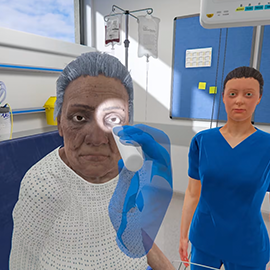
The module will introduce the concept of safe nursing practice and the proficiencies nurses need when undertaking the physical assessment of people of all ages. You will learn how to observe and assess people of all ages in terms of symptoms and signs of physical ill health. You will learn how to take, record and interpret a patient’s vital sign and use communication tools to support verbal and written reports. These skills and proficiencies will be supported by opportunities to participate in simulated education utilising a range of specialist technology and taught by experts. These nursing skills are directly relevant to your practice learning and include nursing procedures that are necessary for safe and effective patient care. Before your first placement you will complete a number of mandatory requirements, which will enable you to practice with confidence and ensure patient safety. The learning opportunities in this module are designed to support you to develop knowledge, which will inform the attainment of communication and relationship management skills and nursing procedures as identified as Part 1 in your Ongoing Record of Achievement (ORA).
NS0425 -
Nursing Skills 2: Development of Communication Skills and Nursing Interventions (20 Credits)
Nursing Skills 2 will build on the concept of communication and safe and effective practice which you have been introduced to in the previous skills module. You will further develop your communication and clinical skills relevant to your practice placement experiences. You will continue to learn a range of skills, such as recognition of the deteriorating patient, that are necessary for safe, effective and professional practice. You will have the opportunity to participate in simulated education utilising a range of specialist technology, including human patient simulators, and taught by a specialist module team of lecturers in nursing, midwifery and health.
You will consider and develop your nursing skills, acting with integrity, applying the principles of The Code (NMC, 2018). You will demonstrate your ability to practise in a holistic, individualised, person centred, non-judgemental, caring and sensitive manner, acknowledging the diverse needs of a contemporary society. You will continue to develop your understanding of team working and its importance in nursing practice. You will learn about the importance of person-centred care and effective communication skills. These learning opportunities will continue to help you gather evidence of your abilities and confidence and will inform your attainment of communication and safe and effective practice as identified as Part 1 in your Ongoing Record of Achievement (ORA).
RV5001 -
Academic Language Skills for Nursing, Midwifery and Health; Social Work, Education and Community Wellbeing (Core – for International and EU students only,0 Credits)
Academic skills when studying away from your home country can differ due to cultural and language differences in teaching and assessment practices. This module is designed to support your transition in the use and practice of technical language and subject specific skills around assessments and teaching provision in your chosen subject. The overall aim of this module is to develop your abilities to read and study effectively for academic purposes; to develop your skills in analysing and using source material in seminars and academic writing and to develop your use and application of language and communications skills to a higher level.
The topics you will cover on the module include:
• Understanding assignment briefs and exam questions.
• Developing academic writing skills, including citation, paraphrasing, and summarising.
• Practising ‘critical reading’ and ‘critical writing’
• Planning and structuring academic assignments (e.g. essays, reports and presentations).
• Avoiding academic misconduct and gaining credit by using academic sources and referencing effectively.
• Listening skills for lectures.
• Speaking in seminar presentations.
• Presenting your ideas
• Giving discipline-related academic presentations, experiencing peer observation, and receiving formative feedback.
• Speed reading techniques.
• Developing self-reflection skills.
LE5001 -
Capability, Empowerment and Capacity in Learning Disability Nursing (20 Credits)
This module continues your journey in becoming a learning disability nurse and will build on the concepts from year one. You will develop greater confidence and autonomy in the context of caring for people with a learning disability, whilst enhancing your skills and knowledge. This module will support you to further examine ethics, values and societal perceptions.
The philosophy of person centred care will form the basis of this module, allowing you to explore a range of contexts for safe care delivery. You will be given the opportunity to explore the experiences and challenges of people with a learning disability and their families; at key points in their lives.
You will explore the concepts of assessment, planning and evaluation of care in relation to the Mental Capacity Act (2005) and consider the safeguards involved in the protection of vulnerable people. You will also be supported to develop your knowledge on contemporary public health issues and the implications effecting the learning disability population. This module also offers an opportunity for you to examine your personal beliefs and values, whilst developing skills to empower others.
Topics you will cover include:
Prenatal diagnosis and diagnostic assessment, including non-invasive testing.
Child development.
Sexuality, sexual health and personal relationships.
Gender identity.
Deprivation of Liberty (DOL’s) and best interest principles.
Introduction to leadership, courage and professional challenges.
Skills for assessment including capacity and capability will be a core theme.
LE5002 -
Perspectives of Complex Care in Learning Disability Nursing (20 Credits)
On this module you will be offered opportunities to learn about supporting people with a learning disability in a variety of non-specialist and specialist practice provision. This will take place in health establishments such as; in GP surgeries, in health and social care provision and in schools. This learning spans the whole life time of people with a learning disability as services and patient needs change. You will learn about:
• Community Nursing
• Behavioural specialisms
• Health Facilitation
• Clinics in other health settings
• Health action plans
• Psychological therapies and patient ownership
• Person centeredness and working with families
Topics you will cover include:
• Practicing in challenging environments
• Practicing in primary health care settings
• Practicing in GP surgeries
• Learning Disability and health policy
• Championing the rights and health of people with a learning disability
• Teaching other health professionals
• Developing accessible information
• Clinical risk taking
• Understanding and utilising Positive Behavioural Support across communities of practice (PBS)
You will explore the experiences of people with a learning disability and their families or carers through meeting with service users and practitioners specialising in learning disability and through the eyes of non- specialist professionals. This module offers an opportunity to discover and develop your creativity, value base and skills of helping people with a learning disability to stay healthy and safe. This module will also allow you to consolidate your specialist communication skills building from the skills developed at level’s 4 and 5 (NS0423: Becoming a safe, caring professional in Learning Disability Nursing, NS0424: Introduction to nursing assessment skills, NS0425: Development of communication skills and nursing interventions, LE4001: Introduction to evidence based practice in health and ill health –Learning Disability Nursing, LE4002: Applied life and social sciences - planning and evaluating care, LE5001: Capability, empowerment and capacity in Learning Disability Nursing and NS0525: Developing evidence based skills for best practice)
You will be undertaking other modules focussing on specialist learning disability practice, alongside this module (NS0524: Developing shared decision making in Learning Disability Nursing and NS0526: Enhancing clinical skills for complex care)
NS0524 -
Practice Module 2: Developing Shared Decision Making (40 Credits)
This practice module will provide you with an opportunity to build upon and extend your portfolio of skills and knowledge relevant to your clinical practice. This module will both support your learning while you are in practice and provide an environment, within university, to consolidate the skills and knowledge necessary to progress effectively. By using a concept curriculum approach, the nursing practice module will support you to learn how to become an accountable professional, lead and manage nursing care, and work in teams.
During your module you will explore clinical decision making in practice through collaboration and partnership working. In your clinical placements you will return to university for two days a week to share your experiences with your peers and module tutors to help develop effective decision making. You will be provided with opportunities to critically reflect on your own role and professional responsibilities in making shared decisions for your continued development as a safe and effective student nurse. By using a developing concept curriculum approach, you will be able to practise safely and have an awareness of your own limitations, demonstrating increasing autonomy and independence when performing a range of practical skills. You will apply your developing knowledge of pharmacology, social and life sciences to nursing practice. Innovative teaching and learning strategies will be used to enhance your learning. This will include the use of digital educational resources to support your learning in relation to concepts such as medicines management. The module will also incorporate simulated practice learning hours to support you to develop appropriate nursing skills.
You will continue to develop your Ongoing Record of Achievement (ORA) and reflect on your personal and professional development as an evidence-based practitioner. You will reflect on the importance of patient and family centred approaches in addition to the effectiveness of patients and client feedback. Some of your learning will be online via online learning resources stored on BlackBoard Ultra as we help you to facilitate, and organise your independent learning.
NS0525 -
Nursing Skills 3: Developing Evidence-Based Skills for Best Practice (20 Credits)
This module will build on the concepts from year one and introduce more complex skills linked to the proficiency standards outlined in Annex A and B ‘Future Nurse: Standards of Proficiency for Registered Nurse’ (NMC, 2018). This will support your practice learning and help you further develop the knowledge and skills you have gained from your year one clinical placements. The module will help you develop greater confidence and autonomy, allowing you to contribute effectively to a multi-disciplinary team of healthcare providers. This skills module will support your learning while you are in practice and provide an environment, within university, to consolidate the skills and knowledge necessary to progress effectively. While in university you will also be updating, consolidating and learning new communication and relationship management skills, nursing procedures and elements of patient safety to ensure safe and effective practice.
More informationNS0526 -
Nursing Skills 4: Enhancing Clinical Skills for Complex Care (20 Credits)
The content of Nursing Skills 4 will be informed by the proficiency standards outlined in Annex A and B in ‘Future Nurse: Standards of Proficiency for Registered Nurse’ (NMC, 2018).
This module will build upon your knowledge of medicine administration whilst being exposed to the challenges of complex care needs. You will learn about nursing interventions associated with people of all ages with complex care needs exploring the principles, approaches and concepts of safe nursing practice and the delivery of holistic care. You will build your knowledge of safe ethical medicines management with an emphasis on the clinical application of these skills and understanding. There will be a particular focus on the challenges of medicines optimisation in people with complex care needs, which requires understanding of pharmacodynamics and pharmacokinetics. Alongside this you will learn to develop professional accountability to ensure safe administration of medicines including competency in drug calculation. You will continue to develop your understanding of team working and its importance in nursing practice.
RV5001 -
Academic Language Skills for Nursing, Midwifery and Health; Social Work, Education and Community Wellbeing (Core – for International and EU students only,0 Credits)
Academic skills when studying away from your home country can differ due to cultural and language differences in teaching and assessment practices. This module is designed to support your transition in the use and practice of technical language and subject specific skills around assessments and teaching provision in your chosen subject. The overall aim of this module is to develop your abilities to read and study effectively for academic purposes; to develop your skills in analysing and using source material in seminars and academic writing and to develop your use and application of language and communications skills to a higher level.
The topics you will cover on the module include:
• Understanding assignment briefs and exam questions.
• Developing academic writing skills, including citation, paraphrasing, and summarising.
• Practising ‘critical reading’ and ‘critical writing’
• Planning and structuring academic assignments (e.g. essays, reports and presentations).
• Avoiding academic misconduct and gaining credit by using academic sources and referencing effectively.
• Listening skills for lectures.
• Speaking in seminar presentations.
• Presenting your ideas
• Giving discipline-related academic presentations, experiencing peer observation, and receiving formative feedback.
• Speed reading techniques.
• Developing self-reflection skills.
LE6001 -
Transition to Accountable Practitioner in Learning Disability Nursing (40 Credits)
The module builds on the skills and knowledge that you have developed during the programme and supports your transition towards becoming a confident accountable practitioner. Scholarship within learning disability nursing will be embraced; this will enable you to critically analyse and challenge the status quo, demonstrating courage and professional curiosity. The module content encourages independent thinking skills and creativity. Research and practice development philosophy is explored, this will support your summative assessment which is a 6000 word Practice Project Proposal.
You will critically reflect upon a presenting operational, practice, or leadership challenge. In order to do this, you will explore contentious elements of people with learning disability receiving service support, healthcare, including consent & capacity, advocacy, global health priorities and health economics. Patient safety and cost effectiveness are competing forces in learning disability healthcare and community services, you will examine this paradox alongside the maintenance of high-quality care with finite resources. Human factors within organisations and/or systems are paramount to its success, you will appraise the evidence, particularly in relation to working within teams. Archived serious case reviews, critical incidents and governance will be critically analysed. This will promote understanding of organisational culture and professionalism, increasing your determination and resilience to become a competent accountable practitioner. Research and practice development provide rich evidence to support innovation and action. The module will develop your ability to analyse and select appropriate methods of research/practice development to fulfil the summative assessment requirements and prepare you for the future.
NS0621 -
Practice Module (3) Leadership, Quality and Team Work (40 Credits)
In this third year module which is based in practice, your learning will be predominantly online via BlackBoard Ultra. This will be supported with some additional face to face seminars to explain expectations as we help you to facilitate greater independent learning as you transition to become a registered nurse. This module will provide you with the opportunity to advance your skills and knowledge directly relevant to your third year practice placement experiences and prepare you for working life as a registered nurse. It will specifically focus on leadership, quality and team work.
By using a concept curriculum approach, the nursing practice module will support you to become an accountable professional, working in teams to lead and manage quality nursing care. Within the context of your practice placements you will critically reflect and debate contemporary theories and explore service improvement models, which support sustainable service improvement. Applying your knowledge of team and Interprofessional working you will learn how to coordinate safe and effective high quality care. This will include a collaborative approach embedding the views of service users, lay carers and colleagues in the delivery and enhancement of care. You will be provided opportunities to critically reflect on your own personal and professional responsibility for your continued development as a manager and future leader of service improvement. You will learn how to manage uncertainty and put into practice the strategies that develop resilience in yourself and others.
Through dynamic learning opportunities in practice you will gather evidence to aid completion of your North East Electronic Practice Assessment Document (NEEPAD). Through critical reflection and self-assessment you will complete your Ongoing Record of Achievement (ORA) demonstrating your capability and readiness for independent practice. This demonstrates to a future employer that you are fit to practise as a registered nurse caring for people of all ages and across all care settings.
NS0622 -
Nursing Skills 5: Leading and Improving Safety and Care Quality (20 Credits)
Nursing Skills 5 will build on the concepts from years 1 and 2 and further enhance your skills. The module focuses on aspects of leadership to build your competence in the delivery of safe and effective person-centred care. You will update and explore in greater depth skills you acquired in previous years, including mandatory skills and a range of more advanced techniques and procedures whilst preparing you for your role as a newly qualified nurse. In addition, you will build on your knowledge and experience of safe nursing practice, promotion of health and medicines management in relation to caring for people with acute, complex and advanced conditions. You will develop advanced communication and nursing procedure skills as appropriate to your field of nursing.
More informationNS0623 -
Nursing Skills 6: Advancing Nursing Skills (20 Credits)
This module will consolidate the concepts and nursing interventions from the previous skills modules and be delivered following Nursing Skills 5. Building on your existing knowledge and skills you will enhance your development and become an agile skilled practitioner in your relevant field of nursing. You will be learning to apply high level communication and medicines management skills, previous knowledge and experience as well as your advanced knowledge of nursing procedures to prepare you for autonomous practice. History taking skills will be developed and used as a framework for enhanced assessment and care of people of all ages. A range of dynamic learning opportunities both in the simulated and real-life practice setting will help to generate evidence, which will aid you in the completion of your Ongoing Record of Achievement, demonstrating that you are capable of a high standard of competent, safe and independent nursing practice.
More informationRV5001 -
Academic Language Skills for Nursing, Midwifery and Health; Social Work, Education and Community Wellbeing (Core – for International and EU students only,0 Credits)
Academic skills when studying away from your home country can differ due to cultural and language differences in teaching and assessment practices. This module is designed to support your transition in the use and practice of technical language and subject specific skills around assessments and teaching provision in your chosen subject. The overall aim of this module is to develop your abilities to read and study effectively for academic purposes; to develop your skills in analysing and using source material in seminars and academic writing and to develop your use and application of language and communications skills to a higher level.
The topics you will cover on the module include:
• Understanding assignment briefs and exam questions.
• Developing academic writing skills, including citation, paraphrasing, and summarising.
• Practising ‘critical reading’ and ‘critical writing’
• Planning and structuring academic assignments (e.g. essays, reports and presentations).
• Avoiding academic misconduct and gaining credit by using academic sources and referencing effectively.
• Listening skills for lectures.
• Speaking in seminar presentations.
• Presenting your ideas
• Giving discipline-related academic presentations, experiencing peer observation, and receiving formative feedback.
• Speed reading techniques.
• Developing self-reflection skills.
To start your application, simply select the month you would like to start your course.
Our Applicant Services team will be happy to help. They can be contacted on 0191 406 0901 or by using our Contact Form.
Full time Courses are primarily delivered via on-campus face to face learning but could include elements of online learning. Most courses run as planned and as promoted on our website and via our marketing materials, but if there are any substantial changes (as determined by the Competition and Markets Authority) to a course or there is the potential that course may be withdrawn, we will notify all affected applicants as soon as possible with advice and guidance regarding their options. It is also important to be aware that optional modules listed on course pages may be subject to change depending on uptake numbers each year.
Contact time is subject to increase or decrease in line with possible restrictions imposed by the government or the University in the interest of maintaining the health and safety and wellbeing of students, staff, and visitors if this is deemed necessary in future.
Northumbria University is committed to developing an inclusive, diverse and accessible campus and wider University community and are determined to ensure that opportunities we provide are open to all.
We are proud to work in partnership with AccessAble to provide Detailed Access Guides to our buildings and facilities across our City, Coach Lane and London Campuses. A Detailed Access Guide lets you know what access will be like when you visit somewhere. It looks at the route you will use getting in and what is available inside. All guides have Accessibility Symbols that give you a quick overview of what is available, and photographs to show you what to expect. The guides are produced by trained surveyors who visit our campuses annually to ensure you have trusted and accurate information.
You can use Northumbria’s AccessAble Guides anytime to check the accessibility of a building or facility and to plan your routes and journeys. Search by location, building or accessibility feature to find the information you need.
We are dedicated to helping students who may require additional support during their student journey and offer 1-1 advice and guidance appropriate to individual requirements. If you feel you may need additional support you can find out more about what we offer here where you can also contact us with any questions you may have: