

Professor of Experimental Psychology, Northumbria University. My research interests lie in the field of cognitive psychology, and in particular eye movements, reading and human visual cognition. Throughout my career, I has used eye movement recording techniques to investigate many aspects of human visual, linguistic and cognitive processing. The measurement of eye movements during reading and other visually mediated tasks provides an excellent online behavioural measure from which inferences concerning current cognitive processing can be made. I have used this method very often in my research. I am also interested in co-registration methods (simultaneous recordings of eye movements and other signals such as EEG and MEG). In my research investigating reading, I have developed a keen interest in how people read in languages other than English.
- Please visit the Pure Research Information Portal for further information
- Exploring effects of foveal load and preview restrictions for single and multiple parafoveal words in Chinese reading, Zhang, M., Zhang, Z., Li, F., Bai, X., Zang, C., Liversedge, S. 1 Feb 2026, In: Journal of Memory and Language
- Aging and word predictability during reading: Evidence from eye movements and fixation-related potentials, Pagán, A., Degno, F., Milledge, S., Kirkden, R., White, S., Liversedge, S., Paterson, K. 28 Jan 2025, In: Attention, Perception, and Psychophysics
- Auditory distraction during reading: Investigating the effects of background sounds on parafoveal processing, Rettie, L., Marsh, J., Liversedge, S., Wang, M., Degno, F. 1 Jun 2025, In: Quarterly Journal of Experimental Psychology
- Correction to: Aging and word predictability during reading: Evidence from eye movements and fixation‑related potentials, Pagán, A., Degno, F., Milledge, S., Kirkden, R., White, S., Liversedge, S., Paterson, K. 1 Jul 2025, In: Attention, Perception, and Psychophysics
- Development of orthographic, phonological and semantic parafoveal processing in Chinese reading, Liu, M., Li, S., Meng, Z., Wang, Y., Zang, C., Yan, G., Liversedge, S. 22 Aug 2025, In: Quarterly Journal of Experimental Psychology
- Does meaningful background speech modulate predictability effects during Chinese reading?, Zang, C., Wang, S., Guan, Y., Meng, Z., Zhang, M., Liversedge, S. 18 Aug 2025, In: Journal of Cognitive Psychology
- Effects of irrelevant speech on semantic and phonological judgments of Chinese characters, Meng, Z., Yan, G., Marsh, J., Liversedge, S. 18 Aug 2025, In: Journal of Cognitive Psychology
- Parafoveal Processing and Transposed-Letter Effects in Developmental Dyslexic Reading, Kirkby, J., Barrington, R., Drieghe, D., Liversedge, S. 1 Feb 2025, In: Dyslexia
- Primary task demands modulate background speech disruption during reading of Chinese tongue twisters: an eye-tracking study, Meng, Z., Yan, G., Marsh, J., Liversedge, S. 18 Aug 2025, In: Journal of Cognitive Psychology
- The effect of emotion on recognition accuracy, intensity and response bias to vocal expressions in adolescents and adults with externalising and internalising symptoms, Sells, R., Liversedge, S., Chronaki, G. 31 Dec 2025
Latest News and Features

Northumbria University professor named among UK's most outstanding health and care research leaders
A Northumbria University professor has been appointed as one of the UK's most influential health…
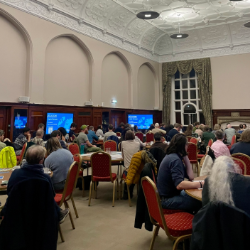
From campuses to communities: Newcastle's fifth Climate Change Forum forges greener future for city
Newcastle's fifth Climate Change Forum drew a full house – and an energising conversation about…

'Safer Stadiums' research shares women's experiences at men's football games
New research led by Northumbria University highlights the experiences of women who attend men's…
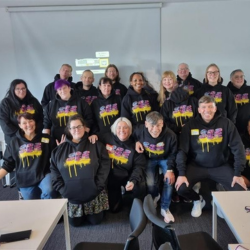
Free online directory launches to support people with experience of homelessness
Researchers at Northumbria University have launched a free, searchable online directory covering…

Northumbria University confirms multi-million investment in Centre for Writing and Publishing alongside commitment from North East Mayor
Newcastle is poised to become a major centre for the UK publishing industry after multi-million-pound…
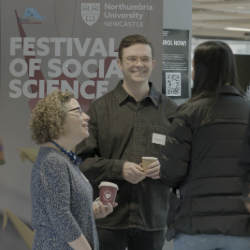
Northumbria University delivers diverse programme of public engagement events for ESRC Festival of Social Science 2025
Northumbria University delivered fifteen innovative public engagement events as part of the…
More events
Upcoming events
North East CTEC Educator Conference 2026
Harvard Lecture Theatre 403
-

From sustenance to complete nourishment in a changing and uncertain climate
Ellison Building A, 001 (ELA 001)
-
