UK network to accelerate the development of sustainable surface technologies
A new national network led by Newcastle University and Northumbria University, in partnership…

The Centre for Global Development (CGD) at Northumbria University has been selected as the lead research partner to work with United Nations Volunteers (UNV) on the new State of the World’s Volunteerism Report (2026 SWVR). This flagship publication is designed to strengthen the understanding of volunteerism and demonstrate its universality, scope, and reach in the twenty-first century.
The 2026 SWVR "Volunteerism and its measurements" was launched on 5 December 2025, International Volunteer Day, during the opening event of the International Year of Volunteers for Sustainable Development (IVY) 2026, at the United Nations General Assembly in New York. This global report on volunteer measurement showcases the latest thinking and evidence from around the world on how to account for the contributions of volunteers and volunteerism to peace and development. The global impact of volunteers and their significance to peace and development worldwide remains largely unquantified, with qualitative measurement often being small-scale and isolated from wider debates.

The focus and theme of the 2026 SWVR responds to the call for improved data, tools, and frameworks for measuring volunteering, ensuring that volunteers’ roles are recognised and better integrated into policy and practice. Measuring volunteering means different things to different people and organisations around the world, depending on their specific contexts, interests and approaches to promoting peace and development. The report explains historical challenges and provides a forward-looking analysis of inclusive and innovative approaches to measuring volunteering that can enable a better understanding of how volunteers drive change worldwide. It includes practical examples from governments, organisations, and volunteers themselves, offering actionable tools and insights for diverse and inclusive measurement of the impacts of volunteering.
This is the fifth edition of this global report, regularly published by UNV since 2011, focusing on different themes. The first SWVR edition in 2011 explored the theme ‘Universal Values for Global Well-being’, highlighting the significant social and economic contribution of volunteers to development. The 2015 SWVR on ‘Transforming Governance’ emphasised the roles of volunteering in helping governments fulfil their duties and responsibilities through accountability and monitoring mechanisms. In 2018, the SWVR on ‘Volunteerism and Community Resilience’ focused on how communities come together to develop collective resources to cope with shocks and stresses, particularly in contexts where government provision is limited. The last report, published in 2022, focused on the theme ‘Building Equal and Inclusive Societies’ and analysed how volunteers and governments work together to create more inclusive structures and mechanisms that are fit for the development challenges of the 21st century.
Northumbria’s CGD research team played a key role in the development of this UNV-led report, working with a consortium of global partners to ensure diverse perspectives and voices were reflected throughout the thematic chapters of the report. The University of Pretoria led the development of the Global Index of Volunteer Engagement (GIVE) and the International Labour Organization (ILO) provided new global estimates of volunteer work.
Following the launch of the report in December 2025, the UNV introduced the 2026 SWVR Global Webinar Series, contributing to its engagement and dissemination efforts and helping diverse stakeholders consider how the insights on volunteer measurement from the SWVR can be applied in their own contexts. This page is regularly updated with the webinar recordings and summary notes:
The session on 16 April 2026 focused on Chapters 4 and 5 of the SWVR report, exploring how volunteering shapes the lives of individuals and broader communities, and how those contributions can be measured more meaningfully. The discussion explored a wide range of impacts, from skills and well-being to economic participation and social cohesion, while highlighting the risks of measurement approaches that overlook less visible outcomes or reinforce inequalities. The session highlighted that capturing the true value of volunteerism requires combining quantitative data with lived experiences, and that better evidence leads to stronger programmes for both volunteers and their communities.
The session on 6 May 2026 focused on Chapter 7 of the SWVR report, introducing the GIVE and its four dimensions: value to the individual, value to the community, economic value, and the enabling environment for volunteerism. The discussion explored how the index moves beyond counting volunteer hours to understanding how volunteering contributes to individuals, communities and economies. The session highlighted that while the GIVE is designed to balance global comparability with sensitivity to local contexts and cultural understandings of volunteering, it is ultimately about making the value of volunteerism more visible in the decisions that shape societies.
The session on 19 May 2026 focused on Chapter 6 of the SWVR report, exploring how different forms of measurement can reveal important insights into volunteering in crisis settings. The discussion examined how volunteering evolves as crises unfold and intersect, and what challenges and opportunities this creates for measurement systems. The session emphasised that capturing volunteering in crisis contexts requires flexible, context-sensitive approaches that better reflect both how volunteers are affected by crises and how their contributions help reduce the impact of interconnected crises on their communities.
Webinar 5: "The value of volunteer measurement data to policy and planning" (access the summary of the fifth webinar in the serie here and the recording here)
The closing session on 18 June 2026 explored how volunteer measurement data can inform policy and planning. Bringing together experts and practitioners from around the world, the discussion explored why volunteer contributions often remain absent from the data that drives decisions, and how stronger evidence on volunteering can influence policy, improve planning and support communities. Drawing on practical examples, the session highlighted cross-sectoral collaborations, including case studies from national planning systems and private sector engagement. Participants were invited to engage with the SWVR recommendations and keep an eye out for additional upcoming resources.
The 2026 SWVR has also inspired a series of think pieces offering diverse perspectives on volunteer measurement:
"The world’s largest workforce no one counts" by Toily Kurbanov, UNV Executive Coordinator
"Casting a statistical frame around volunteerism" by Tapiwa Kamuruko, Chief of Volunteer Advisory Services at UNV
"What measuring volunteerism really tells us about progress" by Emiliya Asadova, UNV Policy Specialist
"Why volunteerism is Africa’s secret development strength" by Meshesha Shewarega,Coordinator of the African Union Continental Volunteer Linkage Platform
"The paradox of invisible contributions" by Professor Samuel Manda, University of Pretoria
"From tradition to transformation: Rethinking volunteering in Central Asia" by Haoliang Xu, UNDP Associate Administrator, and Toily Kurbanov, UNV Executive Coordinator
"Volunteering through an economic lens: From measurement to meaning" by Jakub Dostál, Economist at the College of Polytechnics Jihlava
"When formal systems falter" by Udo Mbeche Smith, Research and Publications Specialist at UNV
"From field to policy: Volunteerism in the Dominican Republic" (also available in Spanish) by Mildred Clementine Samboy Hernández, Development Coordination Officer at UNRCO Dominican Republic
"Volunteerism in focus at DSA 2026" by the Development Studies Association (DSA) Communications Team
"Reflecting on how we measure volunteering: Insights from the 2026 State of the World’s Volunteering Report" by Comhlámh
To find out more, please contact Prof Matt Baillie Smith and Dr Bianca Fadel (Northumbria University), or Emiliya Asadova and Tapiwa Kamuruko (UNV).


A new national network led by Newcastle University and Northumbria University, in partnership…

A Northumbria University criminologist has been awarded a Philip Leverhulme Prize, one of the…
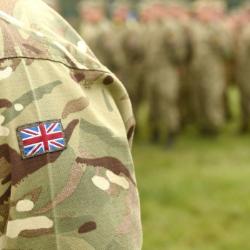
Pioneering data platform maps where the Armed Forces community receive support from charities

A major study co-led by Northumbria University will test whether attachment assessments lead…

New research published today by the AHRC Creative Communities programme provides fresh evidence…

Northumbria University's award-winning Student Law Office is launching SEND Decoded, a series…

The Net Zero Polar Science (NZPS) Doctoral Training Programme (DTP) has welcomed its first…

A new drop-in service is bringing health and wellbeing support for students at both Newcastle…
Manchester Marriott Hotel Piccadilly
-

Sutherland Building

Northumbria University
-
Page last reviewed: 28 July 2026
