UK network to accelerate the development of sustainable surface technologies
A new national network led by Newcastle University and Northumbria University, in partnership…

 Academics in this group investigate the connections between different regions of the world. We are interested in how identities and boundaries were negotiated; how goods, ideas, beliefs, and people moved; how they were received and adapted, and transformed the places to which they moved; in how individuals managed to organise networks across borders; and how different communities and cultures interacted in different ways and spaces across the world.
Our research expertise ranges from the late medieval and early modern world right through to contemporary history, from the Americas, the Middle East, Africa, and Asia, to the Mediterranean, Central and Eastern Europe and European-Asian relations. We study the environment (natural and otherwise), diplomatic relations and kingship, global trade flows, hybrid and global objects, empires, migration and diaspora, transnational movements, political ideologies, and international organisations. What brings us together is a shared interest in transnational, spatial, and global approaches. Some examples of the group’s research include studies on the international impact of the English Reformation, the British and Irish presence in North America, decolonisation in West Africa, and religion in the Ottoman-Arab world.
The group has a growing network of international and third sector collaborations, with organisations such as the Cooperative Group, the Durham Oriental Museum and the international NGO the Union of International Associations. Since 2021 the group has hosted a major UKRI-funded project led by Felicia Gottmann, on Migration, Adaptation, Innovation: 1500-1800. A team of researchers is conducting a global comparative study of skilled migration and its role in the development of new technologies, ranging across Europe, the Islamic world and East Asia. The project involves collaborations with museums and community partners in the UK and internationally. Together with the University of Birmingham the group also runs an AHRC-funded Research Network ‘Reframing the Age of Revolutions’, building on an earlier collaboration on global political economy with the University of Oxford.

Northumbria’s Global and Transnational Research Group is a founding member of NETWoRC, the North-East Transnational and World History Research Centre, which brings together academics, graduate students, and early career researchers from across the North East. We organise a regular lunchtime seminar hosted by Northumbria, research workshops, conferences, symposia, and training workshops. Follow us via our blog, Facebook, or Twitter.
Tweets by networcNE
PGR Students

A new national network led by Newcastle University and Northumbria University, in partnership…

A Northumbria University criminologist has been awarded a Philip Leverhulme Prize, one of the…
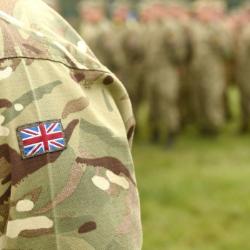
Pioneering data platform maps where the Armed Forces community receive support from charities

A major study co-led by Northumbria University will test whether attachment assessments lead…

New research published today by the AHRC Creative Communities programme provides fresh evidence…

Northumbria University's award-winning Student Law Office is launching SEND Decoded, a series…
Manchester Marriott Hotel Piccadilly
-

Sutherland Building

Northumbria University
-
