-
Study
-
Quick Links
- Open Days & Events
- Real-World Learning
- Unlock Your Potential
- Tuition Fees, Funding & Scholarships
- Real World Learning
-
Undergraduate
- Application Guides
- UCAS Exhibitions
- Extended Degrees
- School & College Outreach
- Information for Parents
-
Postgraduate
- Application Guide
- Postgraduate Research Degrees
- Flexible Learning
- Change Direction
- Register your Interest
-
Student Life
- Students' Union
- The Hub - Student Blog
- Accommodation
- Northumbria Sport
- Support for Students
-
Learning Experience
- Real-World Learning
- Research-enriched learning
- Graduate Futures
- The Business Clinic
- Study Abroad
-
-
International
International
Northumbria’s global footprint touches every continent across the world, through our global partnerships across 17 institutions in 10 countries, to our 277,000 strong alumni community and 150 recruitment partners – we prepare our students for the challenges of tomorrow. Discover more about how to join Northumbria’s global family or our partnerships.
View our Global Footprint-
Quick Links
- Course Search
- Undergraduate Study
- Postgraduate Study
- Information for Parents
- London Campus
- Northumbria Pathway
- Cost of Living
- Sign up for Information
-
International Students
- Information for International Students
- Northumbria and your Country
- International Events
- Application Guide
- Entry Requirements and Education Country Agents
- Global Offices
- English Requirements
- English Language Centre
- International student support
- Cost of Living
-
International Fees and Funding
- International Undergraduate Fees
- International Undergraduate Funding
- International Masters Fees
- International Masters Funding
- International Postgraduate Research Fees
- International Postgraduate Research Funding
- Useful Financial Information
-
International Partners
- Agent and Representatives Network
- Global Partnerships
- Global Community
-
International Mobility
- Study Abroad
- Information for Incoming Exchange Students
-
-
Business
Business
The world is changing faster than ever before. The future is there to be won by organisations who find ways to turn today's possibilities into tomorrows competitive edge. In a connected world, collaboration can be the key to success.
More on our Business Services-
Business Quick Links
- Contact Us
- Business Events
- Research and Consultancy
- Education and Training
- Workforce Development Courses
- Join our mailing list
-
Education and Training
- Higher and Degree Apprenticeships
- Continuing Professional Development
- Apprenticeship Fees & Funding
- Apprenticeship FAQs
- How to Develop an Apprentice
- Apprenticeship Vacancies
- Enquire Now
-
Research and Consultancy
- Space
- Energy
- AI and Tech
- CHASE: Centre for Health and Social Equity
- NESST
-
-
Research
Research
Northumbria is a research-rich, business-focused, professional university with a global reputation for academic quality. We conduct ground-breaking research that is responsive to the science & technology, health & well being, economic and social and arts & cultural needs for the communities
Discover more about our Research-
Quick Links
- Research Peaks of Excellence
- Academic Departments
- Research Staff
- Postgraduate Research Studentships
- Research Events
-
Research at Northumbria
- Interdisciplinary Research Themes
- Research Impact
- REF
- Partners and Collaborators
-
Support for Researchers
- Research and Innovation Services Staff
- Researcher Development and Training
- Ethics, Integrity, and Trusted Research
- University Library
- Vice Chancellors Fellows
-
Research Degrees
- Postgraduate Research Overview
- Doctoral Training Partnerships and Centres
- Academic Departments
-
Research Culture
- Research Culture
- Research Culture Action Plan
- Concordats and Commitments
-
-
About Us
-
About Northumbria
- Our Strategy
- Our Staff
- Our Schools
- Place and Partnerships
- Leadership & Governance
- University Services
- Northumbria History
- Contact us
- Online Shop
-
-
Alumni
Alumni
Northumbria University is renowned for the calibre of its business-ready graduates. Our alumni network has over 253,000 graduates based in 178 countries worldwide in a range of sectors, our alumni are making a real impact on the world.
Our Alumni - Work For Us
People and Place (P&P) is a research group within the Department of Architecture and Built Environment at Northumbria University. It brings together researchers at different career stages, including academics, PhD candidates, and postdoctoral researchers, whose research investigates the interactions between people and the built environment in the context of place.
Recognizing the diverse values surrounding the built environment, the group engages with the social, economic, physical, and cultural fabric of places. Our research operates at the intersection of architecture, urban design, planning, architectural humanities, and the social sciences. Adopting an integrated view of the built environment and an interdisciplinary approach, the group addresses some of the most pressing global challenges through various disciplinary and methodological lenses. These include space syntax, carbon estimation, qualitative surveys, co-creation methods, post-occupancy evaluation, digital modeling, human geography, ethnography, and critical heritage studies. Our research spans across four main cross-cutting themes.
— Sustainable Futures
Research in this area focuses on the diverse roles that the built environment plays in society’s transition towards a sustainable future. This encompasses both technical understandings, such as Post Occupancy Evaluation (POE) of the existing building stock, and building energy performance modelling, as well as employing a ‘nexus of practices’ approach to understand sustainable building measures in a wider social context.
— Heritages Places and People
Research within this area explores the role of built heritage in contemporary societies, with a particular interest in design-led practices, processes, and interventions for heritage valorisation and reuse. Activities develop at the intersection of architecture, museum and exhibition design, and memory, museum, and heritage studies, encompassing cultural collaborations, theoretical research, and funded projects.
— Inclusive Design
Research carried out within this cluster specialises in the areas of collaboration between parties, groups and individuals and participation of stakeholders and the wide community in research. This includes research projects and publications on strategic planning for the development of inclusive cities in response to social, spatial and environmental inequalities, strategic decision-making processes and outcomes towards sustainable cities, as well as political negotiations and emerging digital technologies as innovative ways to communicate with target groups.
— Urban Morphology
Research activities in this area delves into the morphological and spatial aspects of the built environment, including but not limited to space syntax analysis and GIS-based analyses. Research incorporates emerging areas arising from shared and integrative data (e.g., urban pedestrian and vehicular movements, demographic and geographic data sets) and cross-cutting research into wellbeing in the built environment (e.g., dementia, the ageing population, children’s physical and mental health, etc.).
The group’s members come from diverse backgrounds and disciplinary areas, reflected in the richness of their publications, research collaborations, and funded projects. Find out more below:
The People and Places group is co-led by Dr Ayse Ozbil Torun and Dr Francesca Lanz.
The group includes 38 members across the Department of Architecture and Built Environment, with 14 core members, 24 associate members, and 14 postgraduate members with differen disciplinary expertise and backgrounds. The People and Places core members are:
List of PhD projects with titles, supervisor etc
Learn more about our ongoing and most recent funded research:
-
Navigating Urban Ecologies: Mapping the Habitation Patterns and Socio-ecological Dynamics of Kittiwakes along the River Tyne (UKRI - AHRC, 2025-2026)
Navigating Urban Ecologies (NUE) project investigates the socio-ecological dynamics of urban kittiwakes along the River Tyne, focusing on their unique coexistence with Newcastle and Gateshead’s urban environments. Employing a “more than human” approach, the research combines ethnographic study, GIS, and machine learning to map kittiwake habitats and interactions. It aims to reimagine urban planning to support biodiversity, fostering inclusive urban ecologies and sustainable coexistence.
Dr Jiayi (Jennifer) Ji (Project Lead); with Dr Ayse Ozbil Torun and Dr Bing Zhai (Project Co-Leads), and Daniel Turner, Natural History Society of Northumbria & NEBBS Group (Ornithologist)
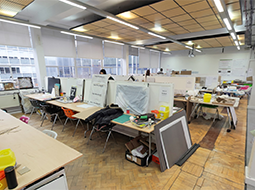
Get an insight into life at Northumbria with videos and 360 panoramas of the Department of Architecture and Built Environment.
Looking to study an Undergraduate degree? Book a place today!
Latest News and Features
Northumbria Architecture showcased at the Venice Biennale
Interior Architecture graduates from Northumbria University have presented their innovative…
Creative collaboration with English Heritage launched at Belsay Hall
Designers and creators from Northumbria University have unveiled a collaboration with English…
Northumbria expands results day support for students
Northumbria University is expanding and enhancing the support it provides to students receiving…
Northumbria wins recognition for expanding access to higher education
Northumbria University has been named Higher Education Institution of the Year at a prestigious…
Northumbria researchers secure Venice Biennale Fellowships
Two PhD researchers from Northumbria University have been awarded Venice Fellowships by the…
Northumbria retains globally-recognised built environment accreditation
Northumbria University has once again cemented its reputation as a leading institution providing…
Upcoming events
Commercialising SHAPE Innovations and Impact
Northumbria University
-